
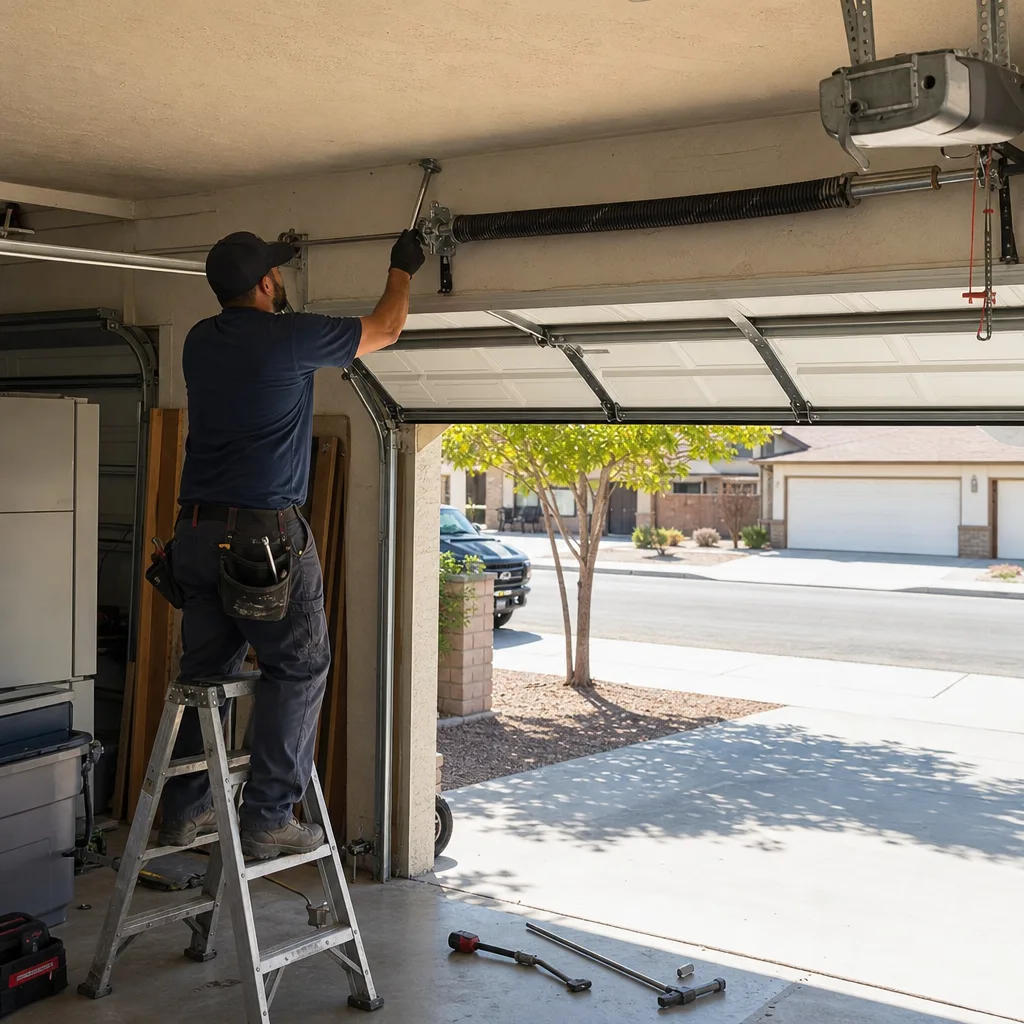
Last updated November 2, 2026
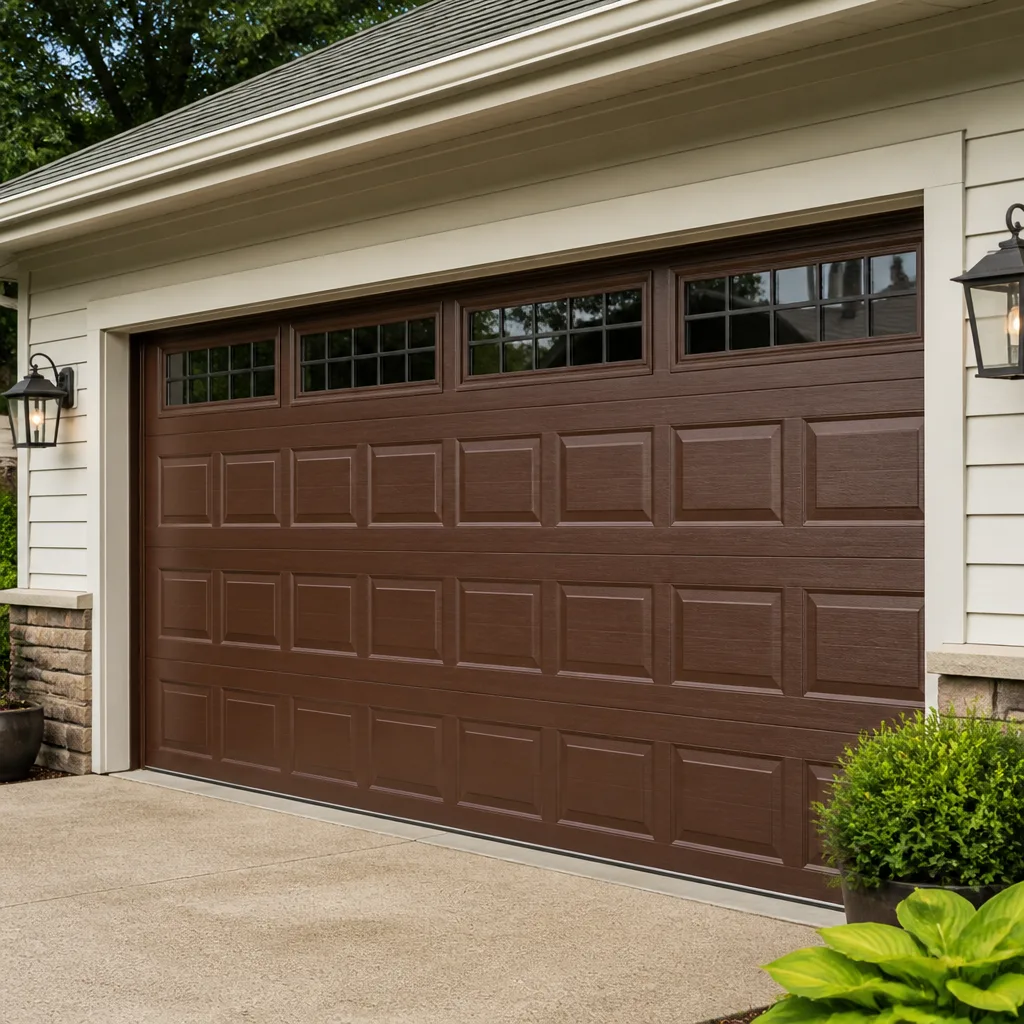 Raised-panel steel
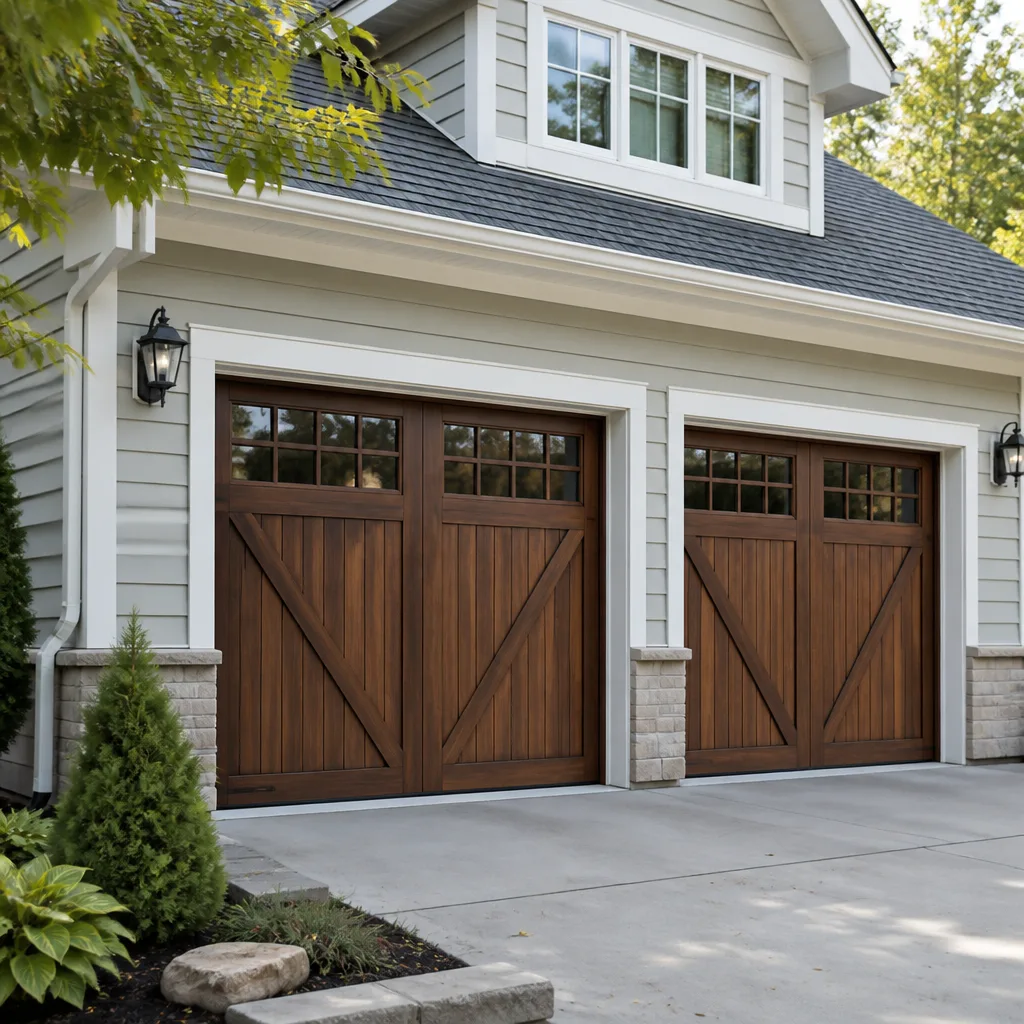 Carriage house
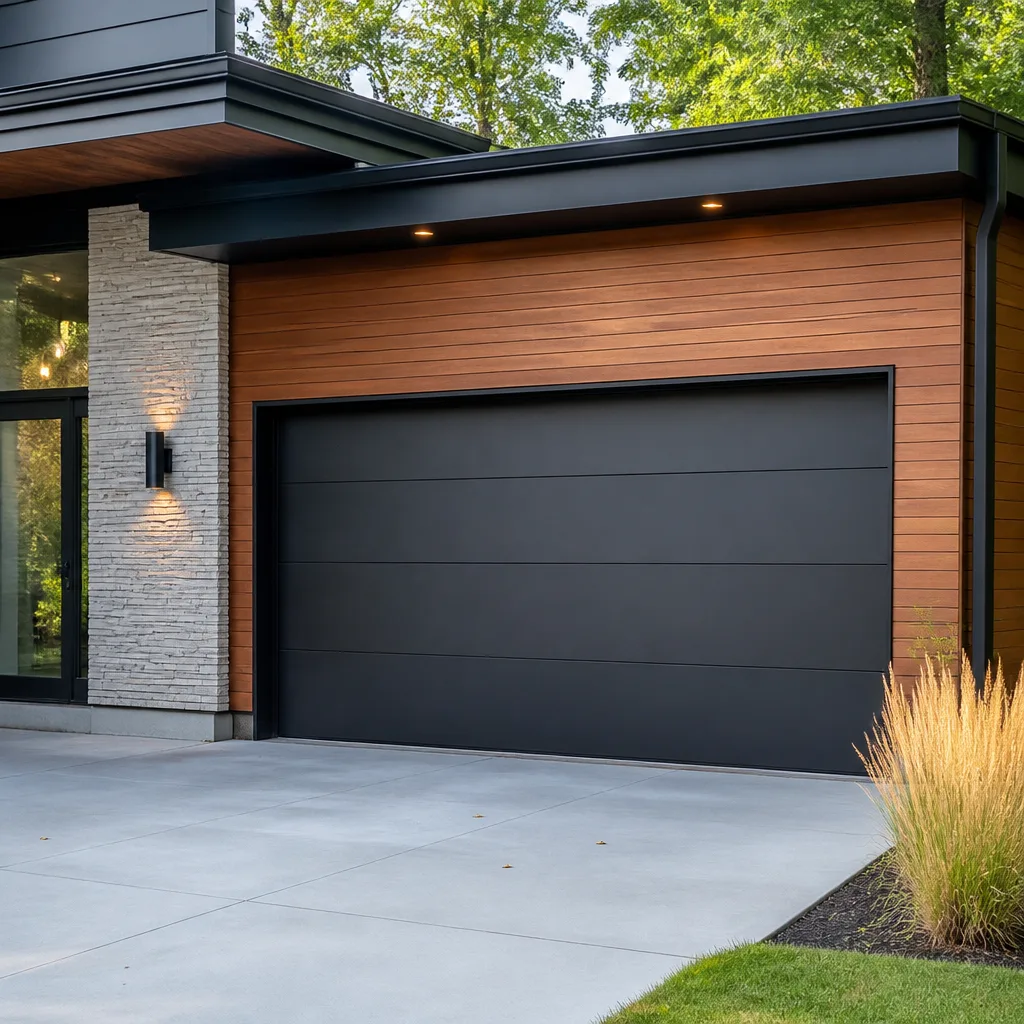 Modern flush
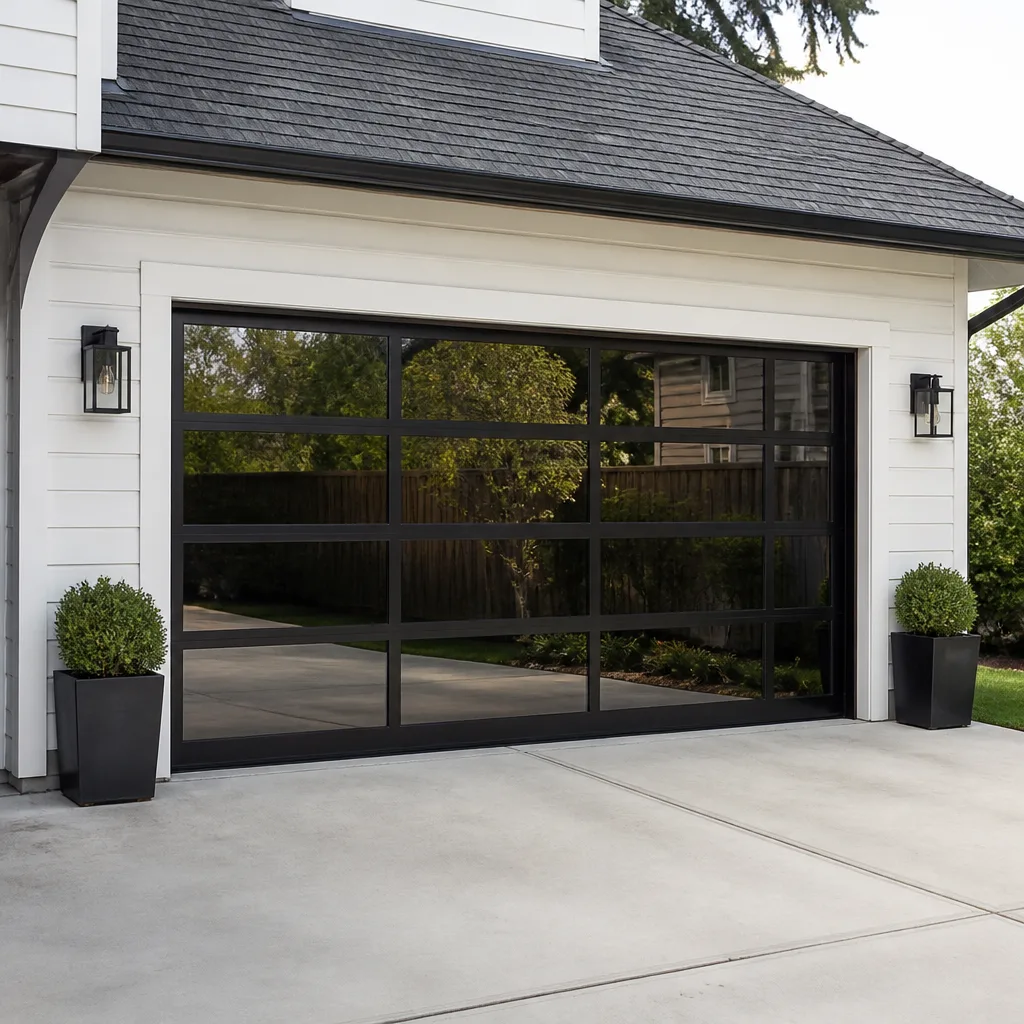 Full-view glass
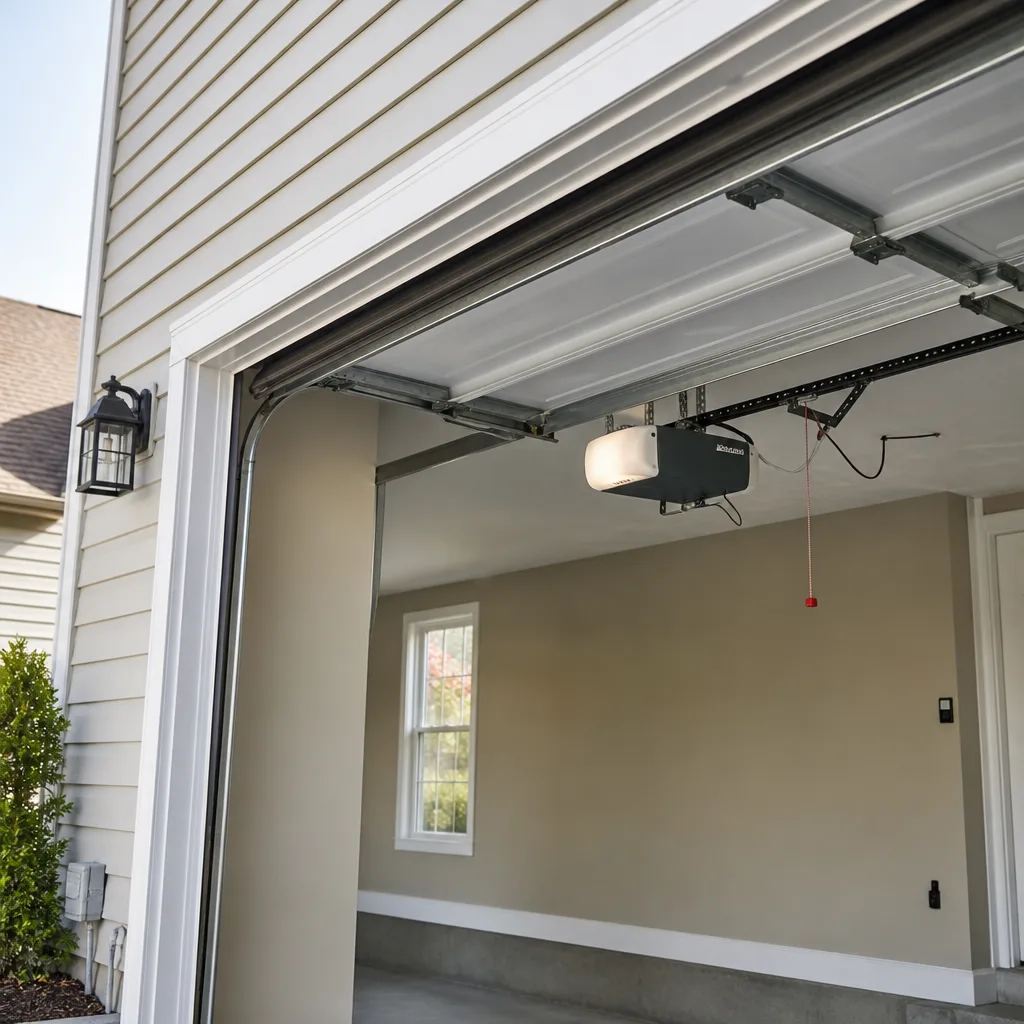 LiftMaster openers
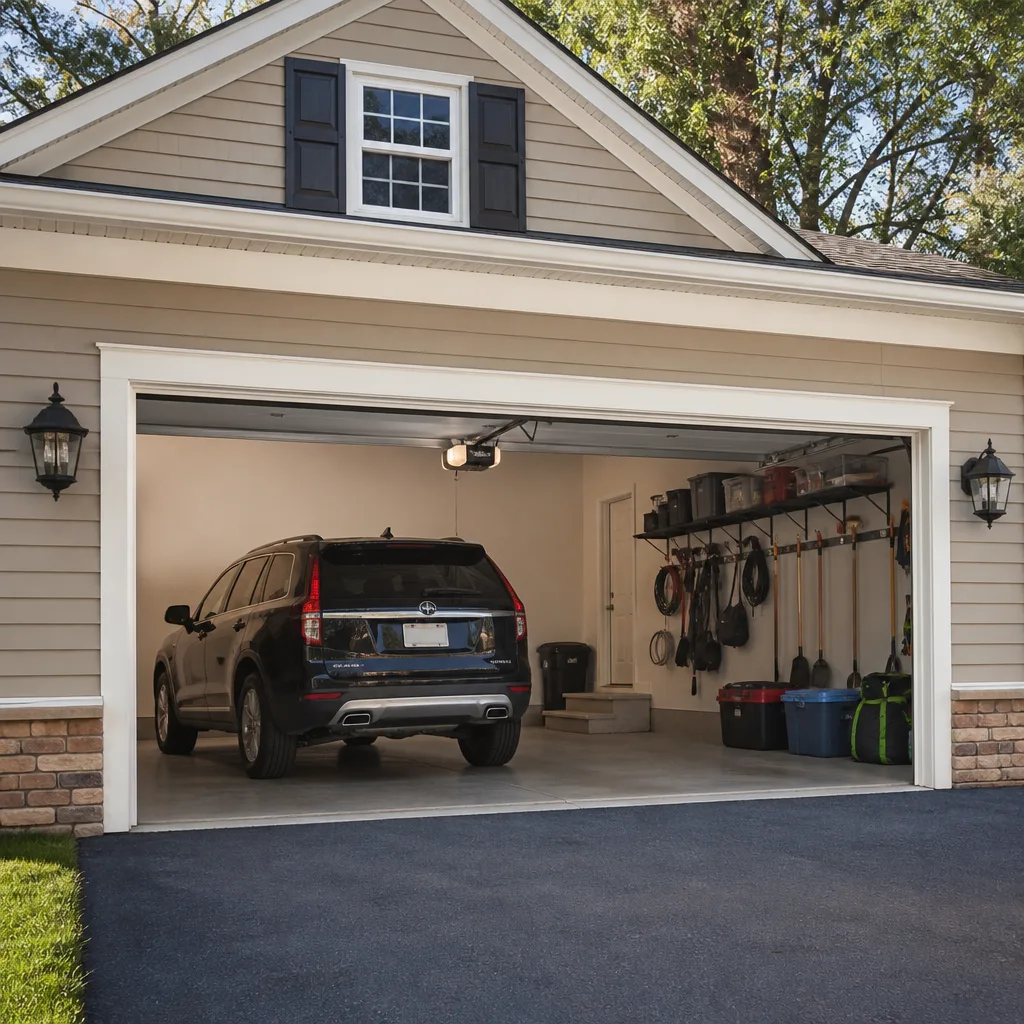 Chamberlain openers
Full 25-point door and opener safety check with every visit - springs, cables, rollers, tracks, and your LiftMaster or Chamberlain opener included
You get a price before we start. It does not change when the truck arrives.
Get your free estimateGarage Door Permits, Codes & Inspections in CA: What You Need to Know
Most California homeowners assume a garage door replacement is a permit-free swap: unbolt the old door, hang the new one, done. That assumption was safer a decade ago. California’s 2022 Energy Code (Title 24, Part 6) changed the calculus, and in San Bernardino County, a like-for-like replacement now triggers a building permit more often than it used to. Homeowners in Apple Valley find this out at inconvenient moments: during a listing inspection, in an escrow demand, or when a county inspector flags the door during an unrelated remodel. This guide explains exactly when a permit applies, what the code requires for our climate zone, what inspectors check, and how unpermitted garage door work becomes a title problem at resale. For Garage Door Warning Signs: An Apple Valley Homeowner’s Reference Guide, see our companion post.
Quick Answer
A garage door permit in California is required when a replacement alters the door’s structural or energy performance, and under Title 24’s 2022 update, most full door replacements in Apple Valley (Climate Zone 14) now trigger a permit because insulation and air-sealing requirements apply. A straightforward panel repair, spring replacement, or opener swap with no door replacement generally does not require a permit. In San Bernardino County, the threshold is whether the work changes the building envelope or structural connections, not whether it “looks the same” as the old door.
Styles & brands we work with
- Raised-panel steel
- Carriage house
- Modern flush
- Full-view glass
- LiftMaster openers
- Chamberlain openers
Table of Contents
- When a Garage Door Permit Is Required in San Bernardino County
- Title 24 Energy Compliance for Garage Doors in Climate Zone 14
- What a San Bernardino County Inspector Actually Checks
- How Unpermitted Garage Door Work Gets Flagged at Resale
- HOA Overlay: How Apple Valley CC&Rs Interact with County Code
- What a Garage Door Permit Costs in San Bernardino County
- Common Mistakes to Avoid
- When to Call a Professional
- Frequently Asked Questions
When a Garage Door Permit Is Required in San Bernardino County
The shortest honest answer: a building permit is required when the work changes the building envelope, structural condition, or fire rating of the garage. Replacing a garage door outright, even with an identical-looking model, falls under San Bernardino County’s building permit requirements because the door is a component of the building envelope, and the county enforces California Building Code (CBC) Section 105.1, which mandates permits for “any change or addition to the building envelope.”
The exemption most homeowners assume applies is spelled out in CBC Section 105.2, which lists work exempt from permit requirements. The key carveout for garage doors is arguably the “minor repairs” language: repairs that do not affect the structural integrity, egress, or energy performance of the building. That means:
- Replacing a broken spring, cable, roller, or hinge: No permit. This is mechanical repair, not envelope alteration.
- Replacing the opener motor or wall control: No permit. This is appliance replacement, not building envelope work.
- Replacing individual door panels on an existing door: Generally no permit, provided the frame, track, and rough opening are untouched.
- Replacing the entire door assembly, including track and frame: Permit required. This is an envelope alteration, and in Climate Zone 14 the new assembly must meet current Title 24 insulation and air-sealing standards.
We’ve handled doors in Apple Valley neighborhoods like Sycamore Rocks and Jess Ranch where a homeowner bought a replacement door online, scheduled a handyman to install it, and only discovered the permit requirement when the county flagged the work during a separate inspection. The distinction matters practically: if the frame stays and you’re only swapping hardware or panels, you’re likely in exempt territory. If the door, track, and weatherstripping all come out, you’re looking at a permit. For a full maintenance schedule that can help you avoid surprise replacements, see our Garage Door Repair Maintenance Checklist for Apple Valley Homeowners.
Title 24 Energy Compliance for Garage Doors in Climate Zone 14
California’s 2022 Energy Code assigns Apple Valley and the broader High Desert region to Climate Zone 14, a designation that shapes the insulation requirements for any new or replacement garage door. The code’s mandatory measures for residential garages include minimum R-value requirements for doors that separate conditioned space from unconditioned space. For attached garages, the door is considered part of the building envelope, and Title 24 Section 150.1(c) sets prescriptive insulation levels based on climate zone.
In Climate Zone 14, a replacement garage door on an attached garage must meet a minimum insulation requirement. The exact R-value depends on whether the garage is conditioned space (heated or cooled) or unconditioned. Most Apple Valley garages are unconditioned, which means the prescriptive minimum is lower, but not zero. Doors manufactured by major brands like Clopay, Amarr, and Wayne Dalton are available with factory-installed polystyrene or polyurethane insulation in R-values ranging from R-6.5 to R-18.4, and the manufacturer’s documentation matters for the inspection.
What this means practically:
- If your attached garage has a door without insulation, and you replace it with a non-insulated steel door, you may fail plan review before installation even begins.
- If your garage is detached, Title 24 requirements are substantially lighter, because a detached garage is not part of the conditioned building envelope.
- The code also addresses air leakage: the weatherstripping on the bottom and sides of the door is a component of the building’s air barrier, and a failing seal is a compliance problem.
We’ve seen homeowners buy a garage door from a big-box store that was manufactured for a different climate zone and then discover at inspection that the door’s insulation does not meet Climate Zone 14 prescriptive requirements. The door gets red-tagged, and the homeowner is stuck with a door that can’t legally be installed. This is one reason a brand-neutral installer familiar with California code is worth the consultation on the front end. Our Garage Door Installation in Apple Valley page covers the process in more detail.
What a San Bernardino County Inspector Actually Checks
The inspection for a permitted garage door replacement in San Bernardino County is not a formality. Inspectors look at specific, code-driven elements, and three failure points account for the overwhelming majority of red tags we’ve seen:
- Insulation documentation. The inspector will ask for the manufacturer’s spec sheet or insulation certificate for the installed door. If the R-value does not meet the Climate Zone 14 requirement stated in the permit application, the inspection fails. This is the single most common failure point.
- Weatherstripping and air-sealing. The bottom seal must make even contact with the slab, and the side and top weatherstripping must be continuous, with no visible daylight. A warped slab or uneven threshold that leaves a gap larger than roughly 1/8 inch will fail the inspection.
- Safety sensor function. If the opener was replaced alongside the door, the inspector will verify that the photoelectric sensors (the “eyes” at the bottom of the track) reverse the door when the beam is interrupted. Missing, misaligned, or bypassed sensors are an automatic fail.
Inspectors will also check that the door’s manual release mechanism works, that the track brackets are securely fastened to the framing, and that no combustible material is stored against the door’s interior face. The inspection typically takes 15 to 20 minutes. If the door fails, the re-inspection carries an additional fee, and the permit remains open until the fix is verified. In our experience, homes in Apple Valley with settled slabs, common in areas with expansive clay soil, are particularly prone to bottom-seal failures at inspection. A door that seals fine on one side may gap on the other if the slab has shifted since the original pour.
How Unpermitted Garage Door Work Gets Flagged at Resale
Unpermitted garage door work surfaces at resale with predictable regularity. The sequence runs like this: the seller lists the home. The buyer’s home inspector notes the garage door looks newer than the rest of the home, and checks the county permit database. No record of a permit. The appraiser may flag the same issue. The buyer’s lender, particularly for FHA or VA loans, can make the permit a condition of loan approval. And in California, the standard residential purchase agreement requires the seller to disclose all unpermitted work, which creates a legal exposure the seller can’t easily disclaim.
The remediation cost for unpermitted garage door work is almost always higher than pulling the permit upfront. Here is what “fixing” an unpermitted door typically involves in San Bernardino County:
- Plan review after the fact: The county will review the installed door’s specifications against current code. If it fails, the door comes out.
- Inspection fee plus penalty: San Bernardino County charges a fee for each inspection, and permit-after-the-fact cases often incur a penalty multiplier on the permit fee.
- Potential door replacement: If the installed door does not meet Title 24 insulation requirements, the homeowner faces the full cost of a new, code-compliant door, plus reinstallation.
- Time pressure: Escrow timelines are tight. The entire remediation must complete before closing, which means paying expedited fees or losing the deal.
In Apple Valley, we’ve seen clients pull a permit for a door replacement that cost $70 in permit fees and one afternoon of inspection scheduling, versus neighbors who skipped the permit and faced a $400 to $800 remediation at resale, not counting the value of lost negotiation leverage. The math rarely favors skipping the permit.
HOA Overlay: How Apple Valley CC&Rs Interact with County Code
Nearly a third of Apple Valley’s residential communities operate under a homeowners association, and the HOA’s architectural guidelines layer on top of county permit requirements. The two regimes serve different masters: the county cares about safety and energy compliance, while the HOA cares about appearance, color, material, and uniformity.
The order of operations matters. In Apple Valley, the HOA approval should come first, before the county permit application, because the HOA’s architectural review committee may require changes (a specific door color, a particular panel style, or a window configuration) that alter what you submit to the county. If you pull a county permit for a flush-panel steel door and then the HOA rejects the style in favor of a raised-panel carriage design, you’re amending the permit or re-submitting plans.
The practical sequence we recommend for Apple Valley homeowners in HOA-governed communities:
- Read the CC&Rs: specifically the architectural guidelines section, which governs garage door appearance.
- Submit to the HOA’s architectural review committee with the door manufacturer’s catalog page (brands like Amarr and Wayne Dalton publish style guides that HOAs accept).
- Once HOA approval is in writing, submit the county permit application with the approved door specifications.
- Schedule the installation after both approvals are secured.
The HOA does not enforce county code, and the county does not enforce HOA rules. Both approvals are independent, and neither substitutes for the other. Skip either one and the problem surfaces later, either as an HOA violation notice or a permit flag.
What a Garage Door Permit Costs in San Bernardino County
The permit fee for a garage door replacement in San Bernardino County is modest relative to the cost of the door itself. The building permit fee is calculated based on the valuation of the work: the county’s current fee schedule sets minimum building permit fees, and a garage door replacement typically falls near the minimum. Expect a total cost in the $60 to $150 range for the permit fee, plus a separate inspection fee, which is often included in the permit total but may be itemized depending on the county’s current fee resolution.
Beyond the permit fee, the compliance costs break down like this:
- Code-compliant insulated door: An insulated steel door meeting Climate Zone 14 prescriptive requirements, from a brand like Clopay or Amarr, adds $150 to $400 over a non-insulated equivalent, depending on R-value and construction.
- Inspection scheduling availability: San Bernardino County inspection appointments are generally available within a reasonable window, but plan around your installation date. The inspection cannot occur until the work is complete.
- Potential re-inspection fee: If the first inspection fails, the re-inspection carries a separate charge, which varies by permit type.
For a frame of reference: a garage door replacement in Apple Valley, with a mid-range insulated steel door, a new opener, and a permit, typically lands in the $1,800 to $2,800 range all-in, depending on door brand, R-value, and opener features. The permit portion is a small fraction of that total, and it is the part that protects the resale value of the work.
Common Mistakes to Avoid
- Assuming “like-for-like” means no permit. The 2022 Energy Code removed the assumption that replacing an old door with a visually identical new one is automatically exempt. If the door assembly comes out, a permit usually applies in Apple Valley.
- Buying a door before checking the insulation spec. A non-insulated or low-R-value steel door may have been perfectly legal when the original door was installed 20 years ago. It may not meet Climate Zone 14 requirements today, and a big-box store won’t flag it for you.
- Skipping the HOA review. In an HOA-governed Apple Valley community, installing a door without architectural review can result in a notice to remove the door, even if the county permit was properly pulled.
- Using a handyman for a full door replacement. Door replacement requires a permit, and the permit requires a contractor licensed for the scope of work. A handyman without the proper license cannot pull the permit, which means the work is unpermitted by default.
- Leaving the bottom seal to chance. The inspector will check weatherstripping contact. A warped slab or an uneven threshold means the door fails inspection even if everything else is perfect.
- Ignoring the sensor requirement. If you’re replacing the opener at the same time, the photoelectric sensors must be mounted within 6 inches of the floor and must reverse the door on contact. Many homeowners and casual installers mount them too high.
- Disclosing nothing at resale. Unpermitted work that’s intentionally undisclosed can create legal liability that extends well beyond the cost of the permit. The California disclosure form is not optional.
When to Call a Professional
Garage door permit and inspection questions have a way of becoming expensive when handled through trial and error. For more guides & resources on navigating these requirements, explore our blog. Call a professional when your door replacement involves an attached garage in Apple Valley, because that’s when Title 24 compliance applies and the cost of a mistake is highest. Call when you’re in an HOA and need the architectural review sequenced with the county permit. And call when you’ve bought a door without checking the insulation spec, because the fastest way to know whether it’s installable is to have a code-familiar installer look at the manufacturer’s data sheet.
Brightwater Garage Door Repair offers free estimates in Apple Valley, and we’re certified to work on doors from LiftMaster, Chamberlain, Genie, Clopay, Amarr, Wayne Dalton, Craftsman, and Raynor, so we can speak to the compliance specs of the door you already own or the one you’re considering. Call (855) 473-2508.
Frequently Asked Questions
Yes, in most cases where the entire door assembly is replaced, a building permit is required in California, including in Apple Valley, because the door is part of the building envelope and the 2022 Energy Code imposes insulation requirements on replacement doors. Panel-only repairs, spring replacements, and opener swaps are generally exempt. Call (855) 473-2508 and we’ll help you determine which category your job falls into.
In Apple Valley, located in Climate Zone 14, the R-value required for a replacement garage door on an attached garage depends on whether the garage is conditioned space, but the prescriptive minimum for attached garages is met by insulated steel doors with R-values of R-6.5 and above, available from brands like Clopay, Amarr, and Wayne Dalton. Detached garages have lighter requirements. Call us for a free evaluation of your specific door.
If you install a garage door without a permit and later sell your house, the seller disclosure requirement obligates you to reveal the unpermitted work, and a buyer’s inspector or lender may require permit remediation before closing, which typically costs more than the original permit would have. Call (855) 473-2508 if you’re in this situation and need a code-compliant fix.
A garage door permit in San Bernardino County typically takes a few days to a week for plan review and approval, and the inspection is scheduled after the work is complete, so the full timeline from application to closed permit is usually two to three weeks depending on scheduling. We can handle the paperwork and coordinate the inspection as part of your installation.
Yes, if your Apple Valley community has an HOA with architectural guidelines, the HOA approval must be obtained before or alongside the county permit, and the two approvals are separate requirements that do not substitute for each other. We’re familiar with the CC&Rs in many local communities and can help with the order of operations.
You can technically install your own garage door, but skipping the permit is not allowed in San Bernardino County for most full door replacements, and the work will still be flagged at resale or during a future inspection. A DIY install that fails code inspection creates a liability that’s more expensive to fix than hiring a licensed installer upfront. Call (855) 473-2508 for a free estimate on a code-compliant installation.
The Bottom Line
The garage door permit process in California is not a bureaucratic technicality, and Apple Valley homeowners in Climate Zone 14 feel the 2022 Energy Code requirements more directly than most of the state. The path that protects your resale value and avoids red-tag surprises is straightforward: check HOA rules first, pull a county permit for full door replacements, buy a door with documented insulation values, and have the work inspected. The permit fee is a rounding error compared to the remediation cost of unpermitted work at escrow. If you’re weighing repair versus replacement, our Garage Door Repair in Apple Valley page explains when a fix makes more sense than a swap. If your opener is part of the upgrade, see our Garage Door Opener Repair in Apple Valley page. And for a full picture of what Brightwater does, start at our Brightwater Garage Door Repair home page.
Written by the team at Brightwater Garage Door Repair, serving Apple Valley since 2018.
See the difference
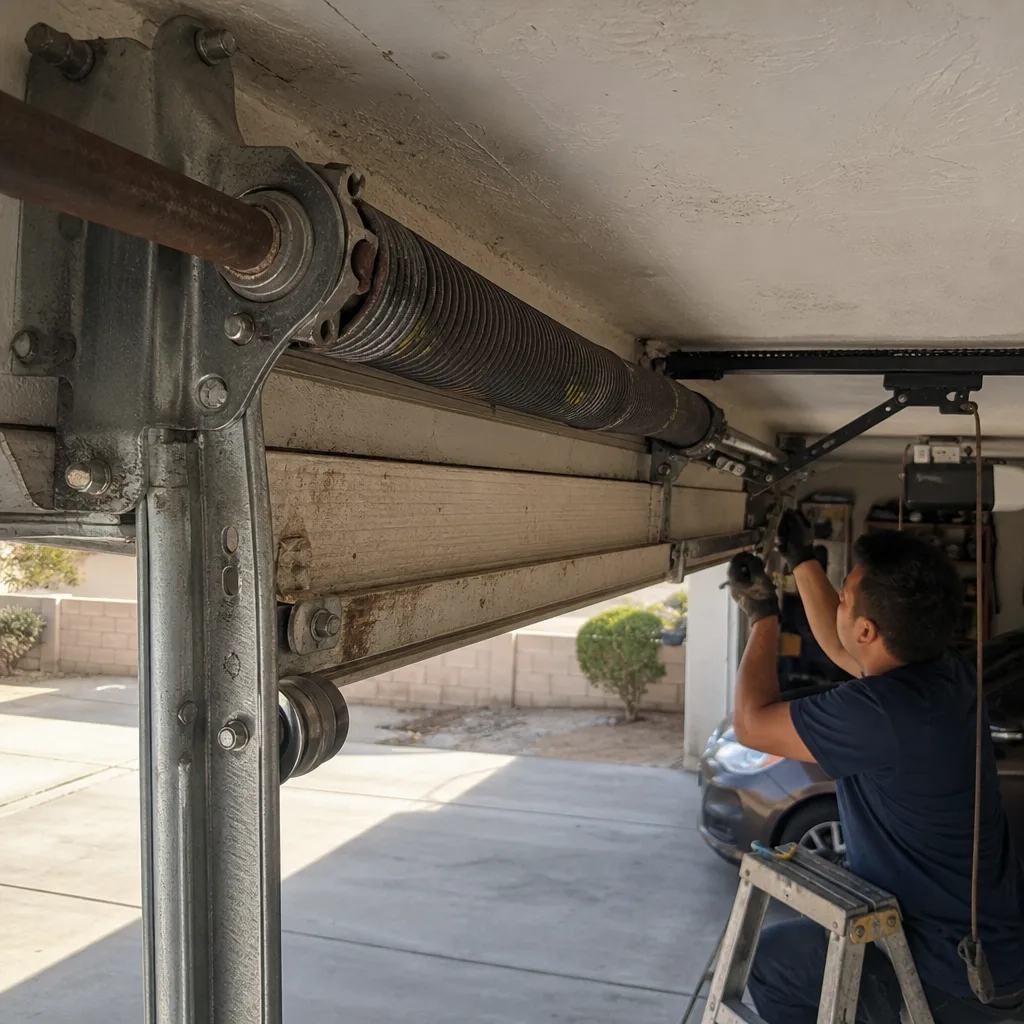 Before
 After
 Before
 After
 Before
 After