
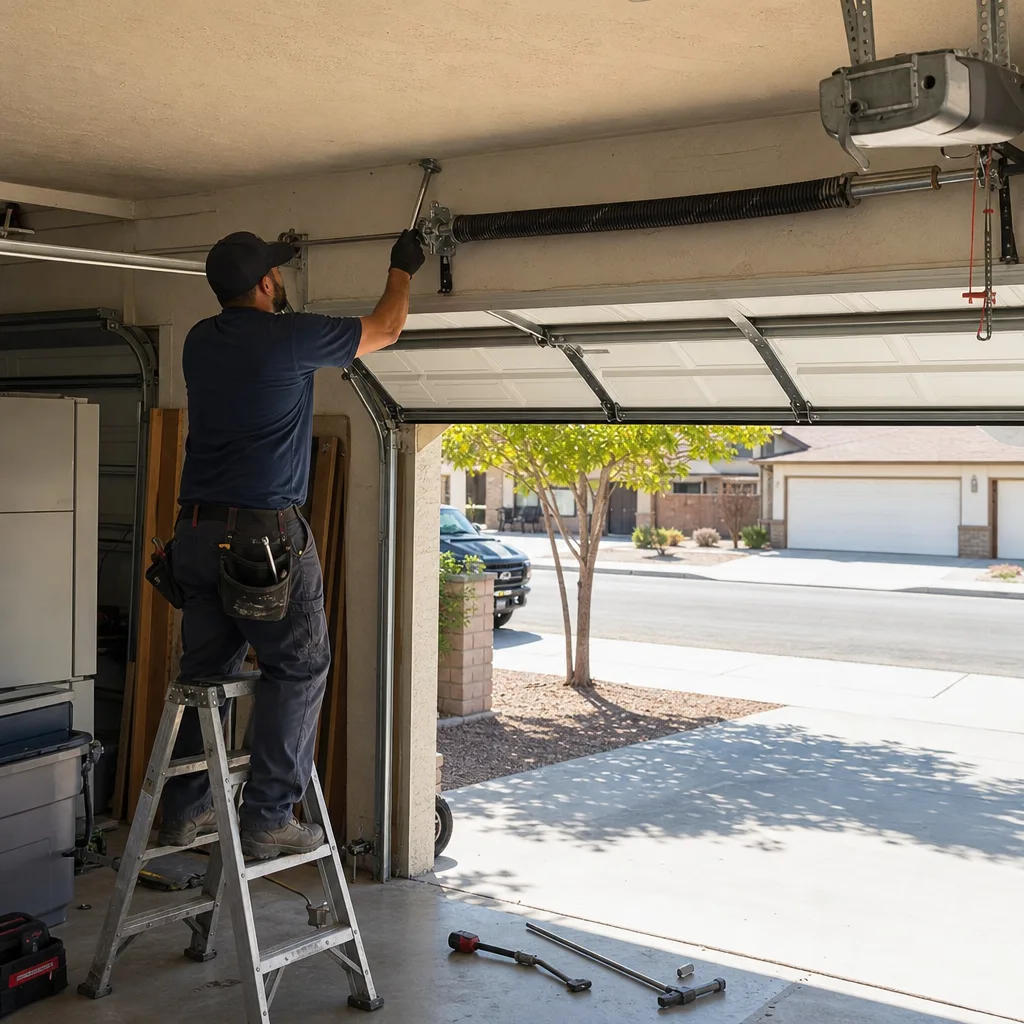
Last updated November 2, 2026
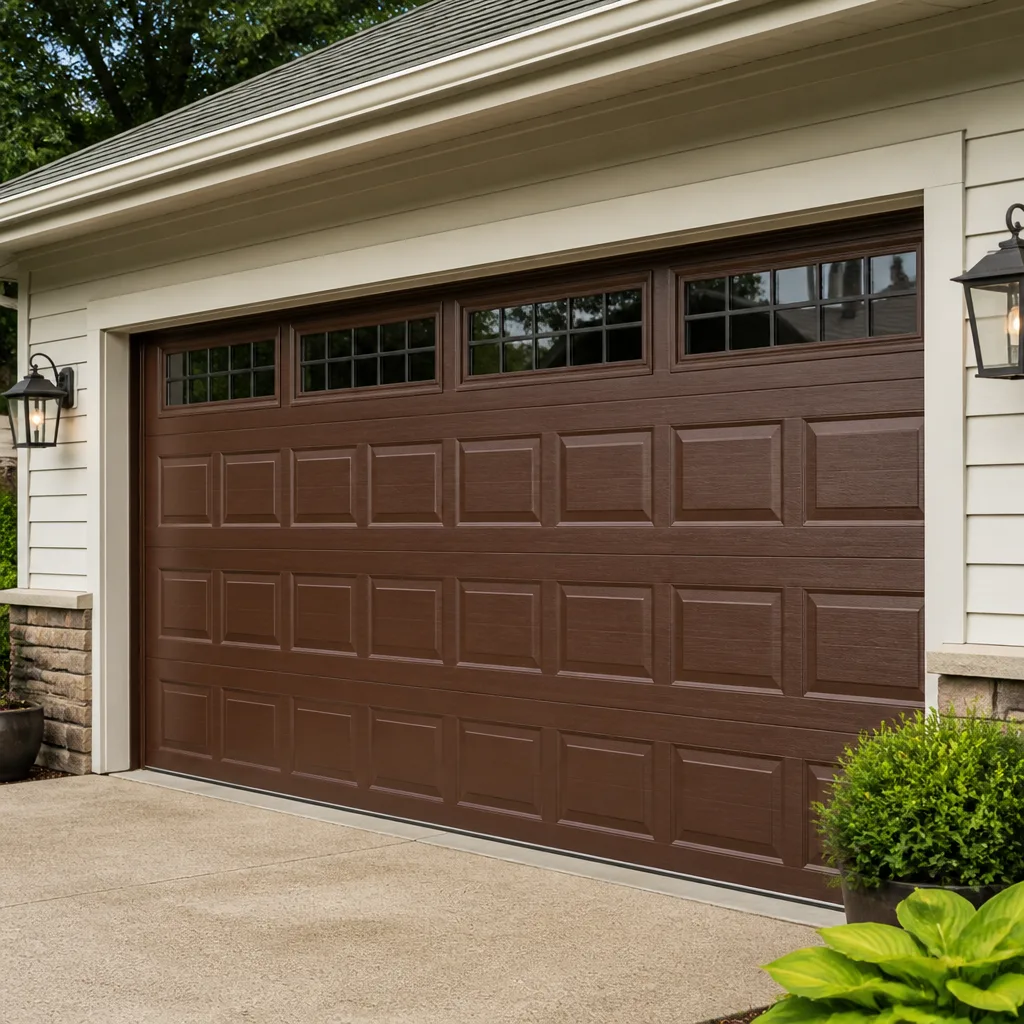 Raised-panel steel
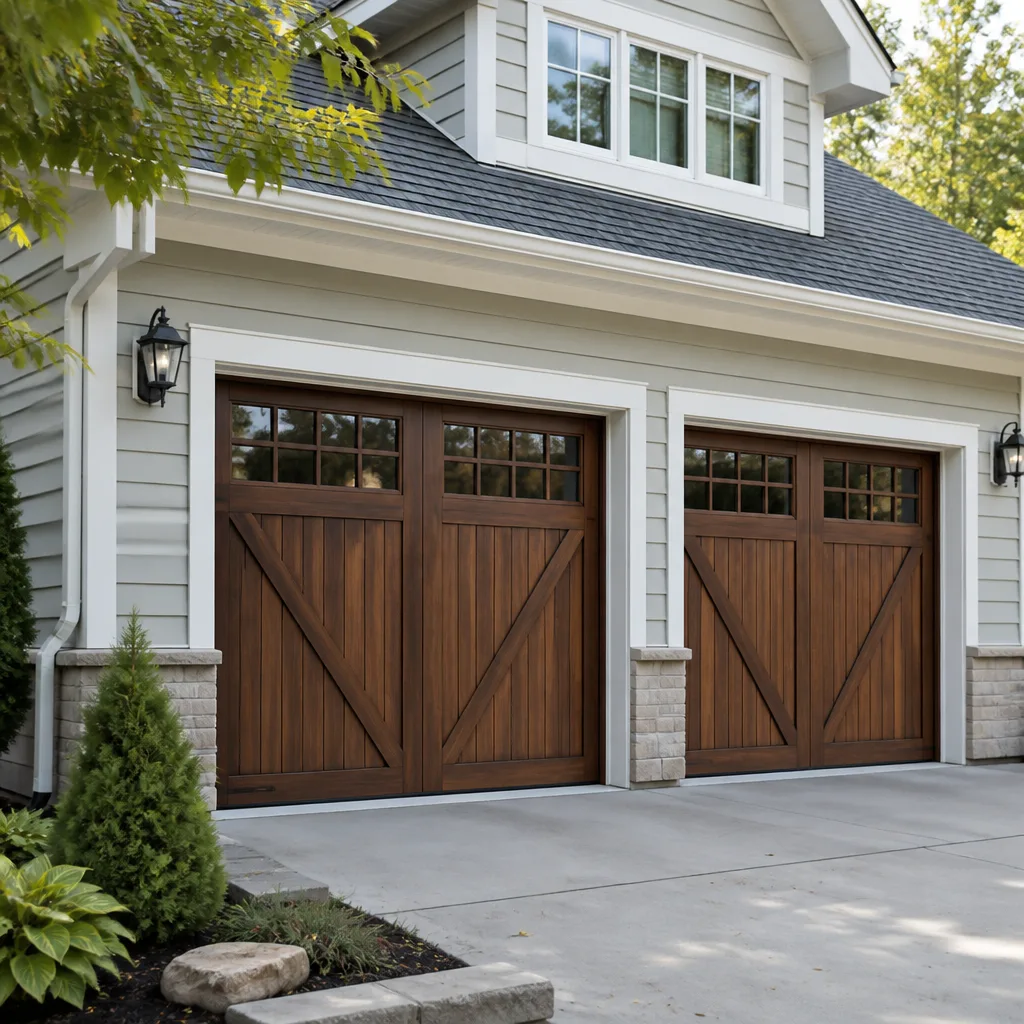 Carriage house
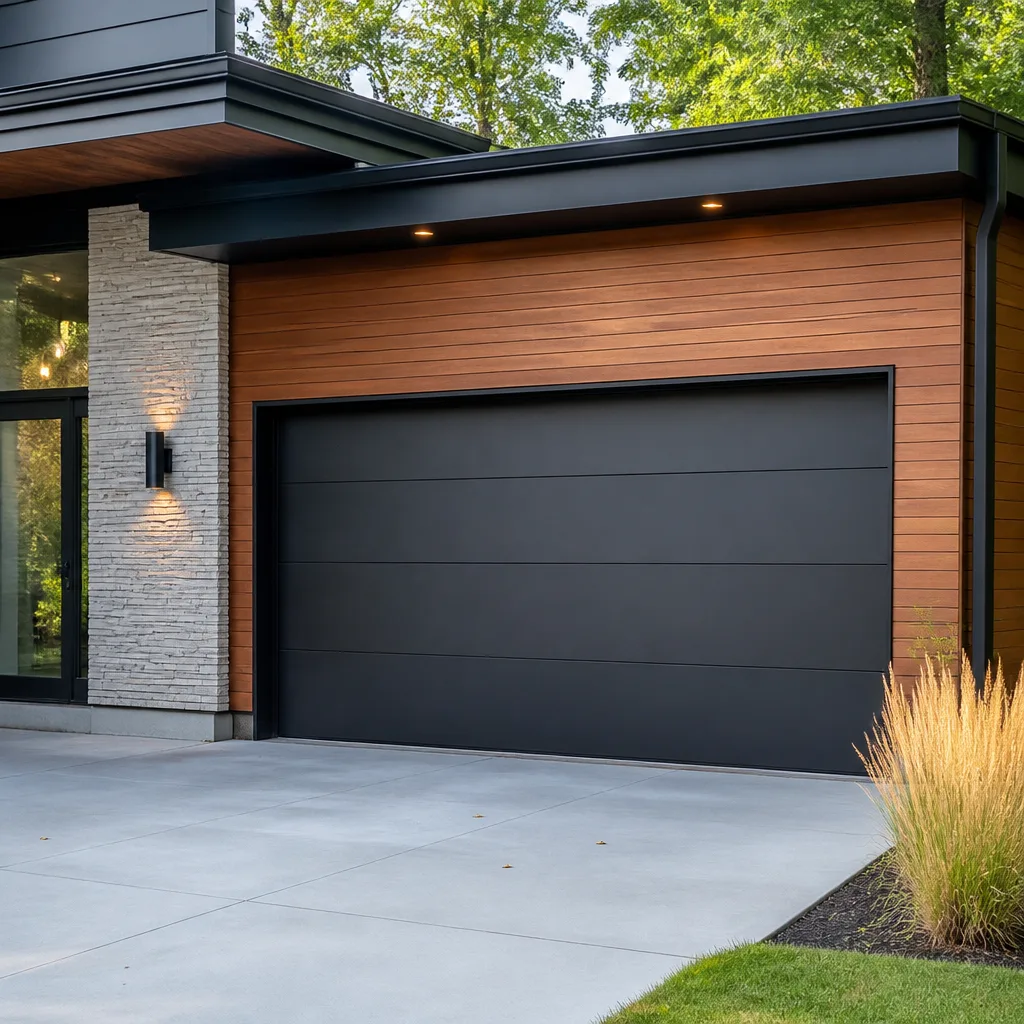 Modern flush
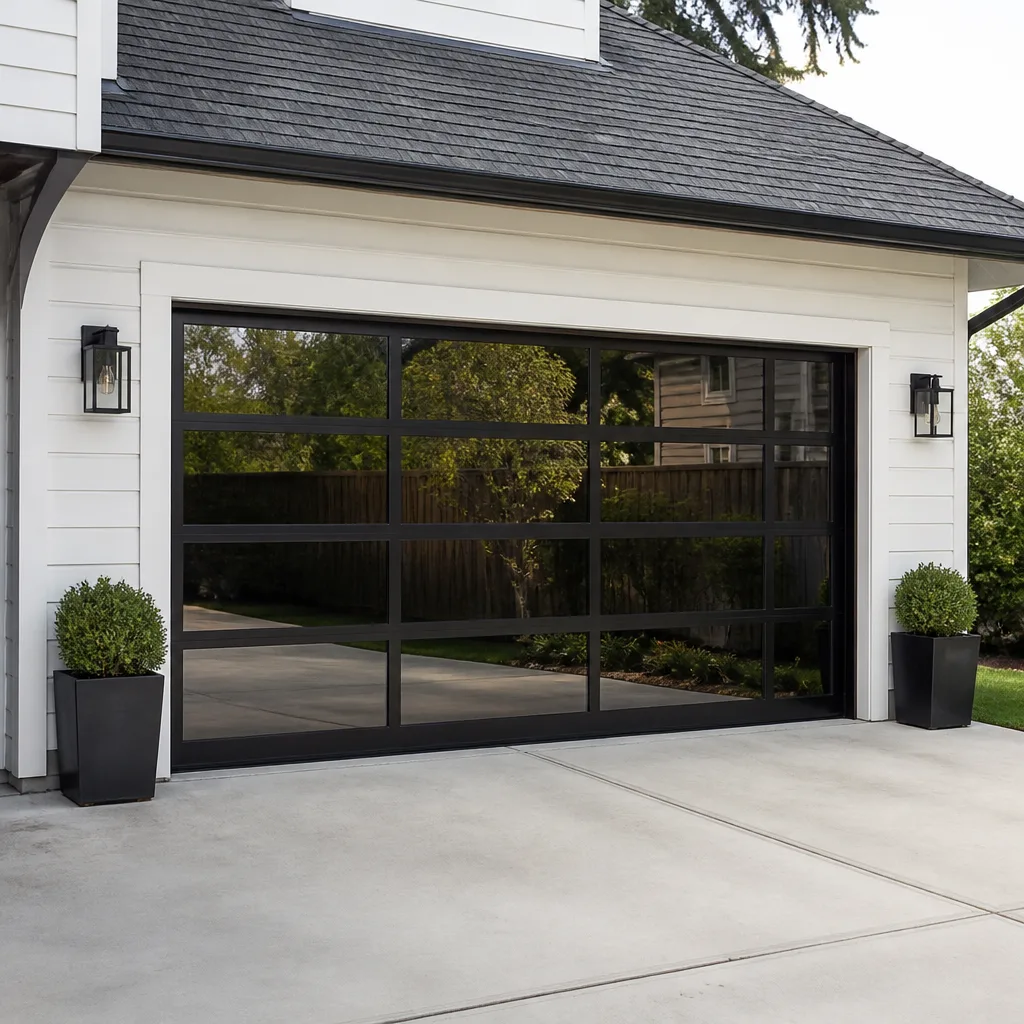 Full-view glass
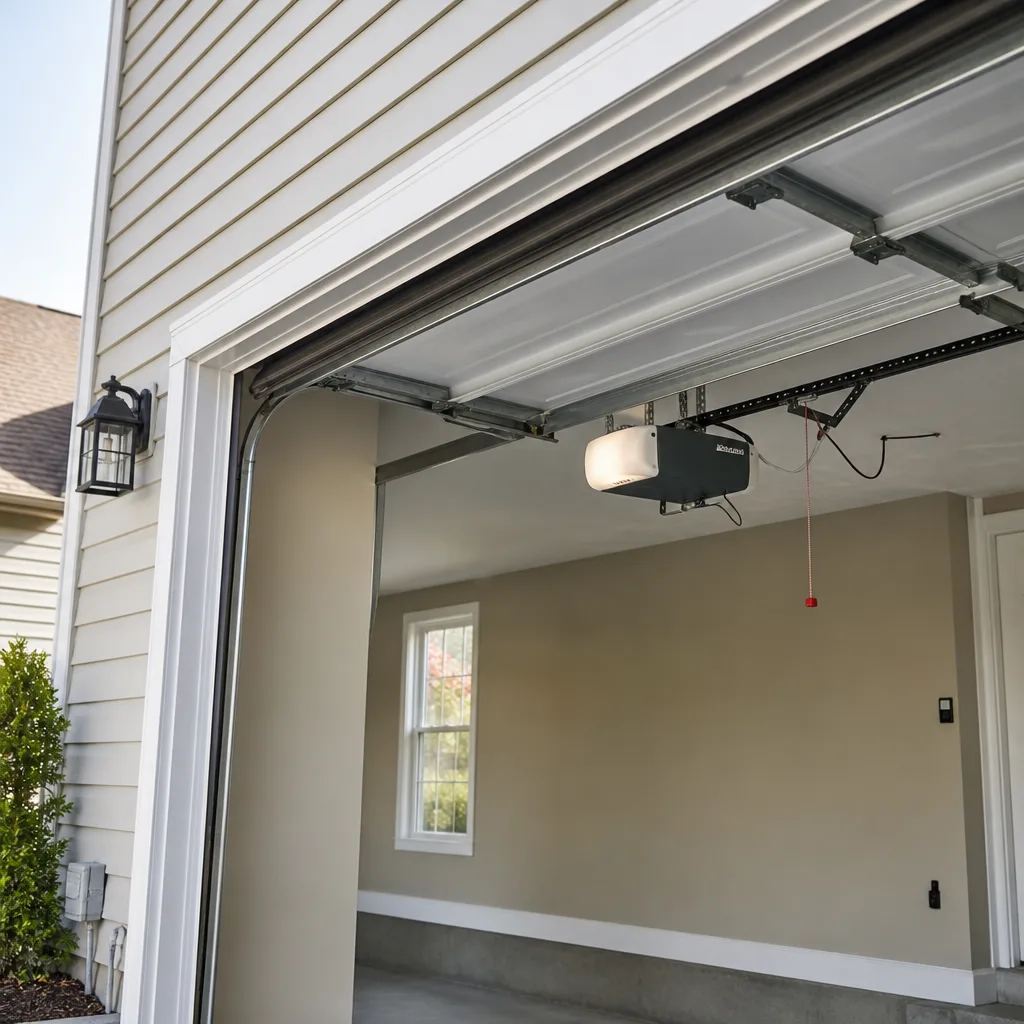 LiftMaster openers
 Chamberlain openers
Full 25-point door and opener safety check with every visit - springs, cables, rollers, tracks, and your LiftMaster or Chamberlain opener included
You get a price before we start. It does not change when the truck arrives.
Get your free estimateGarage Door Repair Maintenance Checklist for Apple Valley Homeowners
Most garage door maintenance guides read like they were written for someone living in Ohio. Follow one of those lists in Apple Valley and you’ll wonder why your torsion springs gave out a full year before their rated cycle count. Here’s what every other checklist misses: high desert heat pulls the factory grease out of your rollers and bearings, UV exposure at 3,000 feet of elevation cracks weatherstripping that would last a decade in a coastal climate, and the 30 to 40 degree temperature swing between a July afternoon and a July night forces metal components through expansion cycles that accelerate fatigue. We wrote this guide because we’ve worked on Apple Valley garage doors long enough to see the same failures repeat themselves, season after season. If you’re already noticing issues, our Garage Door Repair team can help before small problems become costly ones. This is the maintenance checklist we’d hand to our own neighbors, calibrated for what actually breaks here.
Key Takeaways
- Apple Valley’s high heat and intense UV require lubrication intervals roughly twice as frequent as coastal California recommendations.
- Weatherstripping should be inspected for UV cracking every three months during summer, not just when it starts letting light in.
- Three maintenance tasks are safe for most homeowners: lubrication, visual inspection, and weatherstripping replacement.
- Two tasks should always go to a trained technician: torsion spring adjustment and cable tension work.
- Seasonal timing matters: do the heavy maintenance in April and October, not July or January.
Styles & brands we work with
- Raised-panel steel
- Carriage house
- Modern flush
- Full-view glass
- LiftMaster openers
- Chamberlain openers
Quick Answer
A maintenance checklist for Apple Valley garage doors needs shorter lubrication intervals (every 3 to 4 months instead of 6), UV-focused weatherstripping inspections, and cable and drum checks timed to seasonal temperature shifts. Homeowners can safely handle lubrication, visual checks, and weatherstripping replacement, but spring tension and cable adjustment require a technician. Doing these tasks in April and October, before the extreme heat and cold, prevents most mid-season failures.
Table of Contents
- Why Apple Valley Is Harder on Garage Doors Than Most of California
- The April Pre-Heat Checklist
- Monthly Maintenance Tasks That Pay Off
- Lubrication in High Heat: What to Use and How Often
- Weatherstripping and the UV Factor Nobody Mentions
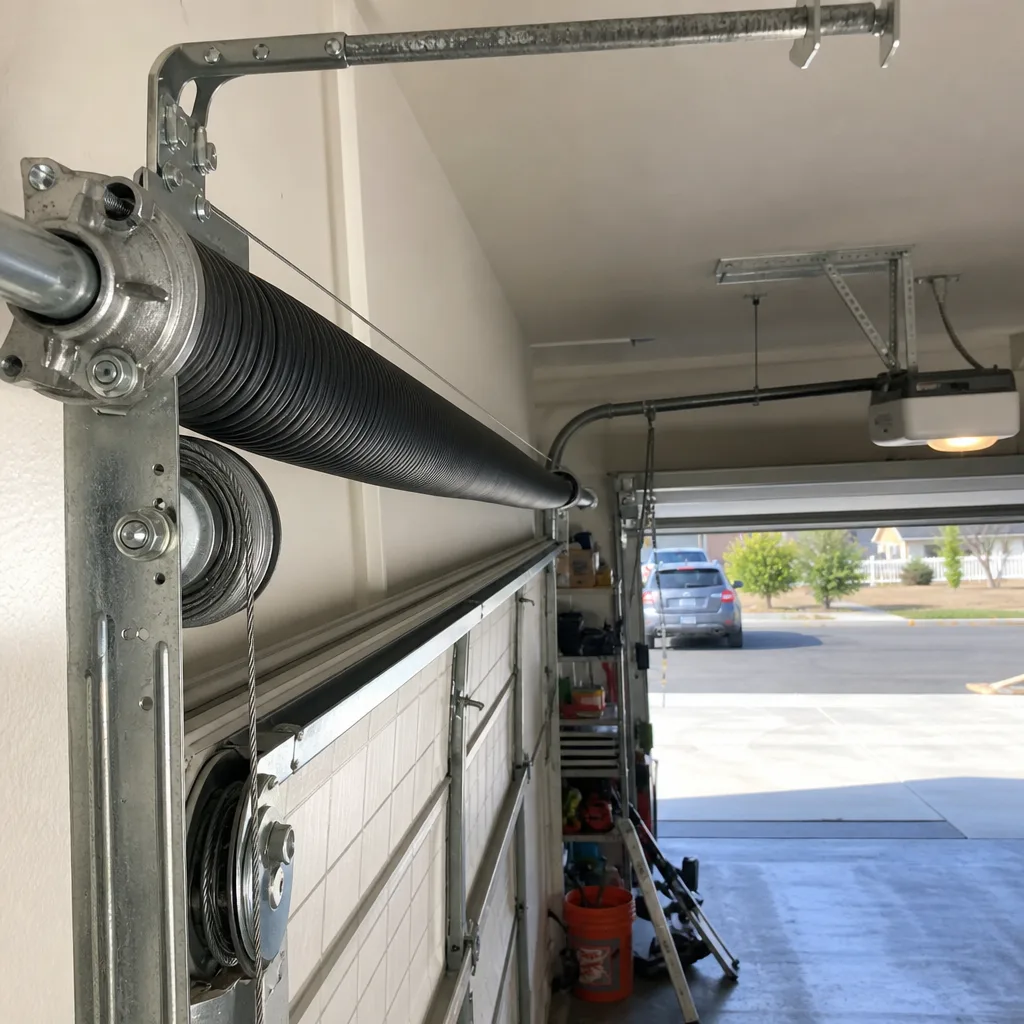
- Cable and Drum Inspection for Extreme Temperature Cycling
- The October Pre-Cold Checklist
- Three Tasks You Can Do Yourself, Two You Shouldn’t
- Common Mistakes to Avoid
- When to Call a Professional
- Frequently Asked Questions
- The Bottom Line
Why Apple Valley Is Harder on Garage Doors Than Most of California
Apple Valley sits at roughly 2,900 feet of elevation in the High Desert. That means dry air, intense unfiltered sun, and summer temperatures that routinely push past 100 degrees and swing dramatically once the sun drops. A garage door is just a big metal and polymer machine, and every one of those materials responds to those conditions in ways that shorten its working life unless you adjust your maintenance.
Specific to this climate: fine dust and sand gets into everything. The Victor Valley gets steady wind, and that wind carries grit that settles into roller tracks, hinge pins, and bearing surfaces. Copper-infused or lithium grease-based lubricants, the favorites in moderate climates, turn into grinding paste once the dust loads up in them. We have seen Genie screw-drive openers brought in after just five years of Apple Valley exposure that sounded like coffee grinders, all because the original grease had absorbed enough wind-borne grit to become sandpaper. This is not age, it is the environment.
The second factor is UV. At this elevation, ultraviolet radiation degrades rubber and vinyl compounds measurably faster than it does at sea level. Weatherstripping on an Apple Valley garage door that faces south or west, the side that catches the afternoon sun, can start cracking within 18 to 24 months of installation. In coastal cities, that same strip might last six or seven years. The failure mode is different, and so the inspection cycle has to be different.
The third factor is the thermal swing. Metal expands when it is hot and contracts when it cools. In Apple Valley, your torsion springs, cables, and drums go through that cycle every single day from roughly April through October. The daily contraction and expansion is cumulative, and it shows up in cable fatigue and spring failure earlier than the rated cycle counts would suggest. This is why we tell Apple Valley homeowners to think of their garage door the way they think of their car in this climate: it needs more frequent, specific attention, not generic once-a-year care. For a deeper look at what to watch for, see our Garage Door Warning Signs: An Apple Valley Homeowner’s Reference Guide.
The April Pre-Heat Checklist
The single most impactful thing you can do for your garage door in Apple Valley is to perform a focused maintenance pass in April, before the summer heat settles in. This is when you address everything that the coming heat will stress hardest. A garage door that gets its April checklist done will get through the summer with far fewer surprises.
- Clean the tracks with a dry rag. Do not apply grease to the tracks. The tracks on LiftMaster, Chamberlain, or Craftsman systems are designed to run dry; adding grease just gives the wind-blown dust something to stick to. Wipe them down, remove any visible grit, and leave them dry.
- Lubricate torsion springs with a silicone-based lubricant. In Apple Valley’s dry heat, petroleum-based lubricants break down and thin out, which means they run off the spring and leave it unprotected. A silicone lubricant holds up better and does not attract sand. More on this in the lubrication section below.
- Lubricate rollers and hinges. Most residential Apple Valley doors use either nylon rollers with sealed bearings or steel rollers. Nylon rollers with sealed bearings do not need oil on the bearing itself; lubricating the bearing area can actually break down the seal. Steel rollers need oil on the stem and pin. Check what you have before applying anything.
- Inspect weatherstripping for UV cracking. Run your fingers along the bottom seal and the perimeter strips. Any rubber that feels chalky, brittle, or shows visible cracks needs replacement before the summer sun finishes the job. Cracked weatherstripping lets dust in and forces your opener to work harder against the extra friction of a misaligned door.
- Test the auto-reverse safety feature. Place a roll of paper towels in the path of the door and close it. The door should reverse on contact. This is not optional; it is the one safety feature on your door that protects people and pets from serious injury.
- Check the door balance. Disconnect the opener using the red release handle, then manually lift the door to about waist height. It should stay put. If it drops, the springs are losing tension and need service. A door that is not balanced is the single biggest predictor of early opener motor failure.
Even in April, Apple Valley days can be warm, and your garage door has already begun its seasonal expansion cycle. Doing this checklist in the morning, when the door is closer to its overnight temperature, gives you a more accurate read on the balance and tension.
Monthly Maintenance Tasks That Pay Off
Not every maintenance task requires a full afternoon. There are a few things worth doing monthly in Apple Valley precisely because the environment is aggressive enough that small issues become expensive ones quickly. These are the tasks we recommend for every Apple Valley homeowner regardless of door brand.
- Listen during operation. The sound of your door tells you more than most people realize. A smooth, even hum is good. A grinding noise usually means dry rollers or bearings. A popping sound at the hinges can mean worn hinge pins. A high-pitched squeal near the top of the door often means dry springs. Catching these sounds early prevents small issues from becoming cracked parts.
- Watch for jerky movement. Your door should move smoothly through its entire travel path. If it hesitates, jumps, or moves unevenly, that is an early indicator of track misalignment or a failing roller. In Apple Valley’s dusty environment, debris buildup in the tracks can also cause jerky movement, so check for visible debris before assuming it is a bigger problem.
- Check opener force settings. On most LiftMaster and Chamberlain openers, there is a force adjustment dial or digital setting. If the opener is straining, it will typically reverse more easily or labor more obviously. If you notice the opener working harder than it did a month ago, that is a sign something in the mechanical system has changed, and it is worth investigating before the motor burns out.
- Visually scan cables and springs. From the ground, with the door closed, look at the extension or torsion spring assembly and the cables that travel up both sides. Look for frayed strands on cables, gaps in the coils of a torsion spring, or any rust-colored dust around the spring hardware. Rust-colored dust is a sign of metal fatigue, and in Apple Valley’s temperature swings, that fatigue accelerates quickly.
Lubrication in High Heat: What to Use and How Often
Here is the counterintuitive part of Apple Valley garage door maintenance: most people under-lubricate their doors because they follow advice written for moderate climates, but the real problem is that they also use the wrong lubricant. In high heat and low humidity, the lubricant itself fails before the parts get a chance to wear out on their own.
What we use and recommend for Apple Valley: a spray-on silicone lubricant, specifically designed for garage door hardware. Silicone does not thin out at 105 degrees the way traditional petroleum grease does, which means it stays on the spring, roller stem, and hinge pin where you put it. It also does not attract dust the way grease does. In the Victor Valley, dust attraction is a bigger problem than most people realize. A grease-coated spring in Apple Valley becomes a dust-coated spring within days, and dust-coated springs wear faster than dry springs because the grit acts as an abrasive inside the coil interface.
For the lubrication schedule: in Apple Valley, we recommend lubricating your torsion springs, hinge points, and roller stems every three to four months. That is roughly twice as often as the typical six-month recommendation for coastal California. The higher frequency compensates for the heat-driven evaporation and breakdown that happens faster in this climate.
The parts to lubricate and the parts to leave alone:
- Lubricate: torsion springs (spring-specific silicone spray), hinge pivot points (light silicone spray), steel roller stems and pins (light oil or silicone), and the lock mechanism (silicone spray or graphite).
- Leave alone: the tracks (keep them dry), nylon rollers with sealed bearings (the bearing is sealed; oil breaks the seal), and the opener rail on belt-drive units (most require no lubrication).
One specific brand note: on Genie screw-drive openers, the screw needs its own specific lubricant. Generic spray lubricants on a Genie screw can cause the carriage to bind, especially in high heat. If you own a Genie screw-drive opener in Apple Valley, use the manufacturer’s recommended screw lubricant, and do it every three months through the summer.
Weatherstripping and the UV Factor Nobody Mentions
In coastal Southern California, weatherstripping fails mostly because of mechanical wear, the door opening and closing thousands of times. In Apple Valley, weatherstripping fails because the sun destroys it. A bottom seal on a west-facing Apple Valley garage door can crack and split after a single summer of afternoon exposure. This does not happen in San Diego or Orange County at the same rate, which is why generic maintenance guides do not emphasize it.
So Apple Valley-specific inspection should look different. We recommend checking your weatherstripping every three months during the warm season: once in June, once in September, and again when you do your April and October full checklists. You are looking for specific failure indicators:
- Chalky residue on your fingers when you run them along the rubber. This is the first stage of UV deterioration, and it means the material is already breaking down at the surface level.
- Visible cracks at the fold points of the bottom seal or at the corners of the side and top strips. Cracks mean the seal is no longer sealing, and they will spread quickly once they start.
- Gaps between the door and the frame when the door is closed, visible as light coming in from outside. This means the stripping has lost its resilience and is no longer filling the gap.
- Brittleness. Weatherstripping should flex. If it bends like a dry twig, it is already compromised and needs replacement.
What happens when UV-degraded weatherstripping goes unreplaced? The door loses its seal, which lets dust and wind-borne sand into the garage. That dust settles into the tracks, the rollers, and the opener mechanism, accelerating wear on those components too. The door also becomes slightly misaligned because the compressed stripping was helping to hold it square, which puts more load on the springs and cables. An eight-dollar seal left too long becomes a two-hundred-dollar spring replacement issue.
Replacement weatherstripping is available for all major brands, including Clopay, Amarr, and Wayne Dalton doors, which are common in Apple Valley neighborhoods. If you are unsure of the profile, the old strip slides out and a matching one can be matched by the profile shape. This is a homeowner-friendly task for most people.
Cable and Drum Inspection for Extreme Temperature Cycling
The cables on your garage door are under constant high tension. They wrap around drums at the top of the door and carry the door’s weight as it travels up and down. In Apple Valley, those cables experience something they would not in a more stable climate: daily metal expansion and contraction from the temperature swing between hot days and cold nights. That repeated stress cycle is called thermal fatigue, and it shows up in specific ways if you know what to look for.
Inspection steps, done with the door closed and from ground level:
- Look for frayed strands. On the cable itself, any individual wires that have broken away from the main bundle mean the cable is starting to fail. One broken strand is not a problem yet. Ten is a warning. At that point, replacement is needed before the entire cable lets go.
- Check the cable tension. Both cables should look equally taut when the door is closed. A sagging cable on one side means the door is no longer balanced and the load is shifting, which puts uneven stress on the drums and the springs.
- Inspect the drums. The drums are the grooved wheels at the top of the door. Look for signs of wear in the grooves, such as shiny metal edges, visible scoring, or cable impressions dug into the drum. In Apple Valley’s temperature swings, drum wear, particularly on Wayne Dalton and Raynor doors we see in local service calls, can accelerate because the metal expands and contracts against the cable under load.
- Look for rust-colored dust around the cable drum and bearing plates. This fine powder is produced by metal-on-metal friction when the drum or bearing is wearing. It is an early warning sign that a component is working harder than it should.
Important: cable inspection is a visual task. Cable adjustment or replacement is not. The torsion spring and cable system is under tension that can cause serious injury if released incorrectly. At Brightwater Garage Door Repair, we treat springs and cables as technician-only work, and we recommend you do the same, regardless of your own skill level or confidence. If your cable inspection turns up anything concerning, call us at (855) 473-2508 and we will evaluate it in person.
See the difference
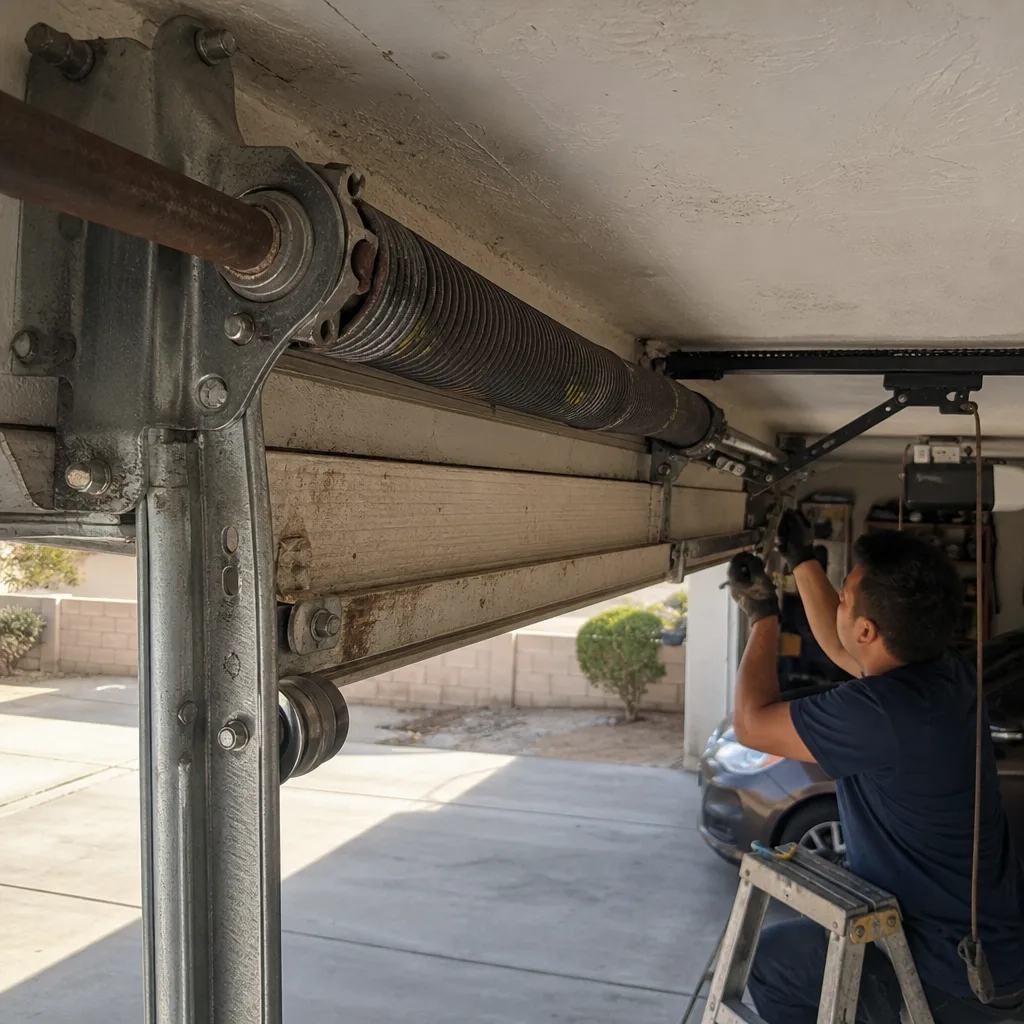 Before
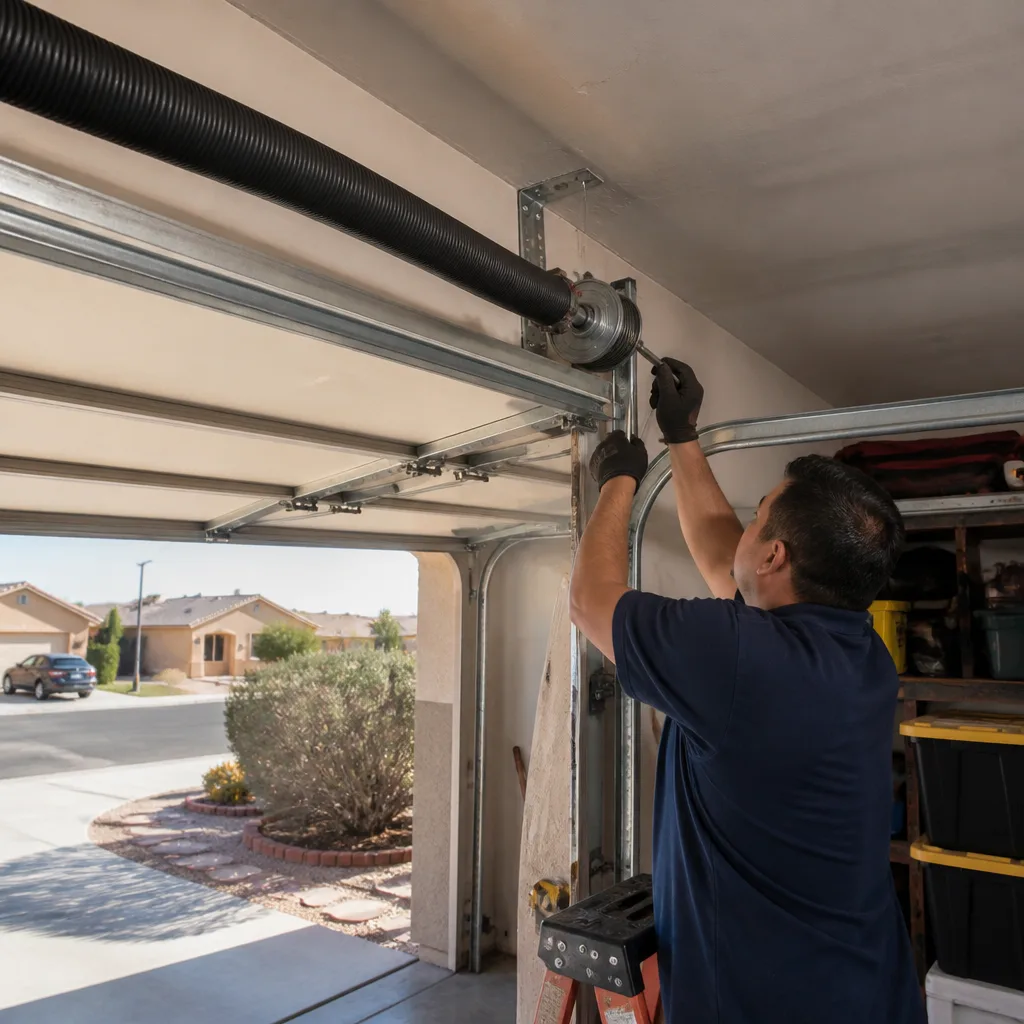 After
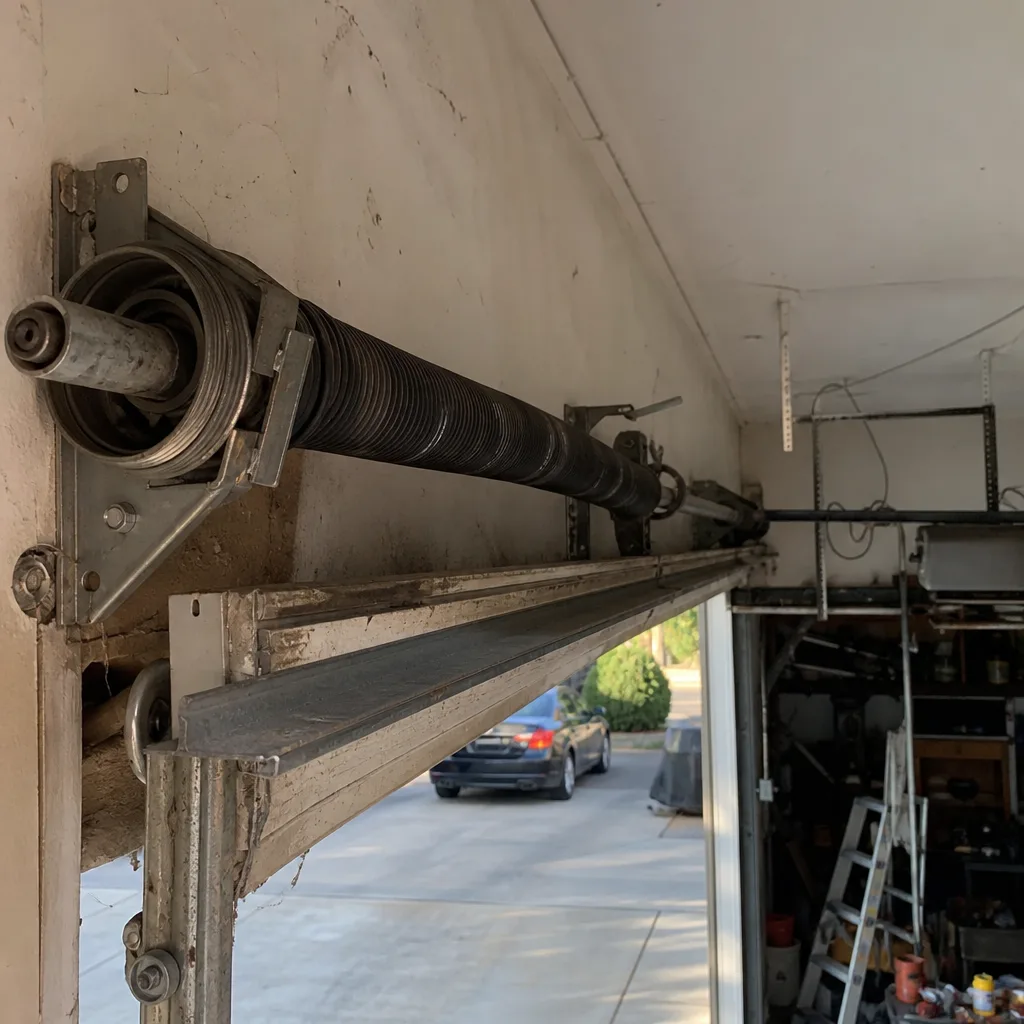 Before
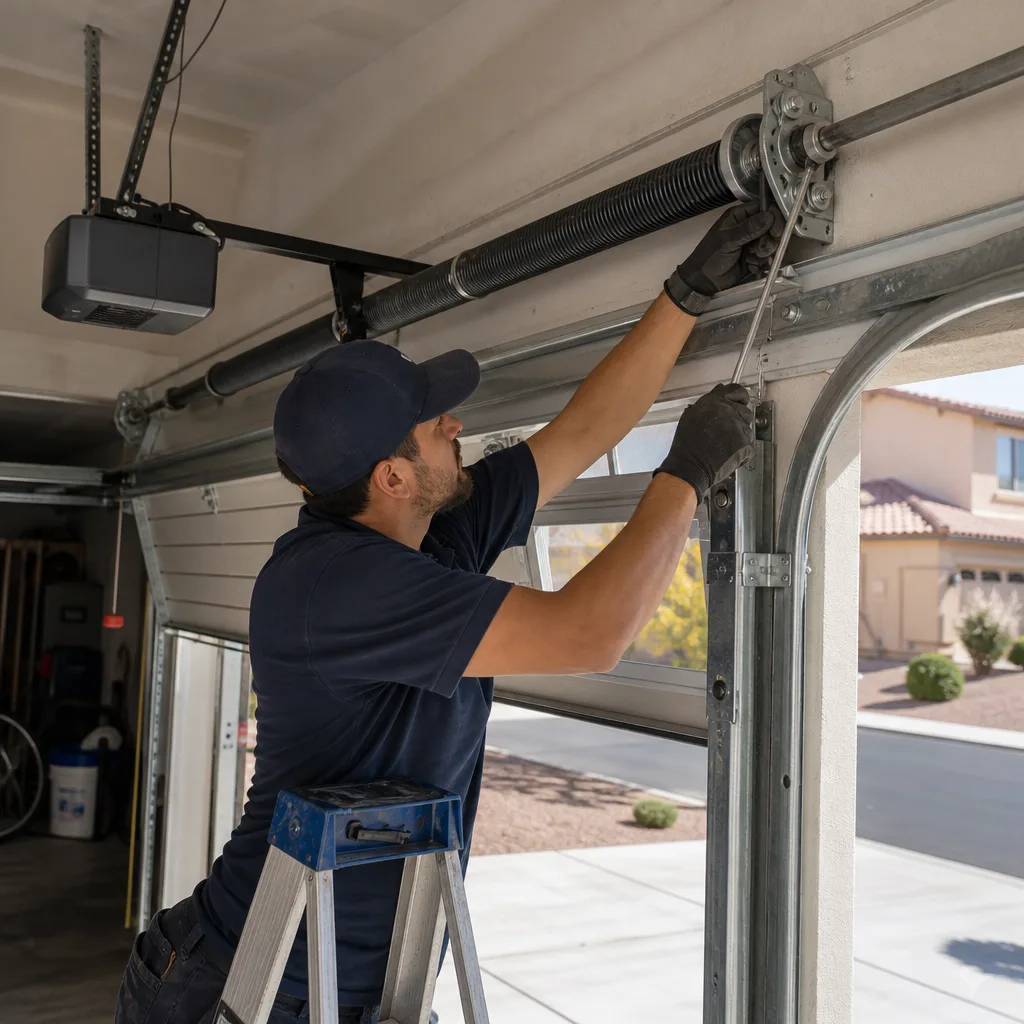 After
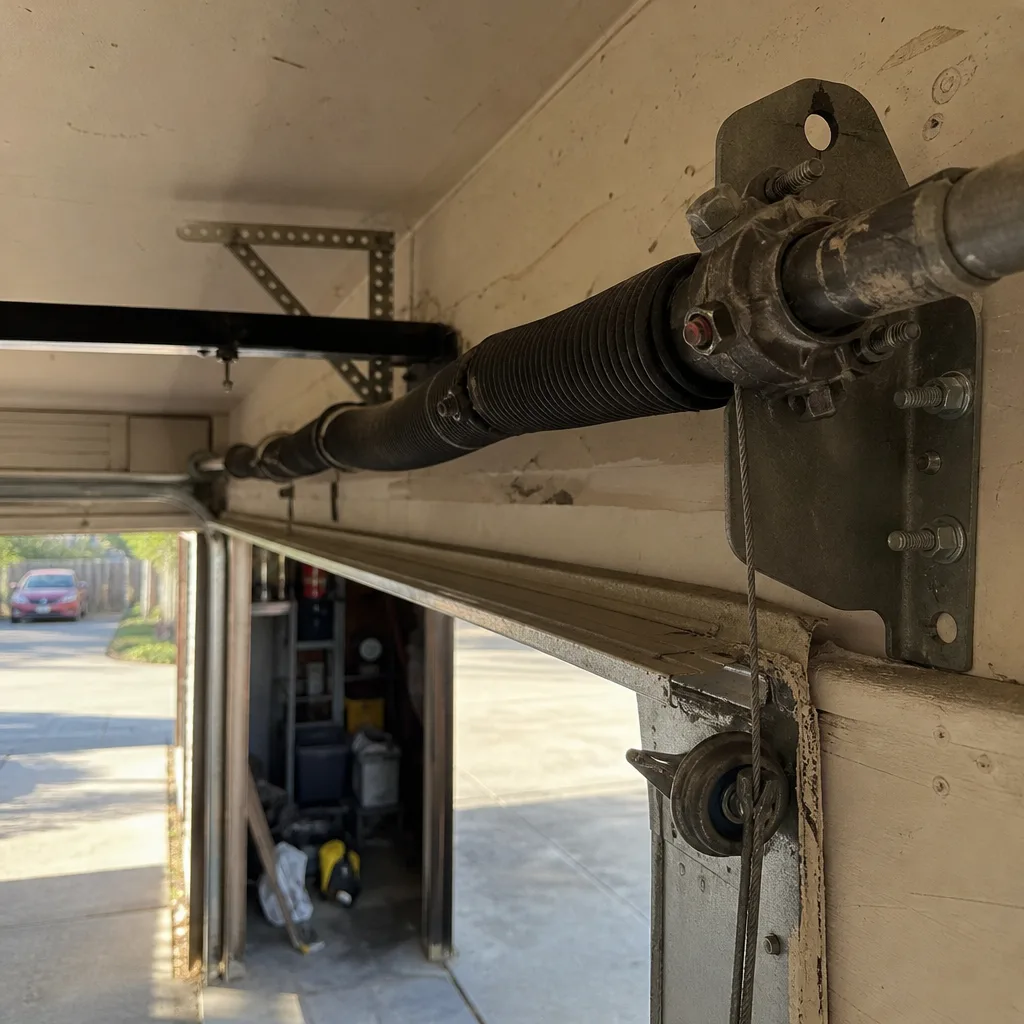 Before
 After
The October Pre-Cold Checklist
Apple Valley winters are not brutal by Midwest standards, but the cold nights do something specific to garage door hardware: metal contracts, lubricants thicken, and any moisture in the air condenses on cold steel. The October checklist is about preparing the door for those conditions so you do not find yourself with a frozen-shut door or a snapped spring on a 35-degree morning in December.
- Re-lubricate before the cold sets in. The silicone lubricant you applied in April has been through a full summer of heat. Reapply to springs, hinges, and roller stems before November. Fresh lubricant in cold weather keeps the door moving smoothly when the metal contracts and parts fit together more tightly.
- Check the opener’s gear and sprocket. On LiftMaster, Chamberlain, and Craftsman chain-drive openers, the main gear is plastic and wears faster in cold weather because the lubricant inside the opener housing stiffens. If the opener sounds louder than usual when the temperature drops, that is often the gear beginning to wear. This is a repair a technician can handle in one visit.
- Inspect the weatherstripping again. The heat is gone, but the existing UV damage from the summer will become more apparent as the rubber hardens further in the cold. If you see cracks now, replace the stripping before winter rains and wind blow in.
- Test the door balance again. The same balance test you did in April: disconnect the opener, lift the door manually, and see if it holds at waist height. Temperature changes can affect spring performance, especially if the springs were already nearing the end of their rated cycle life. Catching a weakening spring in October means replacing it on your schedule, not in an emergency in January.
- Check for any gap at the bottom of the door. Cold air intrusion matters less for your car and more for the door’s hardware. Cold air means cold metal, and cold metal contracts. A door that seals properly keeps the internal hardware at a more stable temperature, which reduces the daily expansion-contraction stress cycle.
Three Tasks You Can Do Yourself, Two You Shouldn’t
One of the most useful things we can tell an Apple Valley homeowner is where the line is between DIY maintenance and work that belongs with a professional. For step-by-step help diagnosing common issues yourself, check out our Garage Door Repair Troubleshooting: Common Problems and How to Fix Them. In our experience, that line is drawn not by skill but by the amount of stored energy in the component. A hinge has no stored energy. A torsion spring holds enough tension to break bones and damage property if it releases wrong. That distinction drives our recommendations.
Safe for most homeowners:
- Lubrication. Applying silicone lubricant to springs, hinges, and roller stems is straightforward and low-risk. You do not need to touch anything under tension, just spray and move the door a few times to distribute the lubricant.
- Visual inspection. Looking at your cables, springs, drums, and weatherstripping from ground level with the door closed is safe and valuable. You are gathering information, not applying force. The monthly and seasonal checklists in this guide are built around visual inspection.
- Weatherstripping replacement. Bottom seals and perimeter strips slide out of their channels and slide back in. This is a low-risk repair that requires no tension adjustment and no special tools beyond a flathead screwdriver for some profiles.
Leave to a technician, always:
- Torsion spring adjustment or replacement. The springs are under constant high tension, wound tightly to counterbalance the door’s weight. The winding and unwinding process requires specialty bars and specific technique. One wrong move can cause a spring to release its tension explosively. This is the most dangerous component on your garage door, and we never advise anyone to work on it themselves, regardless of how many YouTube tutorials they have watched.
- Cable tension adjustment. Cables work as a pair with the springs and drums. Adjusting cable tension means interacting with the spring system, and the risks are the same. A cable under partial tension can whip or snap if mishandled. This is also work that requires the door to be properly balanced afterward, which requires a calibrated feel for the system that comes from experience, not guesswork.
For these two tasks, the cost of a professional is not just a matter of convenience. It is a matter of avoiding serious injury. We work on all eight major brands, including LiftMaster, Chamberlain, Genie, Clopay, Amarr, Wayne Dalton, Craftsman, and Raynor, so whichever door is on your Apple Valley home, our technicians are familiar with its spring and cable configuration.
Brand-Specific Maintenance Notes
Different manufacturers design their doors and openers differently, and in Apple Valley’s climate, those design differences translate into different maintenance needs. We wanted to give you a few specific notes on the brands we most commonly see in local service calls, so your checklist matches your actual hardware.
LiftMaster and Chamberlain
These two brands come from the same parent company and share opener designs. The belt-drive units are quiet and need minimal maintenance, but the chain-drive models have a plastic main gear inside the opener housing that wears predictably over time. In Apple Valley’s temperature swings, that gear can crack sooner than the average. If your LiftMaster or Chamberlain opener starts making a grinding sound when cold, that is the gear, and it is a repair we handle in a single visit. The safety sensors on these brands are also sensitive to dust buildup on the lens, which matters more in Apple Valley than most places due to the wind-blown grit. Wipe the sensor lenses with a dry cloth monthly.
Genie
Genie screw-drive openers are common in Apple Valley, especially in homes built in the 1990s and 2000s. The screw itself requires specific Genie screw lubricant, not generic spray. In high heat, generic lubricant thins out and the screw runs dry, which accelerates carriage wear. Genie openers also tend to have more plastic in the carriage assembly than some competitors, and that plastic expands in the heat, which can cause intermittent sticking during the hottest part of the day. If your Genie opener hesitates at 2 p.m. but works fine at 8 a.m., that is thermal expansion, and it usually means the carriage is nearing the end of its service life.
Craftsman and Raynor
Craftsman doors and openers are ubiquitous in older Apple Valley neighborhoods, and many of them are 15 to 25 years old at this point. Age matters more than brand for Craftsman at this stage. The original torsion springs on those doors have likely already been replaced once, and if the current springs are more than seven years old, they are on borrowed time in this climate. Raynor doors are often found on newer custom homes, and they use a specific roller profile that is not compatible with generic replacements. If you need roller replacement on a Raynor, match the roller to the door rather than buying whatever is on the shelf at the hardware store.
Common Mistakes to Avoid
- Using WD-40 on garage door springs. WD-40 is a solvent, not a lubricant. It cleans, which is useful, but it does not provide the lasting film that a silicone lubricant does. In Apple Valley’s heat, any benefit evaporates quickly and the solvent residue actually attracts dust. Use silicone spray instead.
- Greasing the tracks. Tracks should run dry. Grease in the tracks collects wind-blown sand from the Victor Valley and turns into a grinding compound that wears out your rollers faster. If your tracks are dirty, wipe them with a dry cloth.
- Ignoring a noisy door because it still works. Noise is the earliest indicator of a problem. A door that groans on the way up is telling you the springs are dry, the rollers are wearing, or the hinges need lubrication. Waiting until the noise becomes a failure means a more expensive repair.
- Replacing only one spring. Torsion springs come in pairs and they wear at roughly the same rate. If one breaks, the other is likely close to failing. Replacing only the broken spring leaves the door unbalanced and means another service call is coming soon. We always recommend replacing both springs at once, and a trustworthy technician will tell you the same.
- Skipping the auto-reverse test because the door “seems fine.” The auto-reverse mechanism is the only safety device between your garage door and a child or pet. It should be tested monthly. If it does not reverse on contact, the door is unsafe until it is serviced.
- Forgetting that the release handle works both ways. Pulling the red release handle disconnects the opener so you can operate the door manually. Reconnecting it requires either pulling the handle again or running the opener until it re-engages. When troubleshooting a door that will not open with the remote, check whether the release handle was pulled first. This is one of the most common “repair” calls we get in Apple Valley where the fix takes 30 seconds and costs nothing.
- Ignoring the door’s balance because the opener still opens it. The opener is doing the work the springs should be doing when the door is not balanced. That overwork shortens the opener motor life significantly. The balance test we described in the April checklist is free and takes two minutes, and it can save you a $400 opener replacement.
When to Call a Professional
Some situations should not wait for the next scheduled maintenance check. If you hear a loud bang from the garage, that is almost always a torsion spring breaking, and the door will not open properly until it is replaced. If the door comes off its tracks, or if you see a cable hanging loose, do not try to operate the door manually or with the opener; the system is compromised and needs a technician’s hands. If the door drops quickly when disengaged from the opener, the springs have lost tension and the door is unsafe to operate. All of these are conditions we handle in Apple Valley, and all of them are cheaper to fix when caught early rather than after a complete system failure. Brightwater Garage Door Repair offers free estimates in Apple Valley. Call (855) 473-2508 and we will come out, assess the door, and tell you honestly whether it is a repair or a replacement situation.
Frequently Asked Questions
Every three to four months in Apple Valley, which is more frequent than the six-month standard for coastal California. The high heat breaks down lubricants faster, and the dry, dusty air means you want a fresh silicone film on the springs, hinges, and roller stems more often. Using a silicone-based lubricant matters more than in moderate climates because it resists thinning in the heat and does not attract dust. Call (855) 473-2508 if you would like us to handle the lubrication during a seasonal tune-up.
Yes, for lubrication, visual inspection, and weatherstripping replacement. These three tasks are low-risk and make a meaningful difference in how long your door lasts, especially in Apple Valley’s climate. Spring tension and cable adjustment, however, should always be handled by a technician, as those components hold enough stored tension to cause serious injury if mishandled. Call (855) 473-2508 for any spring or cable work.
A spray-on silicone lubricant designed for garage door hardware works best in Apple Valley’s high heat and low humidity. Silicone does not thin out at 105 degrees and does not attract wind-blown dust the way petroleum grease does. For Genie screw-drive openers, use the Genie-specific screw lubricant. For the rest of the door, a quality silicone spray covers springs, hinges, and roller stems.
Yes. UV exposure at elevation degrades rubber and vinyl weatherstripping measurably faster than in coastal climates, especially on south-facing and west-facing garage doors that catch the afternoon sun. You should check the stripping every three months during the warm season for chalky texture, cracks, and brittleness. Replacing weatherstripping is a homeowner-friendly repair, and the parts are available for all major brands including Clopay, Amarr, and Wayne Dalton.
A loud bang from the garage almost always means a torsion spring has snapped. Do not try to open the door manually or with the opener, because the door is now unbalanced and the opener motor can be damaged if forced to lift it. A snapped spring is a professional repair. Call (855) 473-2508 and we will come out, confirm the diagnosis, and replace the spring. Estimates are free, and the price is agreed before any work starts.
We work on the eight brands most commonly installed in American homes: LiftMaster, Chamberlain, Genie, Clopay, Amarr, Wayne Dalton, Craftsman, and Raynor. That covers the vast majority of garage doors found in Apple Valley driveways. We are brand-neutral in our diagnoses, which means we recommend the fix that makes sense for your door and your budget, not the part that benefits a vendor relationship. Call (855) 473-2508 to schedule a visit.
The Bottom Line
Garage doors in Apple Valley face a harder life than the same door would in a coastal city. The heat demands more frequent lubrication, the UV destroys weatherstripping faster, and the daily temperature swings fatigue metal components like cables and drums that other climates leave alone. The maintenance calendar we laid out here, an April pre-heat pass, monthly visual and sound checks, an October pre-cold pass, and seasonal silicone reapplications, is the schedule we follow and the schedule we recommend to our neighbors. You can handle the lubrication, inspection, and weatherstripping yourself. For more guides & resources on keeping your door running smoothly, visit our blog. When it comes to springs and cables, call us at (855) 473-2508 for a free estimate. A garage door that gets the right maintenance in this climate lasts years longer, and costs you less, than one that only gets attention when it breaks.
Written by the team at Brightwater Garage Door Repair, serving Apple Valley since 2018.