
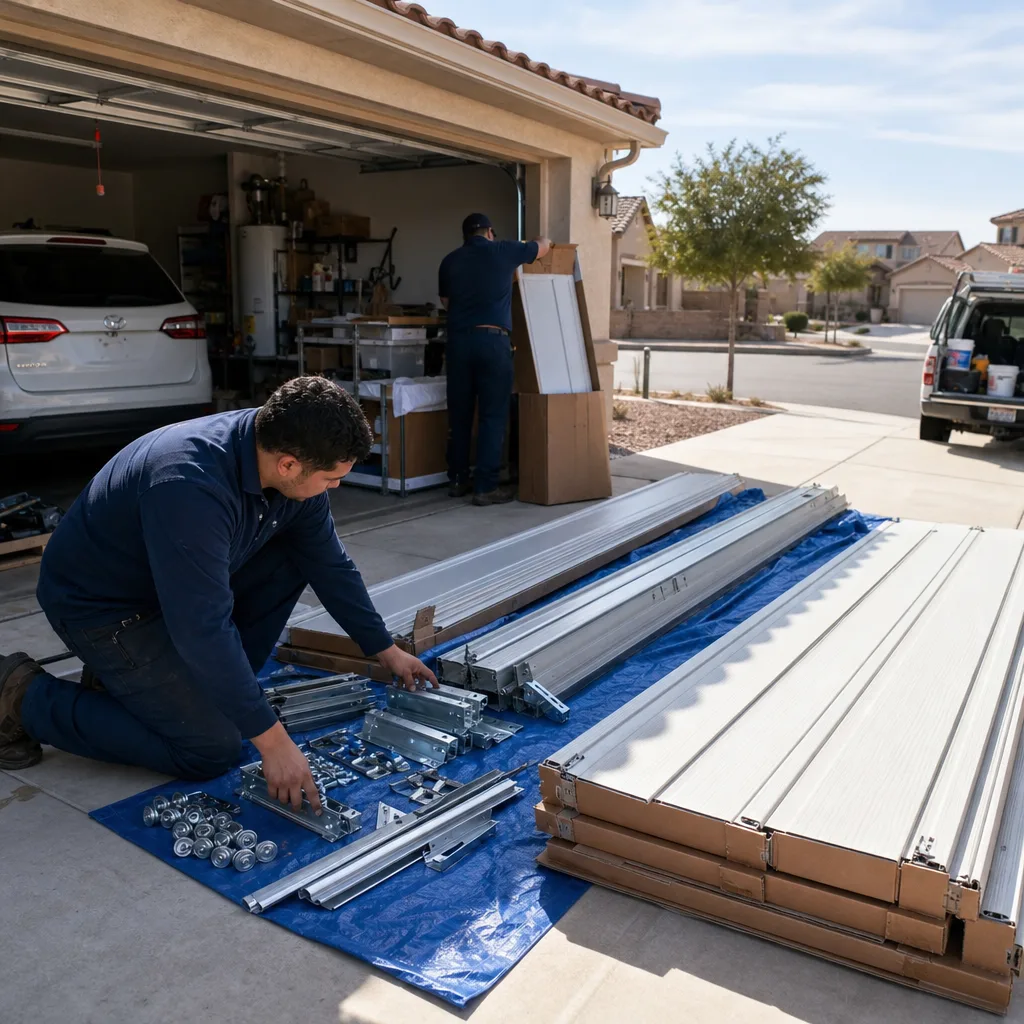
Last updated November 2, 2026
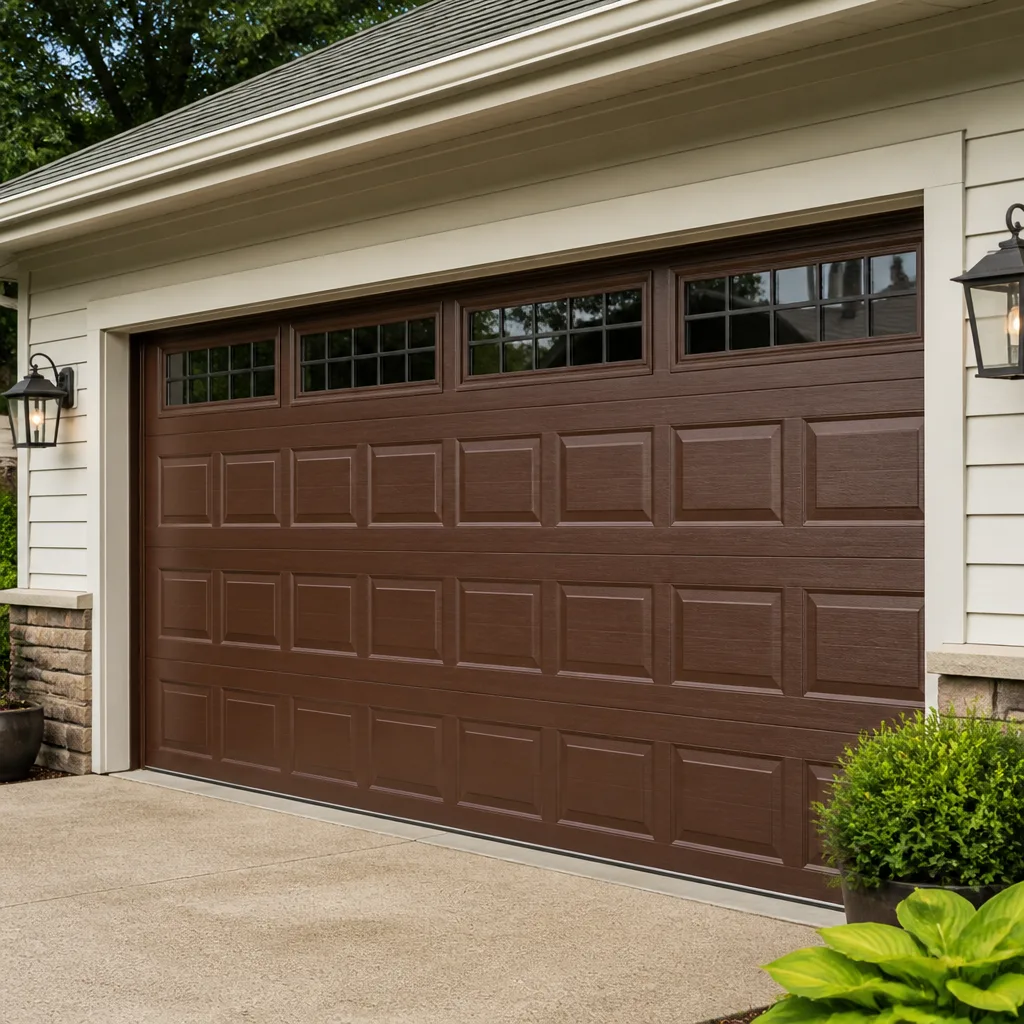 Raised-panel steel
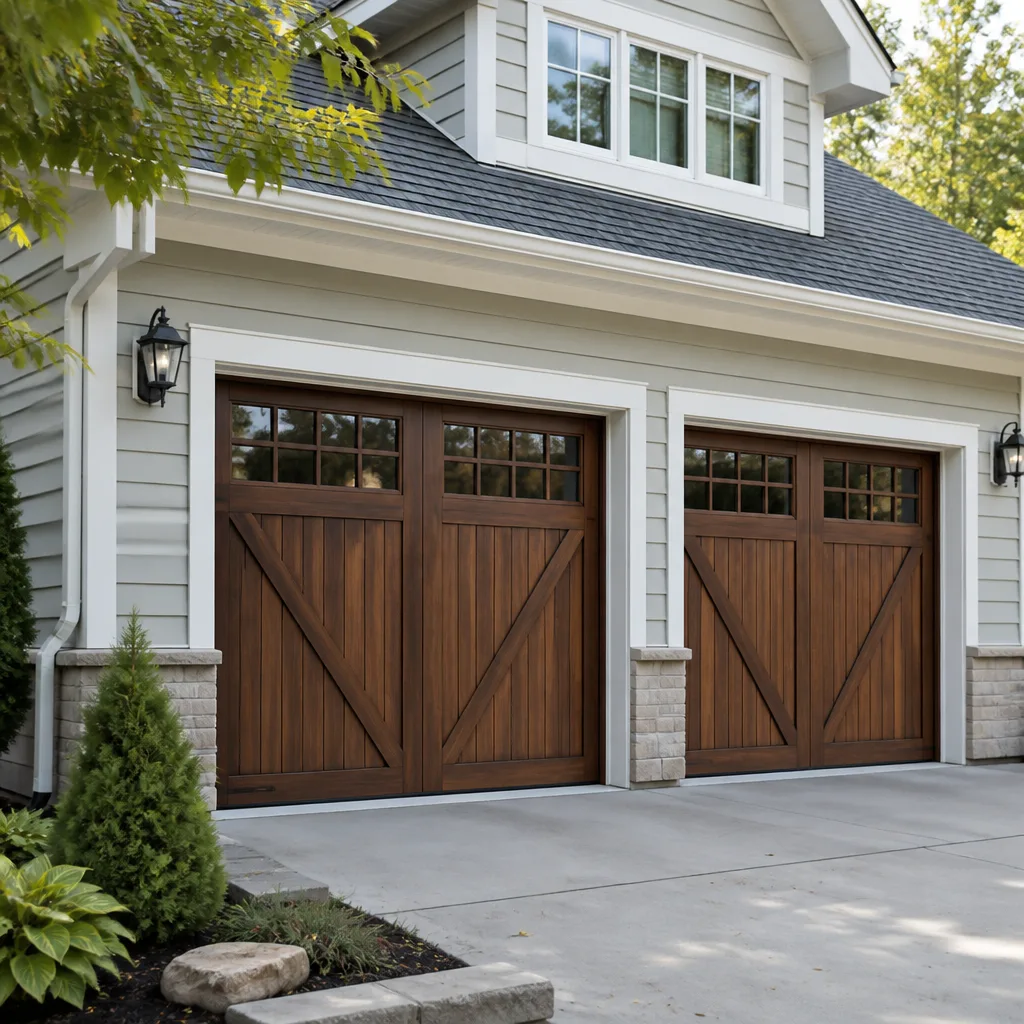 Carriage house
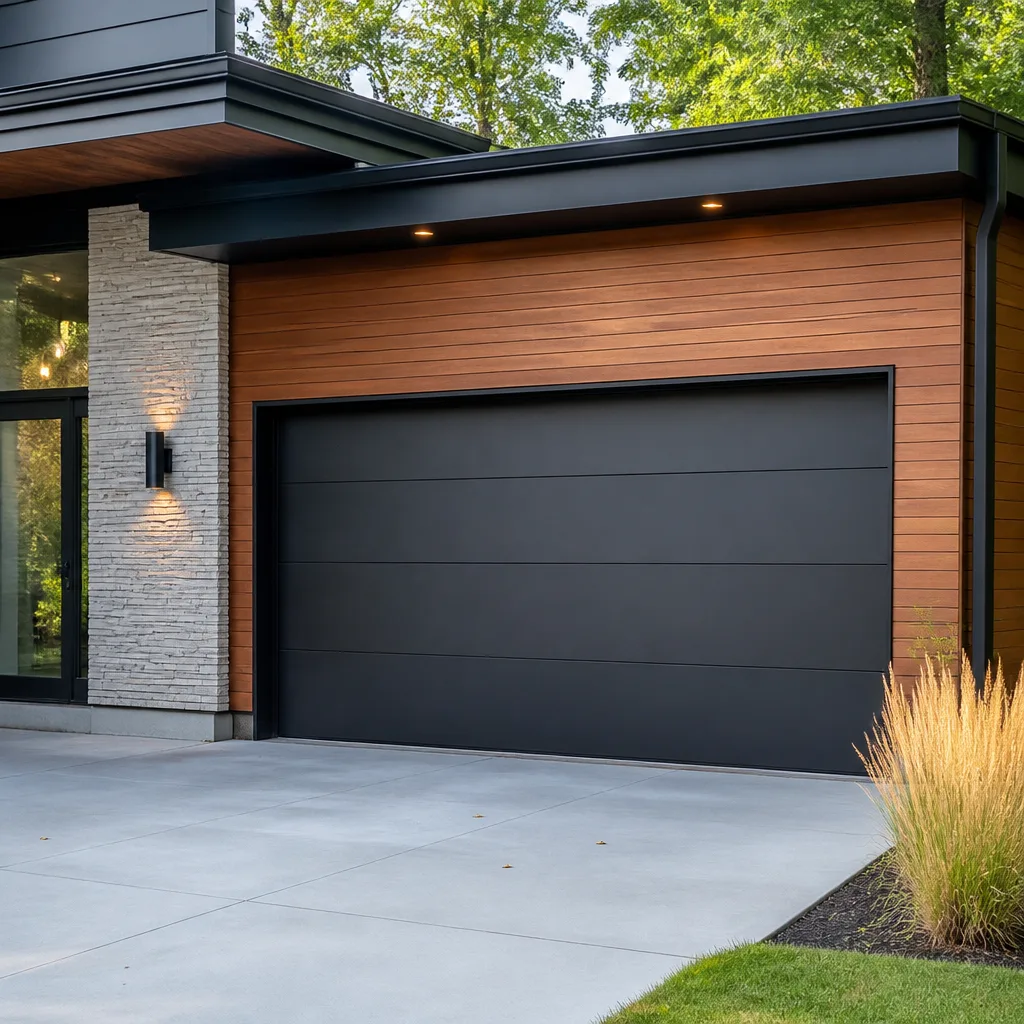 Modern flush
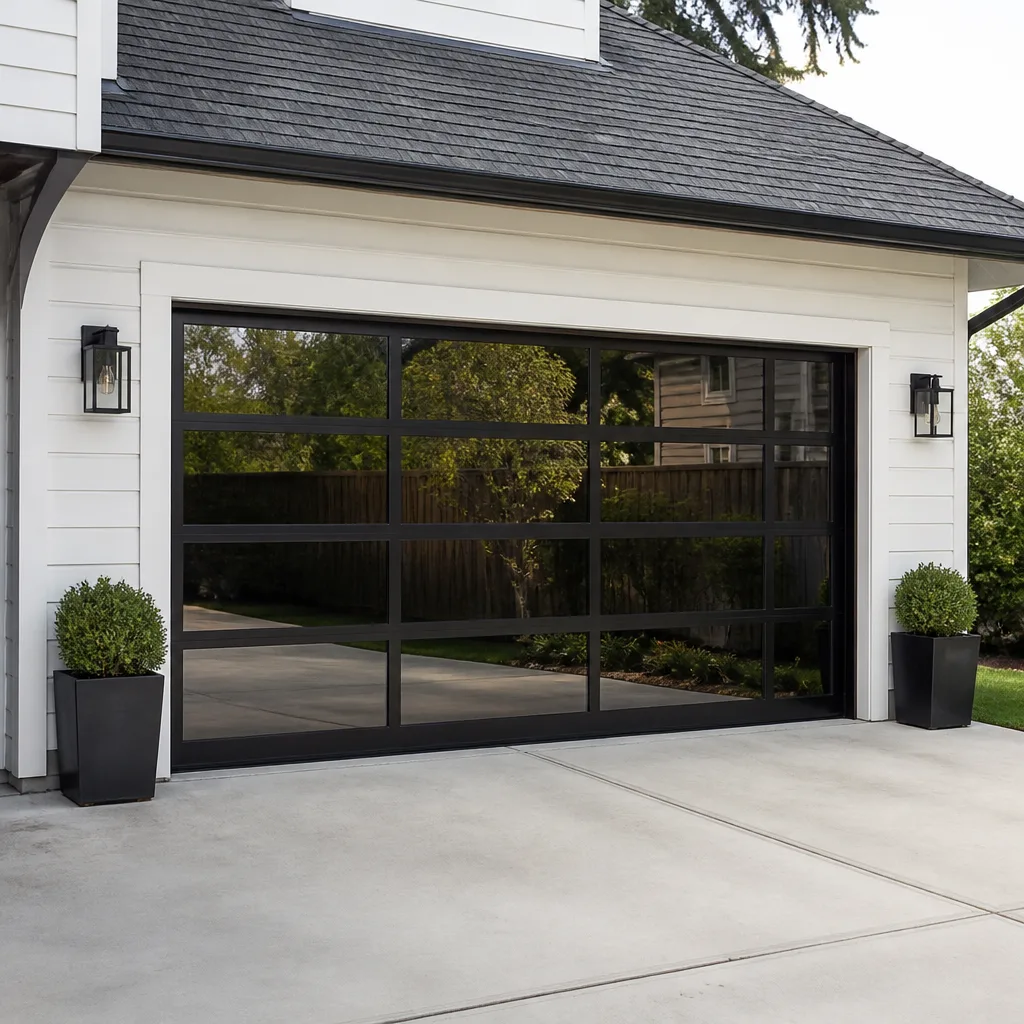 Full-view glass
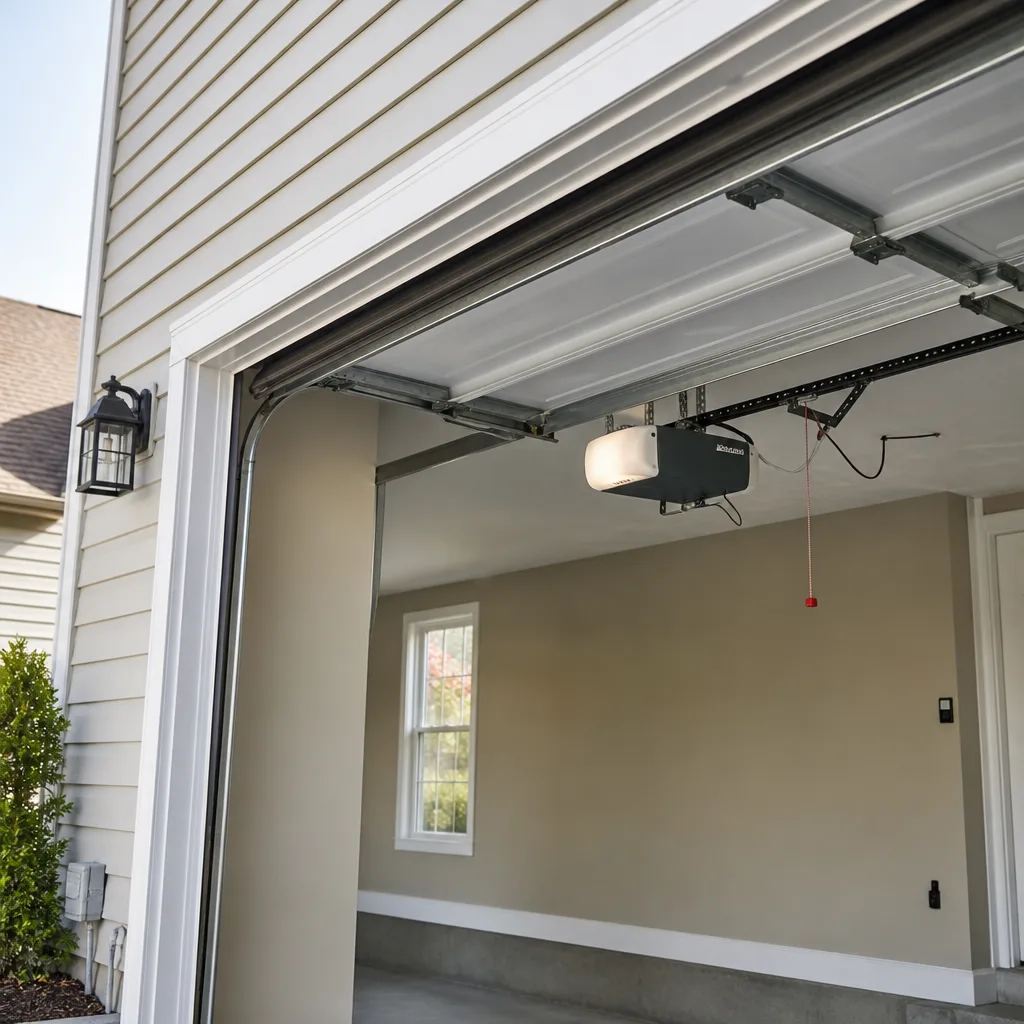 LiftMaster openers
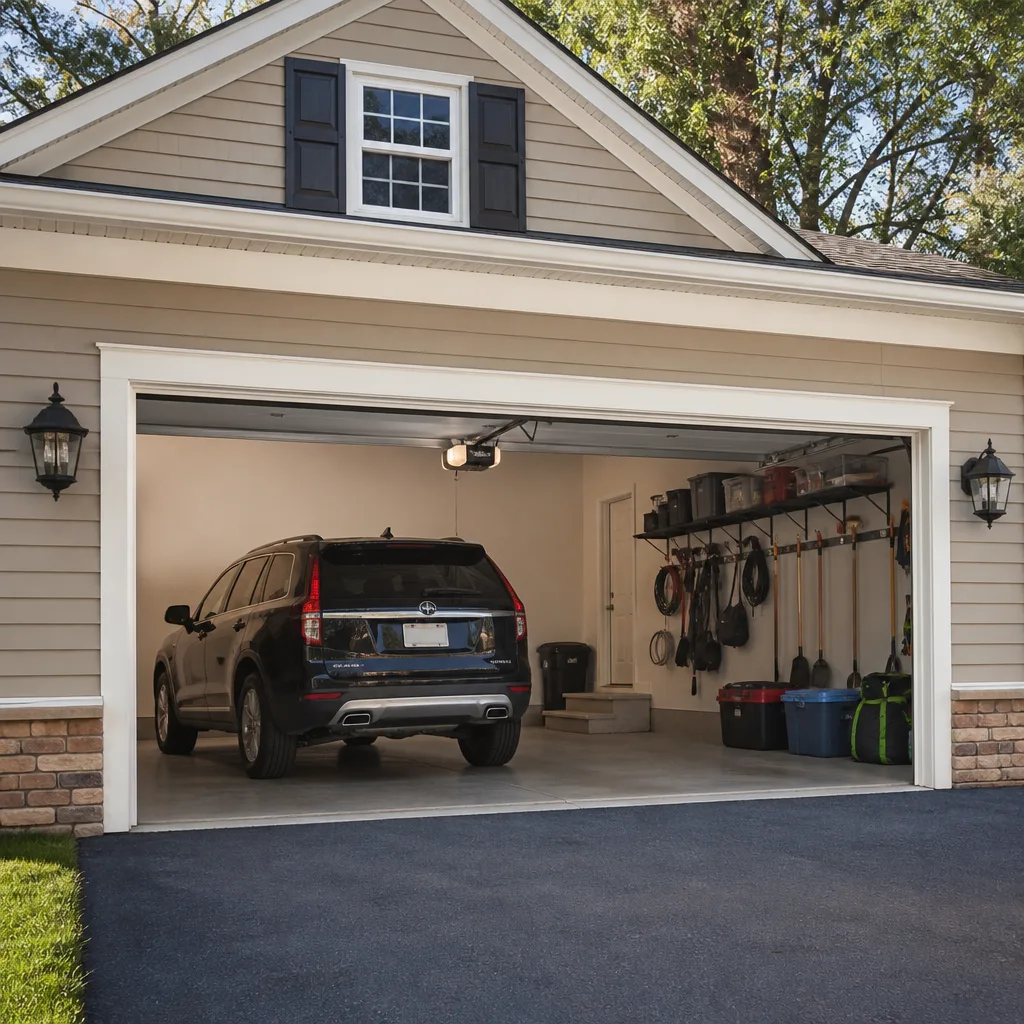 Chamberlain openers
Full 25-point door and opener safety check with every visit - springs, cables, rollers, tracks, and your LiftMaster or Chamberlain opener included
You get a price before we start. It does not change when the truck arrives.
Get your free estimateSeasonal Garage Door Care for Apple Valley: Year-Round Homeowner’s Guide
Most garage door maintenance guides are written for places with real winters. Apple Valley is not one of those places. Here, the door isn’t fighting snow and road salt. It’s fighting 110-degree afternoons that soften the bottom seal into a glue stick, Santa Ana winds that turn pebbles into projectiles against the tracks, and December nights that drop below 28°F just often enough to freeze condensation inside the torsion springs. This guide covers the maintenance rhythm that actually applies to the High Desert, month by month, so your door opens when you need it to. We’re a garage door repair company in Apple Valley, and we’ve built this around what we see in driveways, not what generic checklists assume.
Styles & brands we work with
- Raised-panel steel
- Carriage house
- Modern flush
- Full-view glass
- LiftMaster openers
- Chamberlain openers
Quick Answer
Apple Valley garage doors face three distinct stress seasons: March wind season, June through August heat, and December through February freezes. The most important maintenance tasks are a twice-yearly spring tension check, cleaning the tracks after every major wind event, and inspecting the bottom seal for heat bonding starting in June. Most seasonal failures are preventable with about 20 minutes of attention every six weeks.
Table of Contents
- The Real Apple Valley Stress Calendar
- Why Your Bottom Seal Glues Itself to the Driveway in August
- Opener Thermal Shutdowns: What’s Normal, What’s Motor Failure
- Pre-Wind-Season Door Balance Test
- What to Do After a Significant Wind Event
- October Freeze Prep for the High Desert
- December-February: Condensation and Freeze Cycles
- Common Mistakes to Avoid
- When to Call a Professional
- Frequently Asked Questions
- The Bottom Line
The Real Apple Valley Stress Calendar
Apple Valley doesn’t follow the four-season maintenance rhythm that most guides assume. The actual calendar is driven by three events: Santa Ana wind season, triple-digit summer heat, and occasional hard freezes. Each one attacks a different component of the door system, and each one calls for a different response. If you only do maintenance once a year, you’ll miss at least one of them.
Here’s what the year actually looks like in Apple Valley from a garage door perspective:
- March through May: Wind season. Sustained west-to-southwest winds push dust, tumbleweeds, and small gravel into the tracks, rollers, and weather stripping. The lateral stress on a door that’s even slightly out of balance compounds quickly. This is when a minor misalignment becomes a bent bottom section.
- June through August: Heat peak. Asphalt driveways in Apple Valley regularly exceed 145°F, and the bottom seal material on most doors starts to deform around 140°F. Springs lose a small percentage of tensile strength per 10-degree rise above 90°F, and openers with thermal protection circuits may click off entirely in the late afternoon. More on that below.
- October through November: Freeze prep. The first hard freeze in Apple Valley typically arrives between late October and mid-November. It’s the window for lubricating moving parts, checking spring tension, and addressing any seal or track issues before cold air makes them worse.
- December through February: Condensation and freeze cycles. Temperatures swing above and below freezing repeatedly. Condensation collects inside springs and hinges overnight, then freezes, expands, and works against the metal. This cycle accelerates rust and weakens spring coils.
The key takeaway: your heaviest maintenance months in Apple Valley are March and October, not December and April like most national guides suggest. Our team at Brightwater Garage Door Repair home sees call volume spike in these two windows more than any other time of year. The June-through-August heat creates its own pattern too, but it’s different: fewer calls for broken springs, far more calls for doors that won’t open and seals that have to be peeled off the driveway.
Why Your Bottom Seal Glues Itself to the Driveway in August
August is the single worst month for garage door bottom seals in Apple Valley. It’s not a gradual failure. It happens over the course of a few intensely hot afternoons. The seal, which on most residential doors is a rubberized PVC or EPDM extrusion, softens when the surface it rests against stays above 140°F for hours at a stretch. The pressure of the door’s weight presses the softened material into the texture of the asphalt or concrete. When the temperature drops at night, the material re-hardens in place. The result is a seal that’s effectively glued to the ground.
When the opener tries to lift the door the next morning, one of three things happens:
- The seal tears clean off the aluminum retainer rail, leaving strips of rubber on the driveway and a bare metal edge under the door.
- The opener strains against the resistance, triggering its force-sensor reverse function. The door opens a few inches, then slams back down.
- The door lifts but the seal stays partially bonded, pulling the retainer rail out of alignment and warping it so the new seal never seats correctly afterward.
We see this repeatedly each August across Apple Valley neighborhoods, from the older Rancho Verde tracts to newer developments off Bear Valley Road. The homes most at risk are south- and west-facing doors with asphalt driveways that get full afternoon sun exposure.
Prevention is straightforward. Once a week between June and September, lift the door manually and look at the bottom edge. If the seal feels tacky or leaves a residue mark on the concrete, apply a thin coat of silicone-based lubricant to the bottom contact surface. Silicone doesn’t degrade rubber the way petroleum products do, and it creates a release barrier. Don’t use WD-40 on rubber seals; it accelerates drying and cracking over a season.
If the seal has already bonded and torn, it needs replacement. On most Clopay, Amarr, and Wayne Dalton residential doors, the seal is a standard T-style or bead-style extrusion that slides into the bottom retainer. Replacement takes under an hour. It’s one of the lowest-cost garage door repairs in Apple Valley we handle, but delaying it means the door closes unsealed against wind-blown dust, insects, and, come winter, cold air.
Opener Thermal Shutdowns: What’s Normal, What’s Motor Failure
Every garage door opener manufactured in the last 20 years has a thermal protection circuit. It’s a safety device, not a design flaw. When the motor’s internal temperature crosses a threshold, usually between 165°F and 185°F, the circuit interrupts power. The opener goes dead for anywhere from 10 to 30 minutes, then works normally again. In Apple Valley, a garage with a west-facing door and no insulation can hit that temperature by 4:00 PM on a 105-degree day, especially with a black or dark-painted door panel absorbing heat into the space above it.
That’s the benign scenario. Here’s the two-step reset sequence to confirm:
- Wait 20 minutes, then try the wall button. If the opener responds, it was thermal protection. No harm done.
- If it still won’t respond after cooling down, disengage the emergency release cord and try the wall button with the door disconnected. If the motor runs with no load, you have a door balance problem, not an opener failure. The opener was working too hard against a door that’s out of adjustment, and the excess current draw tripped the thermal circuit.
The sign that it’s actual motor failure is different. If the opener hums without moving, or runs but fails to lift the door even when the door is manually confirmed to move freely in the tracks, the motor windings or gear drive are shot. That’s an opener repair in Apple Valley, not a maintenance issue.
We work on Genie, LiftMaster, Chamberlain, and Craftsman openers most frequently, and the thermal behavior is consistent across brands. One proactive step we recommend in Apple Valley specifically: if your garage gets afternoon sun, set the opener’s travel limits and force settings in the early morning when the door is cold. Metal expands when it’s hot, and adjustments made at 2:00 PM on a 108-degree afternoon won’t be accurate at 7:00 AM the next morning.
Pre-Wind-Season Door Balance Test
Santa Ana wind events put enormous lateral stress on garage doors. The average single-car door is 8 feet wide and 7 feet tall, which is 56 square feet of surface area. A 40 mph gust against that surface generates over 500 pounds of lateral force. If the door is properly balanced, that force distributes evenly through the tracks and the spring system handles it. If the door is even slightly out of balance, the wind finds the weak point and works it like a hinge until something bends or breaks.
Here’s the balance test we recommend every Apple Valley homeowner do in late February, before the March wind season kicks in:
- Close the door. Pull the emergency release cord to disengage the opener. The cord is red and hangs from the trolley rail.
- Lift the door manually to about waist height, around 3 to 4 feet. It should stay in place without drifting up or falling down. A balanced door will hold position. A door that creeps upward has too much spring tension. A door that starts dropping has too little.
- Repeat at half-open (top panel around 6 feet) and three-quarters closed (bottom of door around 18 inches off the ground). The door should hold at every position. If it only holds at some positions, the spring tension is borderline and the door is fighting itself at other points in its travel.
- Re-engage the opener by pulling down on the release cord toward the door or pressing the wall button until the carriage reconnects.
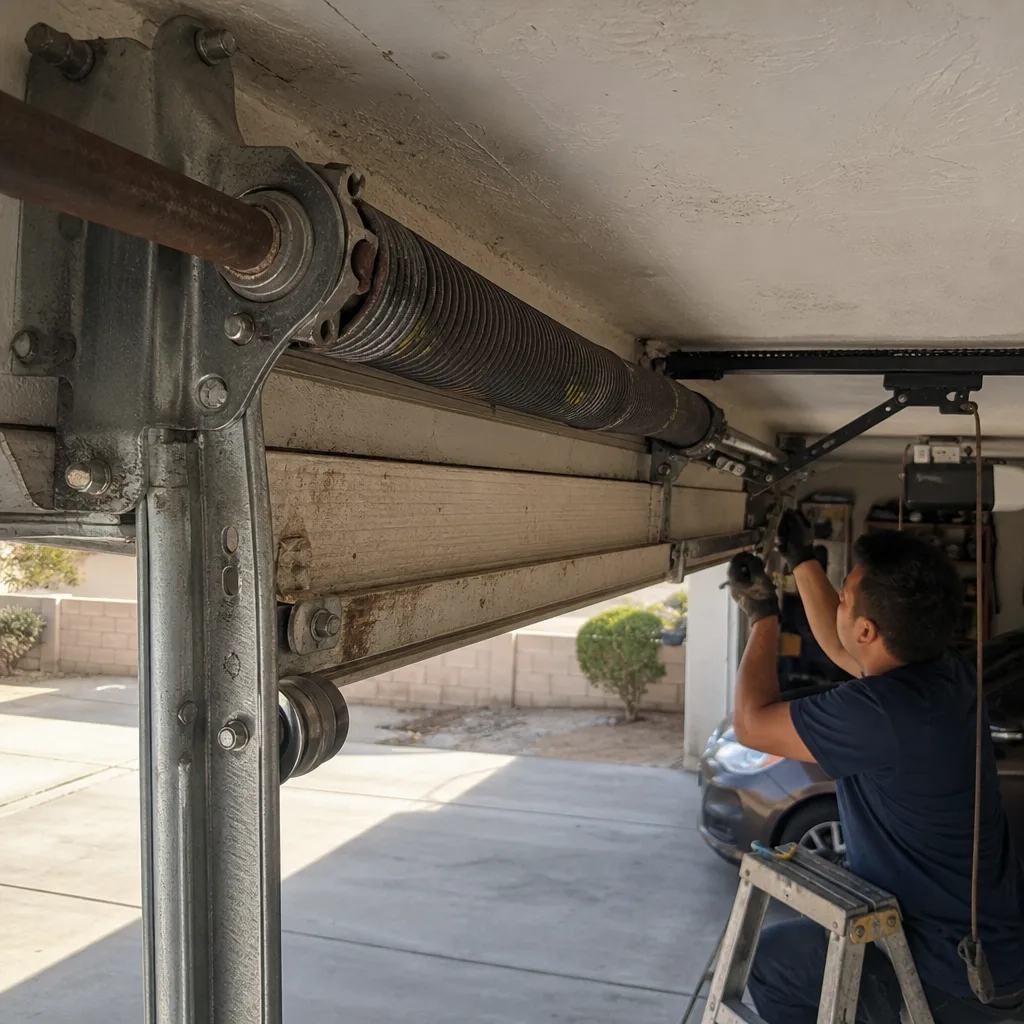
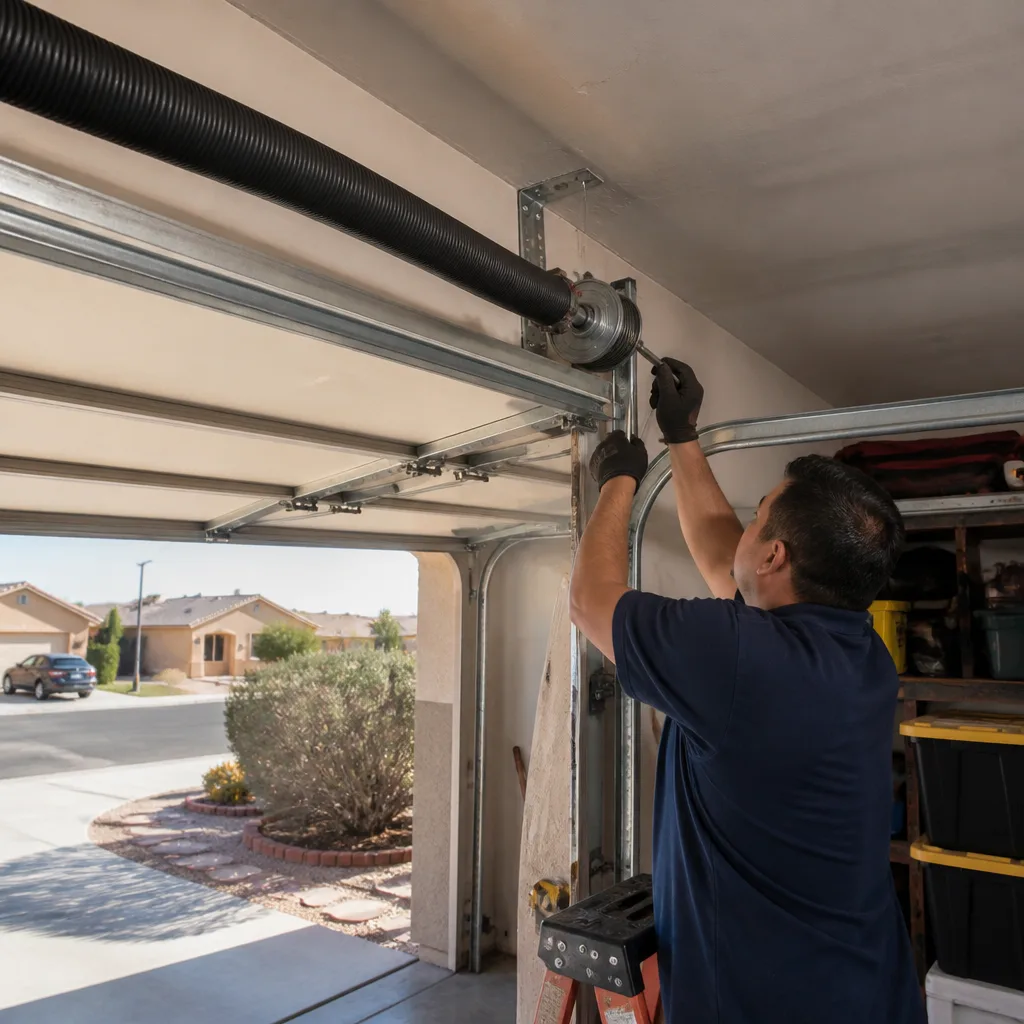
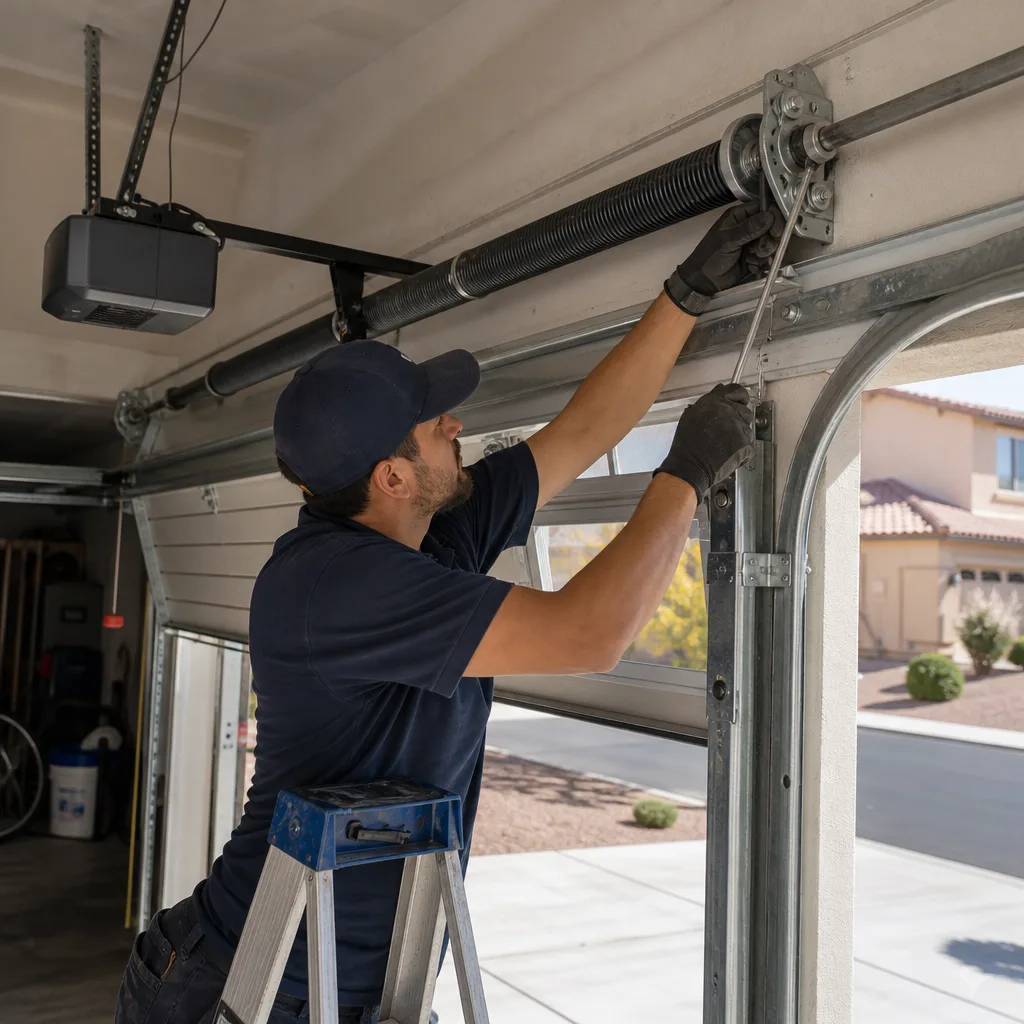
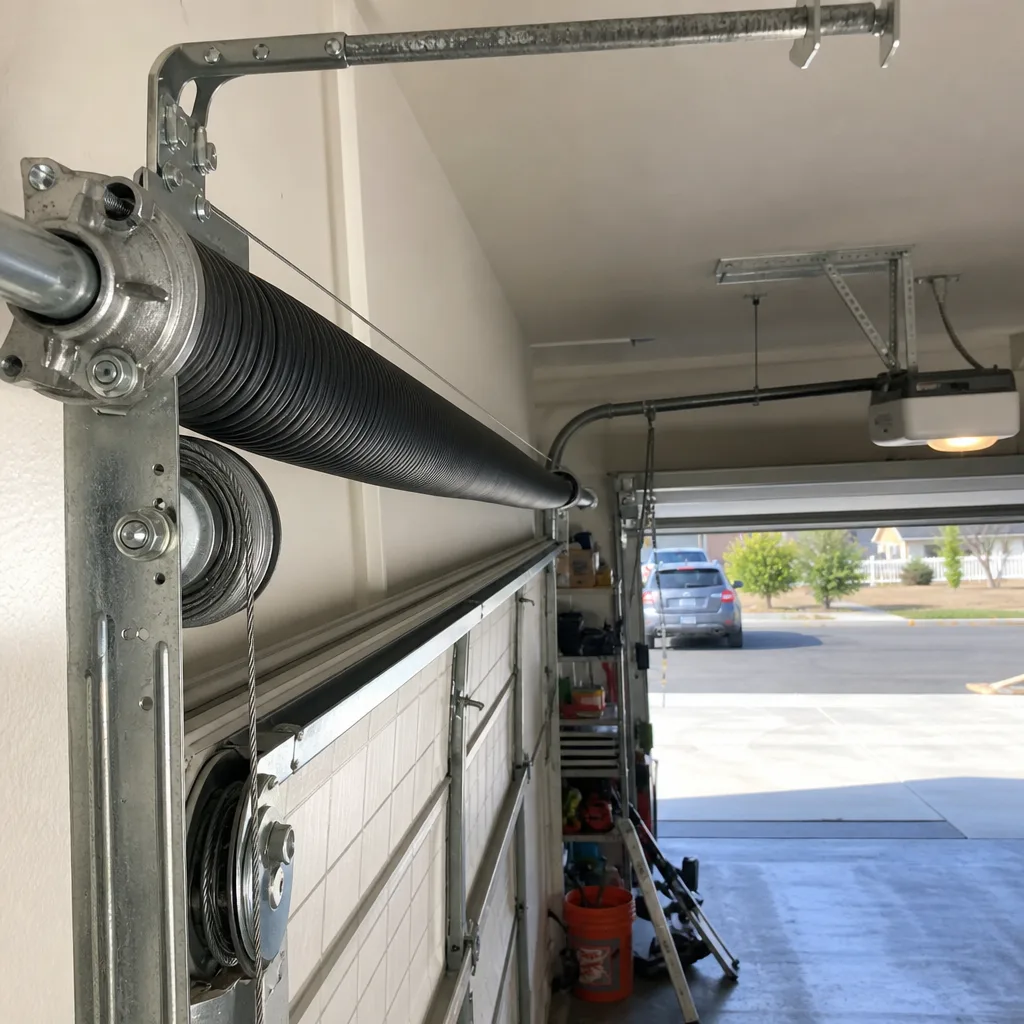
If the door fails this test, the springs need adjustment. This is not a DIY job. Torsion springs, the ones mounted on a steel rod above the door opening, are wound under 50 to 200 pounds of rotational force. A spring that lets go during adjustment can break bones or worse. Any qualified technician will tell you the same thing: spring work is professional work. If your door fails the balance test, call us before the wind season starts. A spring adjustment runs far less than a new door panel, which is what a big gust costs you when an unbalanced door gets slammed sideways in its tracks.
We also recommend a visual check during wind season. After any day with sustained winds over 30 mph, look at the top and bottom of each track from inside the garage. Dust and sand accumulate in the lower track curve, and once it mixes with the existing lubricant, it forms a grinding paste that accelerates roller wear. A dry rag and a reapplication of spray lithium grease takes three minutes and saves the rollers from flat-spotting.
What to Do After a Significant Wind Event
A Sierra wind event through the Cajon Pass can hit Apple Valley neighborhoods with gusts over 60 mph. When that happens, your garage door takes a beating even if nothing looks visibly wrong from the curb. Here’s the post-wind checklist we use when assessing doors in Apple Valley after a heavy blow:
- Look for debris in the lower tracks first. Tumbleweeds, palm fronds, and wind-blown gravel collect in the curve at the bottom of each track. Even a small pebble there can bind the roller and force the door to jump the track on its next cycle.
- Inspect the bottom section for deflection. The bottom panel is the one that takes the brunt of lateral wind force. Open the door halfway and sight down the bottom edge. It should be a straight line. A bow or dent of even half an inch means the internal steel stile is compromised, and the panel will eventually buckle under opener pressure.
- Test the force recalibration on the opener. If the door moved at all during the storm while the opener was still engaged, the opener’s force settings may have recorded that pressure as normal. Run the door through a full open-and-close cycle. If it jerks, hesitates, or reverses unexpectedly, the force limits need to be reset.
- Check the weather stripping on both sides of the door. Wind-driven dust acts like sandpaper against vinyl weather stripping. Once the strip tears, it starts flapping in the next breeze, and each flap peels more of it away until you have a three-inch gap letting in dust and cold air.
- Listen for new sounds during operation. A grinding sound that wasn’t there before the storm usually means a roller bearing is packed with sand. A squealing sound means a hinge pin is dry. Both are easy fixes if caught early.
Wayne Dalton, Clopay, and Amarr doors sold in the High Desert are all rated for the wind loads typical here, but the rating assumes a properly installed and maintained door. A door that’s already carrying a slightly bent track or a loose hinge won’t survive the same gust a maintained door shrugs off. If the post-wind inspection turns up anything you’re not sure about, it’s worth a call. We diagnose honestly, and we don’t recommend replacing anything that doesn’t need replacing. Your door, not ours to complicate.
October Freeze Prep for the High Desert
The first hard freeze in Apple Valley usually lands between late October and mid-November, and it arrives fast. The temperature can drop from a daytime high in the 80s to an overnight low in the 20s within 72 hours. That thermal shock is rough on metal components, especially the torsion springs, which are under constant tension regardless of season.
The October prep list is short but specific:
- Lubricate everything that moves. Hinges, rollers, the spring coils, and the opener chain or belt. Use a spray lithium grease on metal-on-metal contact points and a silicone spray on the spring coils. Wipe off excess. New lubricant drives out moisture and dust, both of which accelerate wear when temperatures fluctuate.
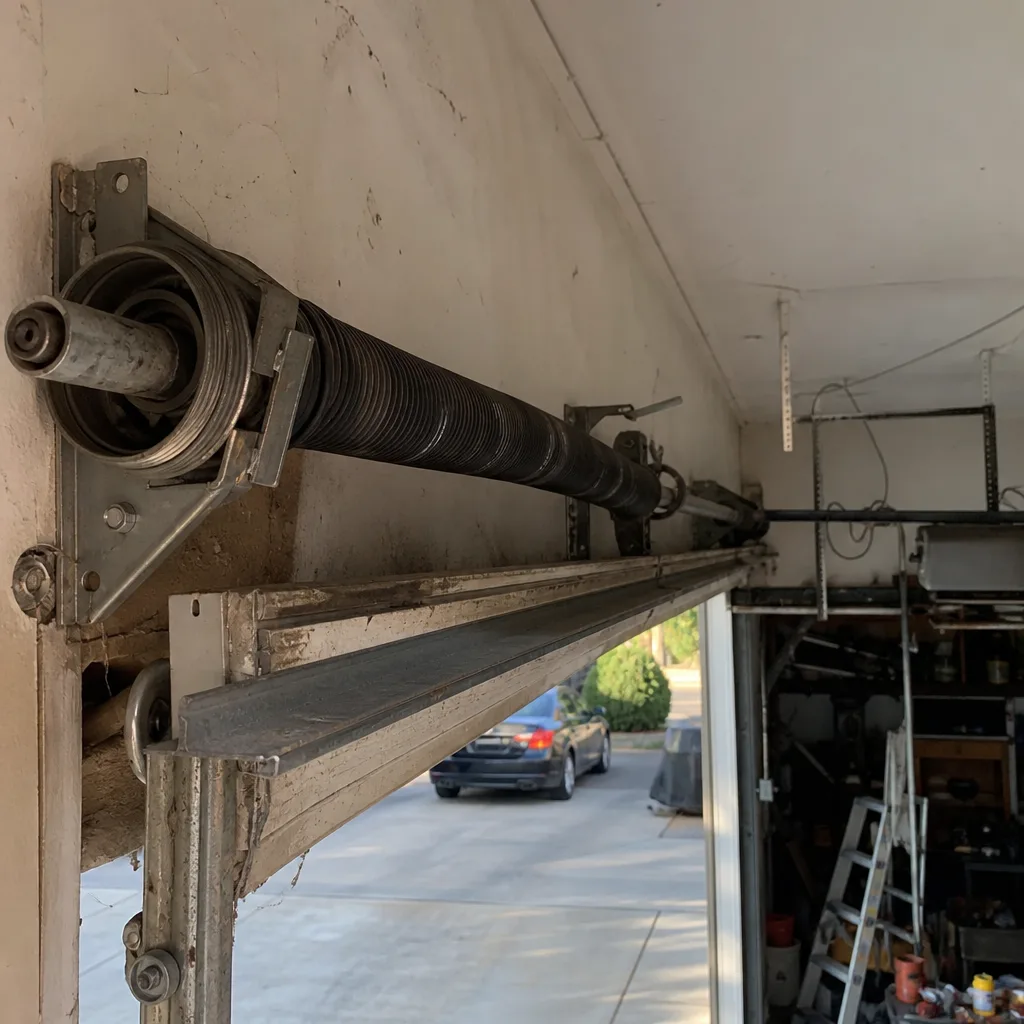
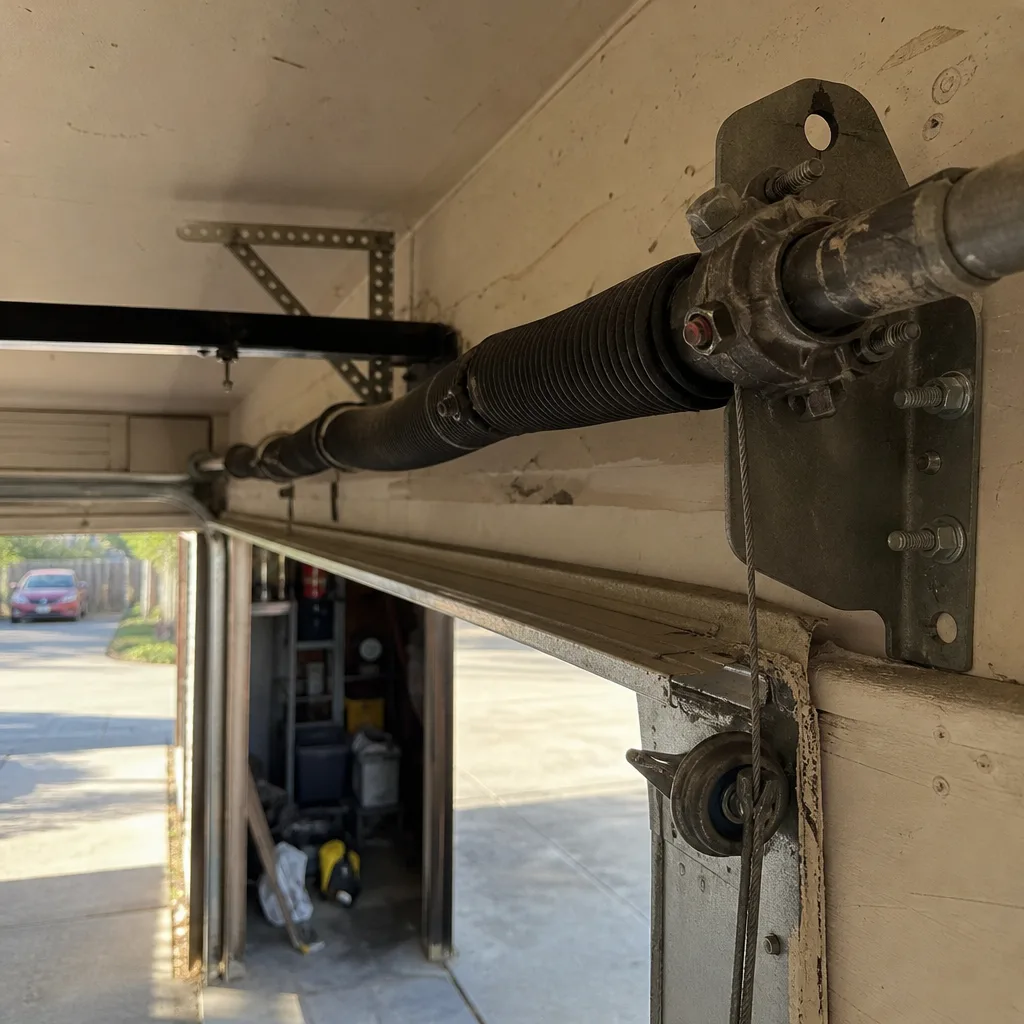
- Inspect the torsion springs for rust. Surface rust is normal on older springs. But flaking rust, uneven coil spacing, or visible gaps between coils mean the spring is fatigued. A spring at the end of its life will fail within a few weeks of the first freeze cycle. Replacing it in October costs the same as replacing it in January, but doing it in October means you’re not standing outside in 30-degree weather when the door won’t open.
- Confirm the bottom seal is intact. Any gap at the bottom edge lets cold air in. In Apple Valley garages, that’s also the same gap that lets scorpions and pack rats in. Rodent infestations in garages spike from November through February, and a torn bottom seal is the entry point we see most often.
- Check the weather stripping around the door frame. The vinyl trim that runs along the sides and top of the opening should be pliable, not brittle. If it cracks when bent, it needs replacement before it starts flapping loose in the November winds.
If you have an opener that’s been in service a while and you’re thinking about garage door installation in Apple Valley anyway, fall is the right time to do it. The new door and opener get their break-in period before the freeze-thaw cycle starts, and you’re not scheduling an install in the middle of the December call surge.
December-February: Condensation and Freeze Cycles
Apple Valley winter is mild compared to the mountains 30 minutes south, but it’s the fluctuation that causes problems. A typical January week might swing from 60°F in the afternoon to 22°F overnight, and that repeated expansion-and-contraction cycle works on every metal component in the door system.
The specific winter failure we see most often in Apple Valley is condensation inside the torsion spring coils. Here’s the mechanism: warm afternoon air inside the garage carries moisture. As the temperature drops overnight, that moisture condenses on the spring, which is the coldest metal surface in the room. The water beads collect in the bottom of each coil gap. When it freezes, it expands by about 9 percent, pushing against the coil surfaces. Over the course of a winter, dozens of these cycles create micro-fractures at the stress points. Springs that were close to end-of-life in October fail in February.
The other winter-specific problem is opener behavior in extreme cold. Gear-driven openers, which use grease-packed worm gears, have noticeably more resistance when the grease is cold. If your opener labors or runs slower on a 25-degree morning, that’s normal. It’s not normal for the opener to strip its plastic drive gear internally, but that’s what happens when a door is slightly out of balance and the opener has to work harder against cold-stiffened hardware. Diagnosis is simple: a door that’s balanced runs smoothly in any temperature. A door that jerks on cold mornings but smooths out by midday has a spring tension issue that the cold is amplifying.
Winter is also when we hear from Apple Valley homeowners about doors that won’t close all the way. The culprit is often the safety sensor, not the door itself. The infrared beam sensors mounted on the bottom of both tracks get coated with frost or dust in winter, and the beam gets interrupted. A quick wipe of the sensor lenses with a dry cloth fixes this 90 percent of the time. If the sensors are clean and aligned but the door still stops short, check for ice buildup at the bottom of the track channels. A quarter-inch of ice in the track curve will stop a door dead.
Common Mistakes to Avoid
- Following a national maintenance schedule. Most garage door guides assume winter is the stress season. In Apple Valley it’s wind season and heat season. If you’re doing your deep maintenance in December, you’ve already missed the two periods that cause the most damage. Shift your routine to March and October.
- Using WD-40 as a garage door lubricant. WD-40 is a water displacement product, not a lubricant. It cleans, then it evaporates, and what’s left behind attracts dust. Spray lithium grease and silicone spray are the right products for this job.
- Ignoring a bottom seal tear because it’s “just a gap.” In the High Desert, that gap is the entry point for dust, scorpions, pack rats, and winter cold. It also changes the pressure balance on the door’s bottom section, which can warp over time. It’s the cheapest repair on the door system and the most frequently postponed.
- Doing spring adjustment yourself. Torsion springs are under lethal tension. Every knowledgeable technician in Apple Valley has the same advice: don’t do this. The tools are cheap, the hospital bill is not.
- Throwing away the opener manual. Genie, LiftMaster, and Chamberlain openers each have specific programming sequences for force limits, travel limits, and thermal resets. The manual has the sequence for your specific model. Without it, you’re guessing, and guessing with opener settings causes doors to reverse mid-travel or slam at the bottom of travel.
- Waiting for the door to fail before calling anyone. A spring with visible rust, a door that fails the balance test, a seal that’s torn: these are all predictable, scheduleable repairs. A door that won’t open at 6:30 AM when you need to leave for work is an emergency call. The repair is the same either way. The timing and stress level are not.
When to Call a Professional
Some garage door work is routine homeowner maintenance. Some is not. Call a professional if your door fails the balance test, if the springs show deep rust or uneven coil spacing, if the door jumps the track, if the opener runs but the door doesn’t move, or if you see clear structural damage to any panel. Broken springs, cable replacement, track realignment, and opener motor work are all jobs that require specific tools and experience. Brightwater Garage Door Repair offers free estimates in Apple Valley, and every quote is confirmed before any work starts. Call (855) 473-2508 and we’ll take a look.
Frequently Asked Questions
Twice a year, timed to the Apple Valley stress calendar: once in late February before wind season, and once in early October before the first freeze. Light maintenance, like track cleaning and visual checks, should happen every six to eight weeks during wind season.
In most cases, the opener’s thermal protection circuit is tripping because the garage interior has exceeded the motor’s safe operating temperature, which is common in Apple Valley garages with west-facing doors and no insulation. Wait 20 minutes and try again. If it still won’t work after cooling, the issue is likely a door balance problem forcing the motor to overwork, not the heat itself.
Apply a thin layer of silicone-based lubricant to the bottom face of the seal once a week during June through September, especially if your door faces south or west and the driveway is asphalt. The silicone creates a release barrier that prevents the softened rubber from bonding to the hot surface.
Yes. A 56-square-foot door surface facing a 40 mph gust experiences over 500 pounds of lateral force. If the door is even slightly out of balance, that force concentrates on the track and bottom panel instead of distributing through the spring system. March wind season causes a measurable spike in bent tracks and buckled bottom sections across Apple Valley every year.
No. Torsion springs are wound under 50 to 200 pounds of rotational force, and an uncontrolled release can cause serious injury or death. This is the one garage door task where there is no acceptable DIY version. Any qualified technician will tell you the same thing.
Preventive maintenance on a standard residential single door, including spring adjustment, track cleaning, lubrication, and seal inspection, typically runs $85 to $150 in Apple Valley. Specific repairs, like bottom seal replacement or spring replacement, are quoted as line items before any work begins. Call (855) 473-2508 for an exact quote, estimates are free.
The Bottom Line
Garage doors in Apple Valley don’t follow a traditional seasonal pattern. They follow the desert’s pattern: wind in the spring, brutal heat in the summer, freeze cycles in the winter. Unmaintained doors fail predictably. A door that hasn’t been balanced before wind season buckles. A seal that isn’t lubricated bonds to the asphalt. Springs with rust and condensation damage break in February. The preventive work is quick, cheap, and boring, which is exactly why it works. Schedule the twice-yearly checks, clean the tracks after wind events, and call us at (855) 473-2508 when something’s off. It’s a lot less expensive than waiting for the door to fail on the worst morning of the year.
Written by the team at Brightwater Garage Door Repair, serving Apple Valley since 2018.
See the difference
 Before
 After
 Before
 After
 Before
 After