
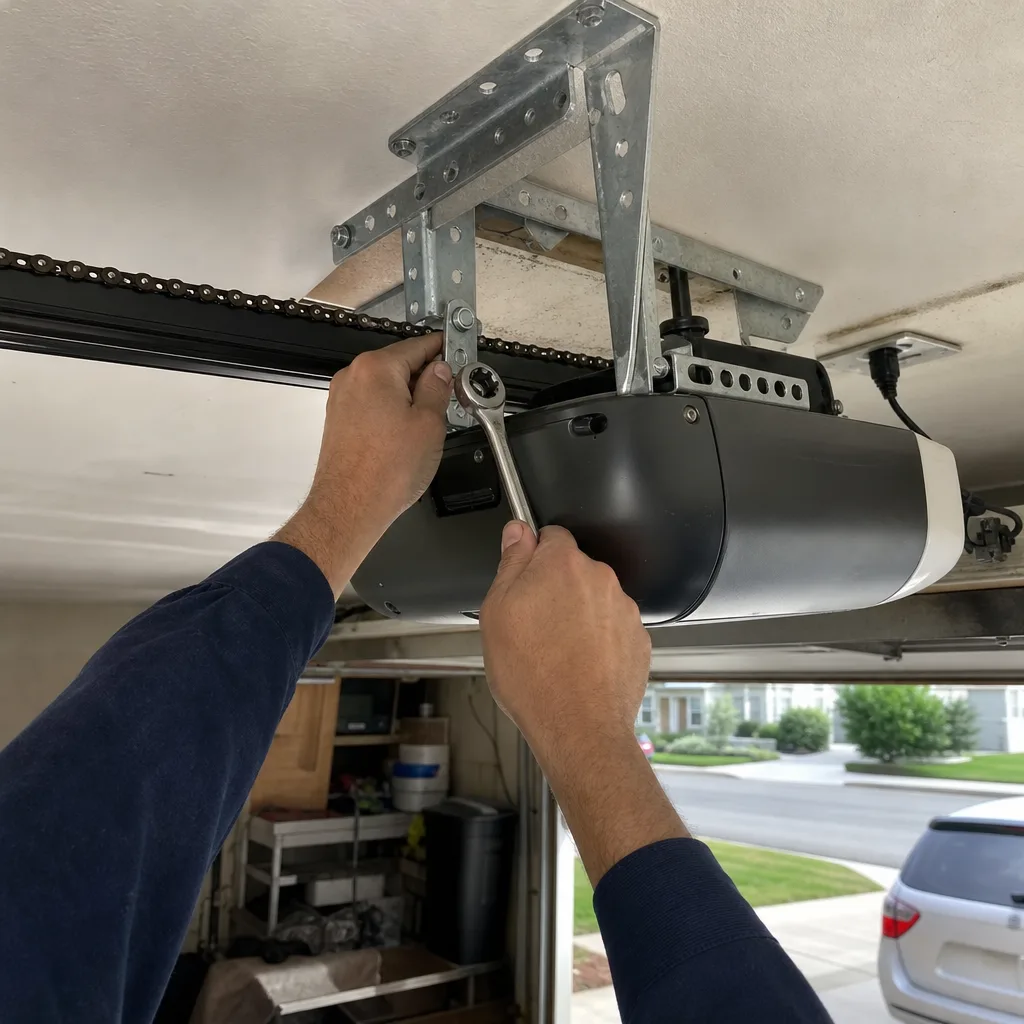
Last updated November 2, 2026
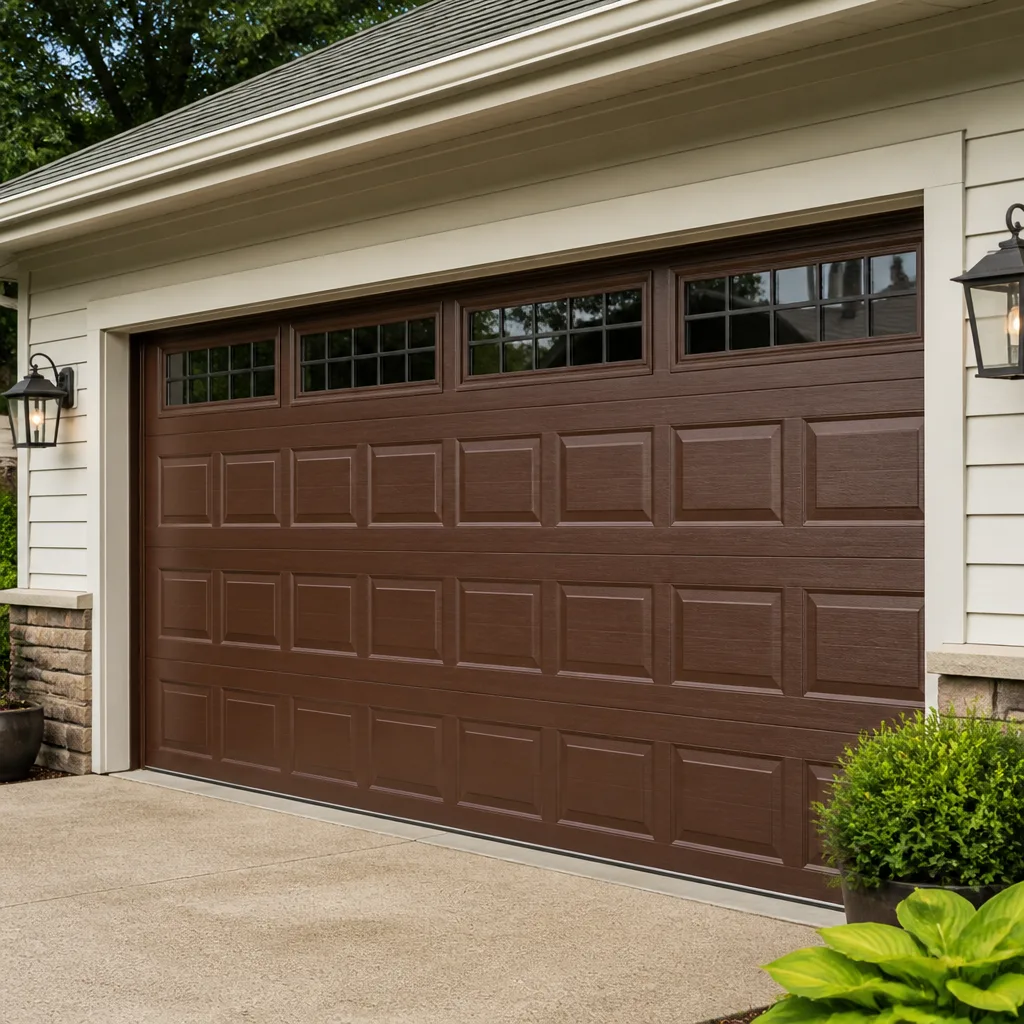 Raised-panel steel
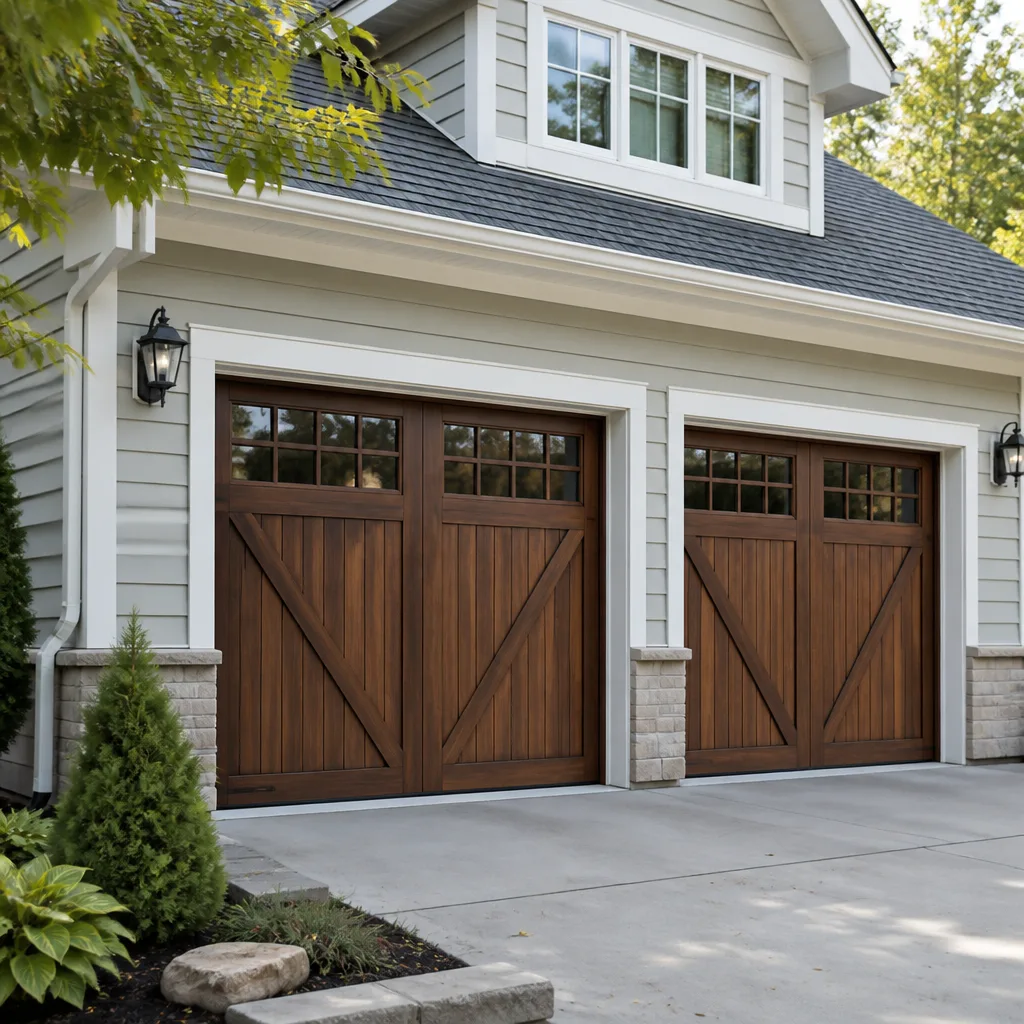 Carriage house
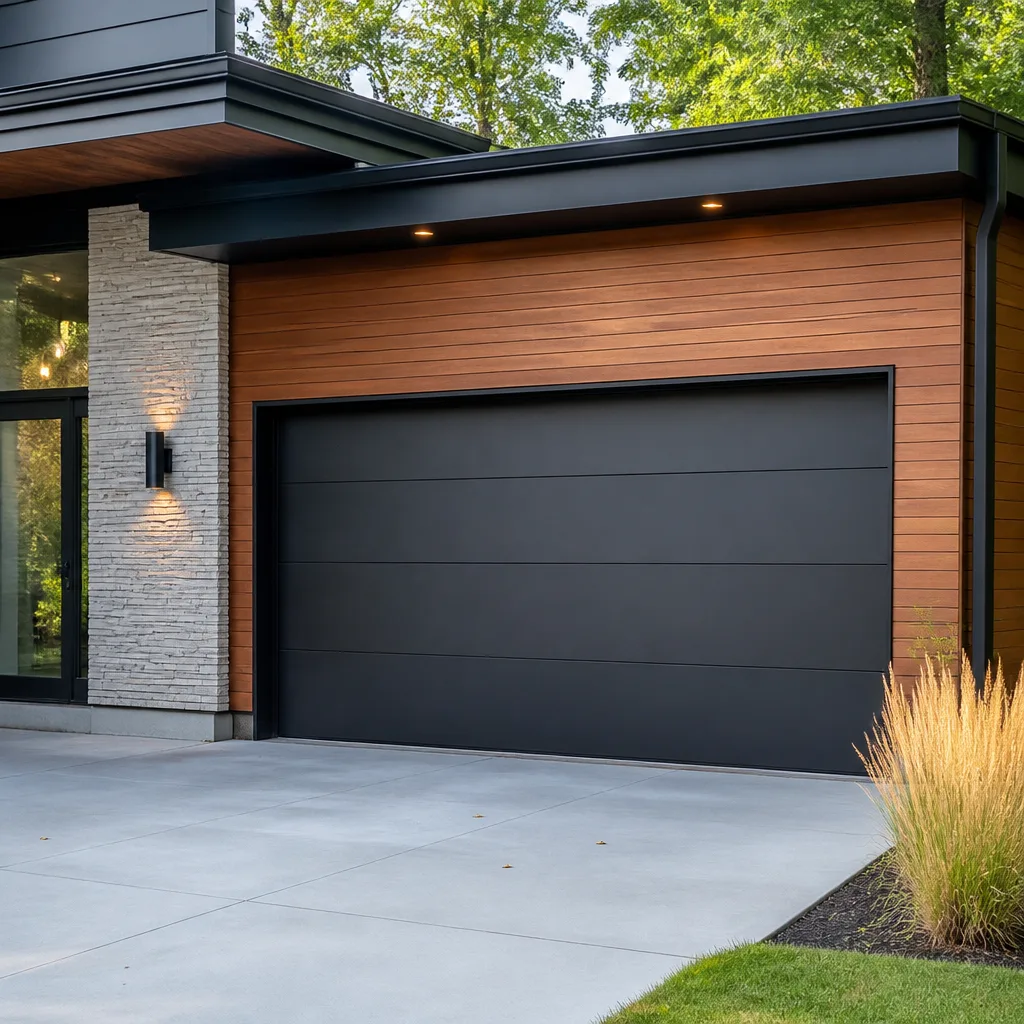 Modern flush
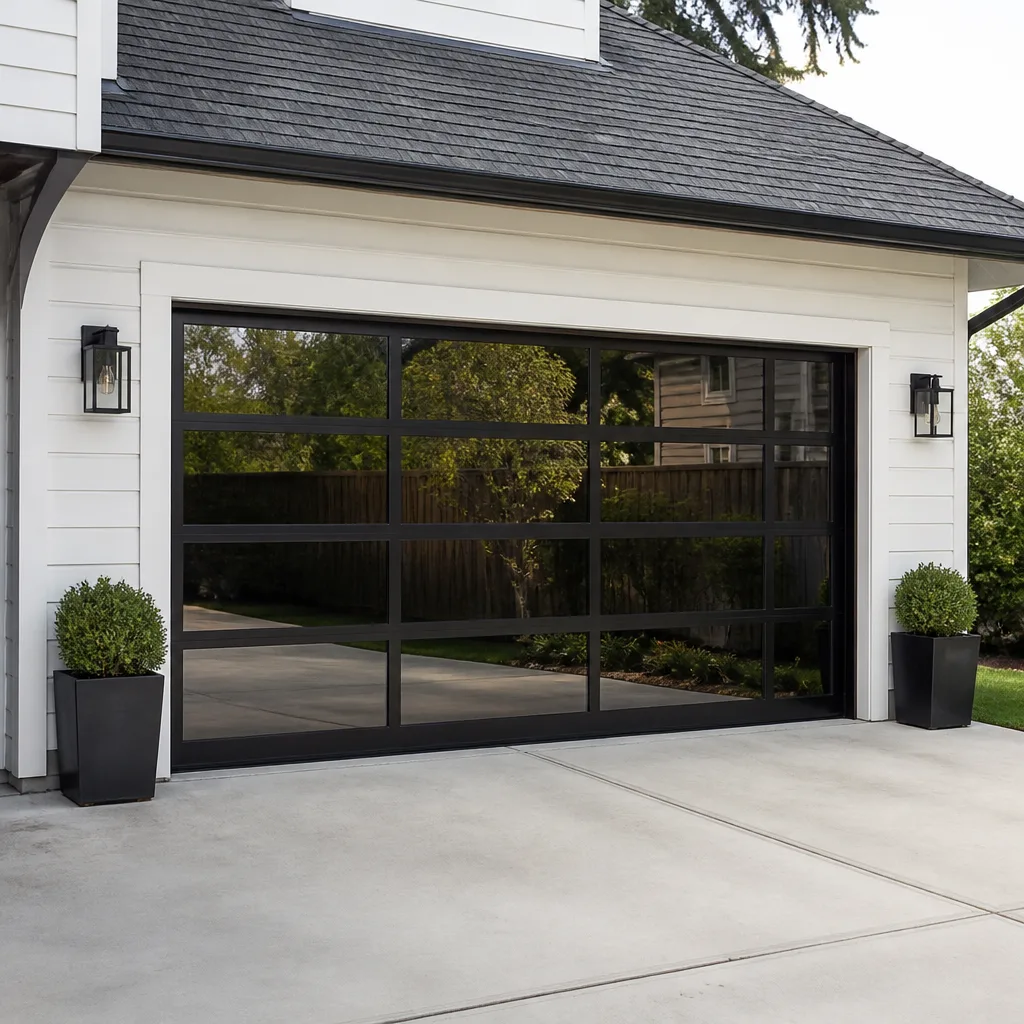 Full-view glass
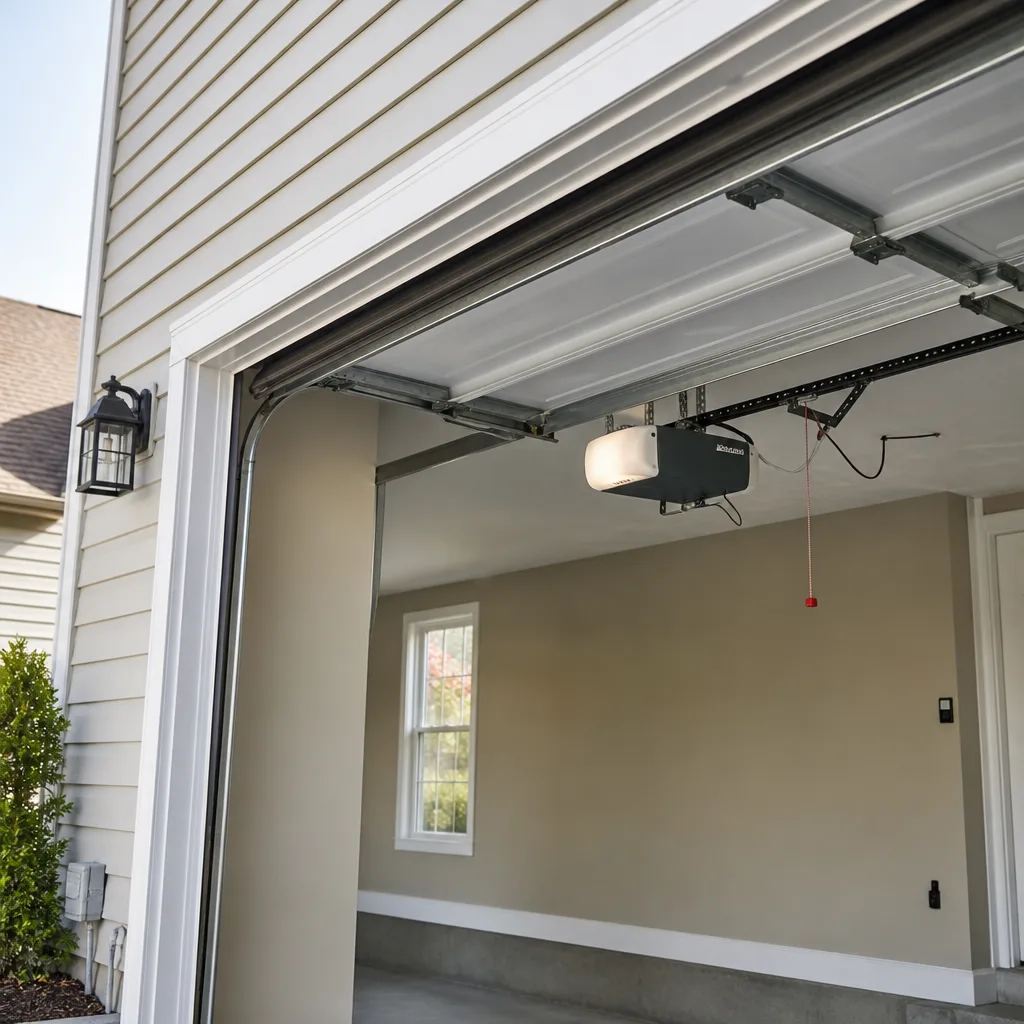 LiftMaster openers
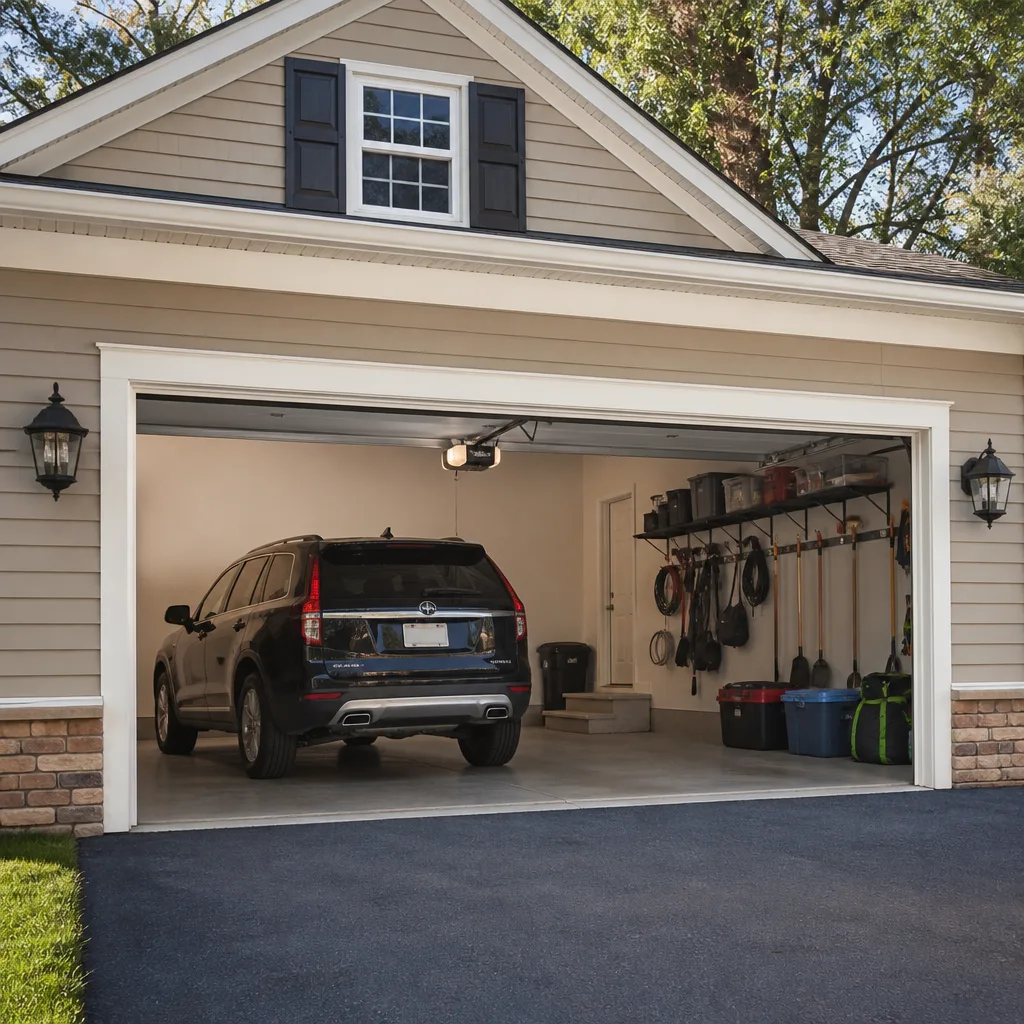 Chamberlain openers
Full 25-point door and opener safety check with every visit - springs, cables, rollers, tracks, and your LiftMaster or Chamberlain opener included
You get a price before we start. It does not change when the truck arrives.
Get your free estimateThe Complete Garage Door Repair Guide for Apple Valley Homeowners
Garage door springs in Apple Valley don’t fail on a schedule. They fail on a temperature curve. The Mojave’s 40-degree overnight drops and 110-degree summer afternoons cycle steel through expansion and contraction at a rate most manufacturer ratings never anticipated. This guide maps those specific High Desert conditions to the parts that fail first, so you know what to watch, what to tighten, and what to leave alone before a $49 roller swap becomes a $400 spring replacement and a busted opener.
Styles & brands we work with
- Raised-panel steel
- Carriage house
- Modern flush
- Full-view glass
- LiftMaster openers
- Chamberlain openers
Quick Answer
Our Garage Door Repair services in Apple Valley typically address one of four things: a broken torsion spring, a snapped cable, misaligned tracks, or a failed opener gear. Most repairs cost between $125 and $350 for parts and labor on a standard two-car door, with springs running $180 to $340 including installation. The High Desert’s heat swings and wind-blown grit wear components down roughly 30 percent faster than manufacturer ratings assume, which is why annual inspection matters more here than in coastal climates.
Table of Contents
- How Apple Valley’s Climate Causes Garage Door Failures
- Springs and Cables: The Parts That Break First
- Rollers, Tracks, and Wind-Driven Grit
- Opener Brands You Should Know in Apple Valley
- An Apple Valley Seasonal Inspection Checklist
- What to Fix Yourself vs. What to Call In
- Common Mistakes to Avoid
- When to Call a Professional
- Frequently Asked Questions
- The Bottom Line
How Apple Valley’s Climate Causes Garage Door Failures
Every garage door system is a network of metal under tension, and metal responds to temperature. Apple Valley’s diurnal swing (the difference between afternoon highs and predawn lows) is among the most aggressive in California. A steel torsion spring that’s wound to hold 150 pounds of torque at 105 degrees behaves differently at 38 degrees the same night. Multiply that thermal cycling across 300-plus days of use per year, and the effective fatigue rate outpaces what spring manufacturers model for temperate regions.
Here’s what we see in Apple Valley specifically:
- Spring fatigue before 10,000 cycles. Most torsion springs are rated for 10,000 to 20,000 open-close cycles. In Apple Valley’s heat, springs often lose tension materially by cycle 6,500 or 7,000. Homeowners in the more established neighborhoods south of Highway 18 near Apple Valley Road tell us their springs fail in 5 to 7 years, not the 8 to 10 manufacturers suggest.
- Cable corrosion from low humidity and dry air. It sounds counterintuitive, but the High Desert’s aridity doesn’t protect steel cables. It makes them brittle. Combined with fine wind-blown dust that acts as an abrasive, cables can snap without warning, particularly where they wrap around the drum near the top of the door.
- Opener motor capacitors cooking off in garages that hit 120 degrees. Most garage openers are rated to 140 degrees Fahrenheit ambient, but sustained exposure to summer attic-like heat inside a closed garage can degrade capacitors over several seasons. If your garage door opener stops working mid-summer afternoon and works again late at night, heat is the likely culprit.
- Weatherstripping shrinkage and cracking. Low humidity tears through rubber bottom seals and perimeter weatherstripping faster than any coastal climate. A cracked bottom seal in Apple Valley admits dust, lizards, and scorpions, not just cold air.
The point isn’t that Apple Valley is uniquely hostile. It’s that the failure patterns here are predictable, which means they’re preventable. Most garage door repair in Apple Valley CA happens because an issue went unseen for a season or two, not because a part failed catastrophically without warning.
Springs and Cables: The Parts That Break First
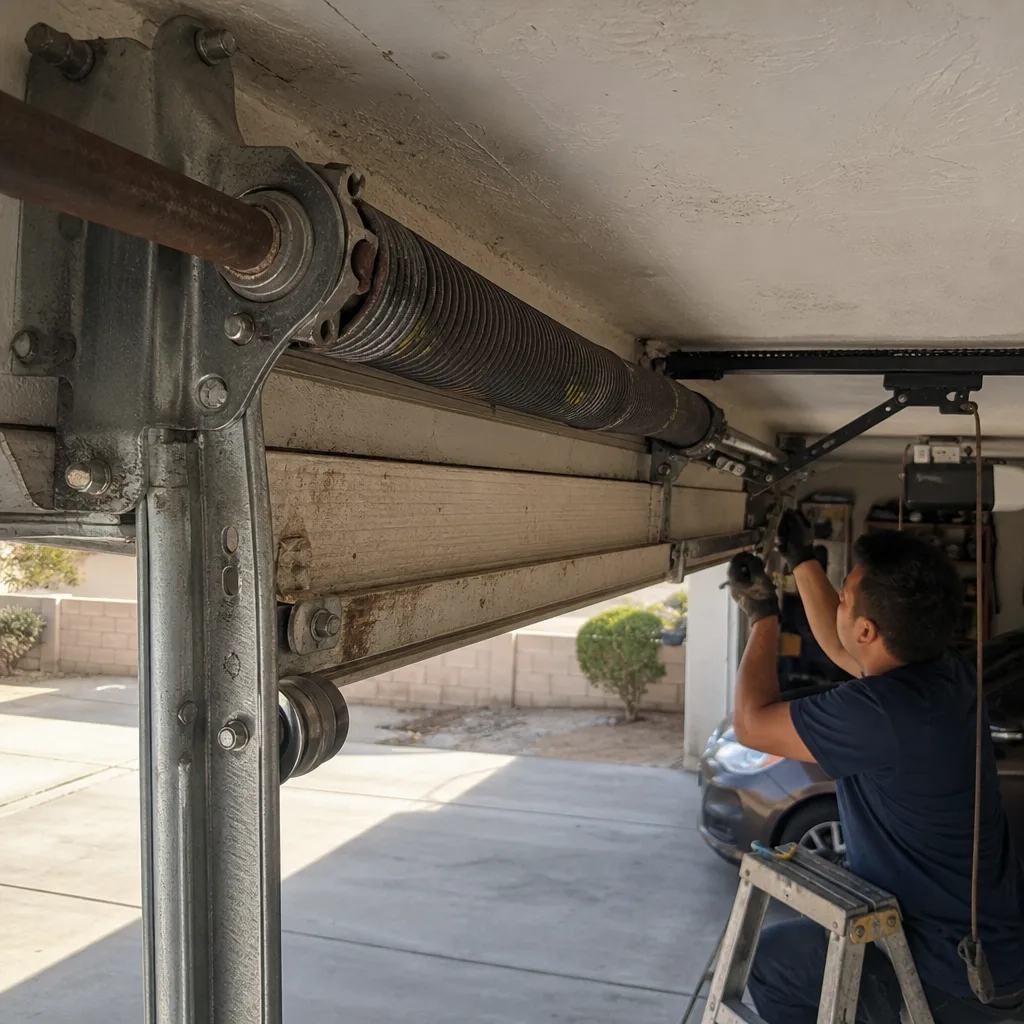
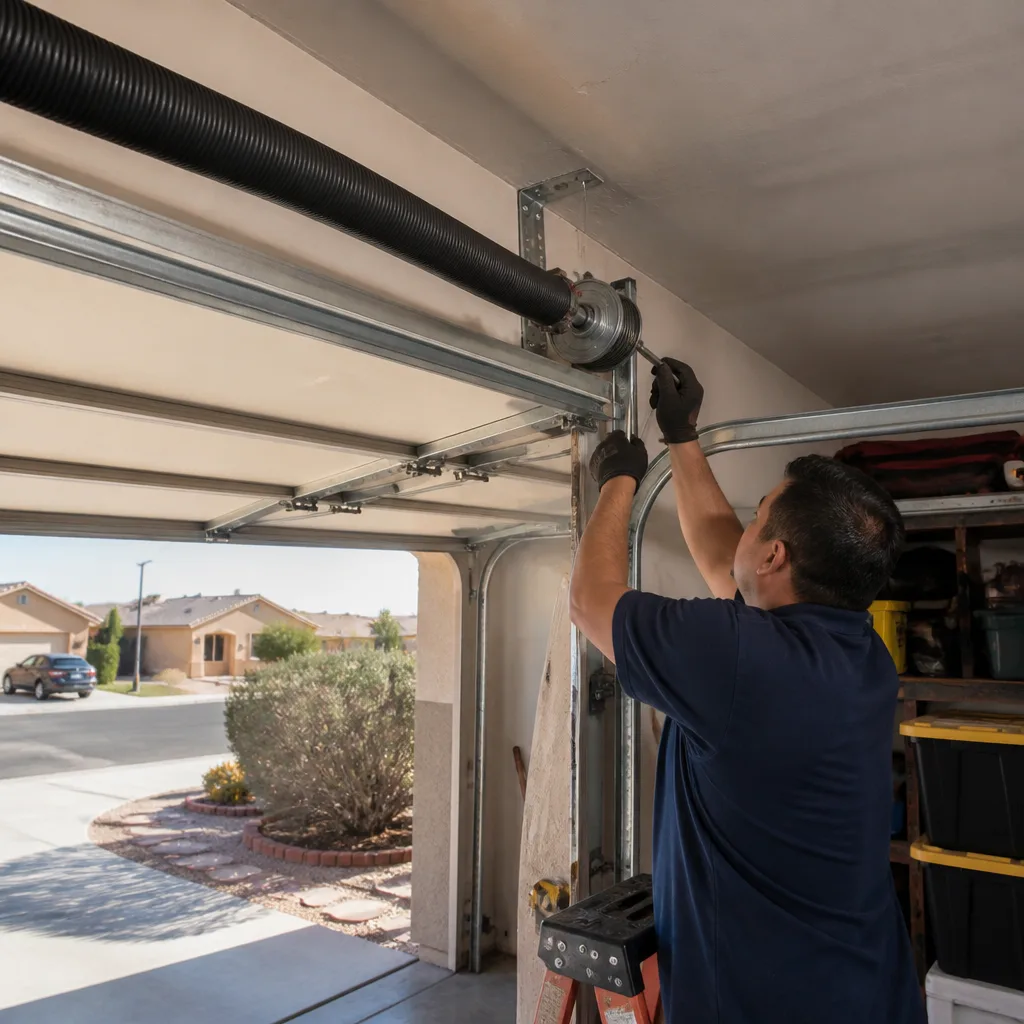
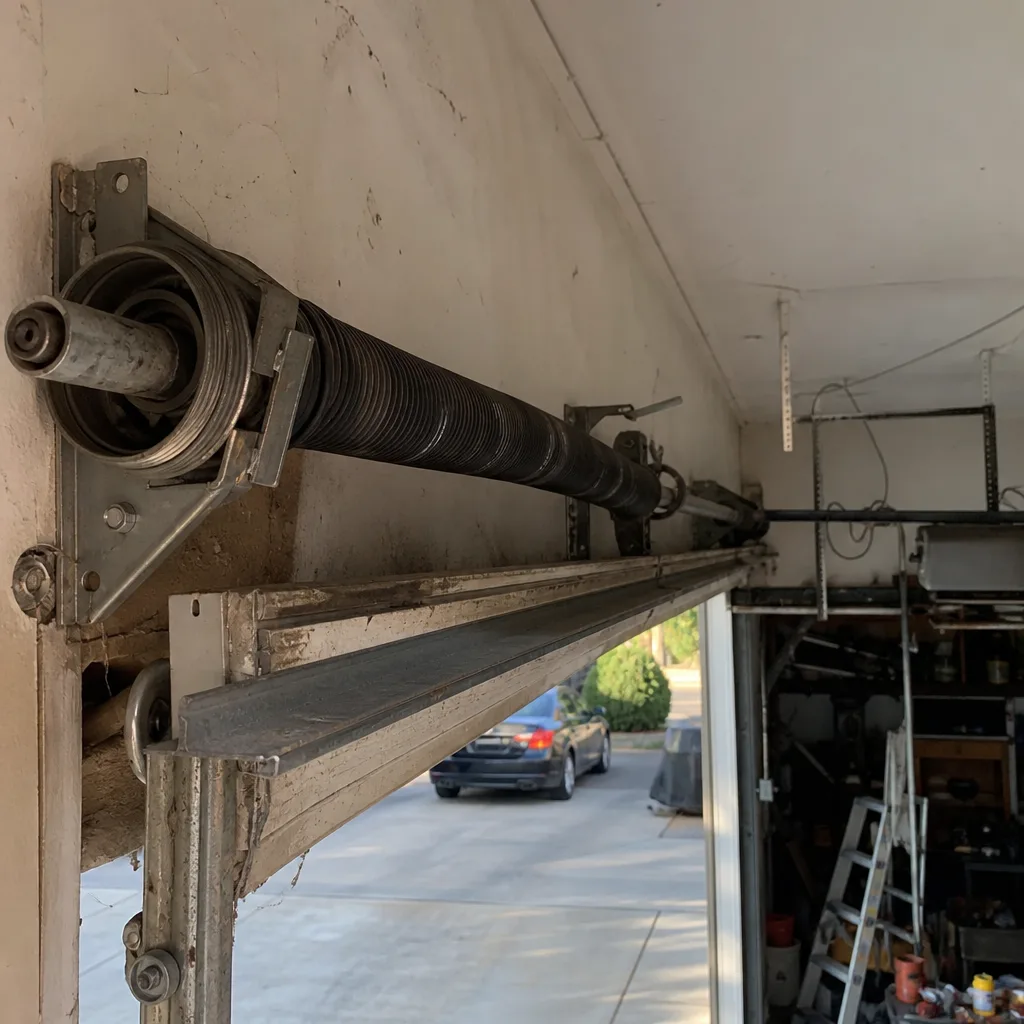
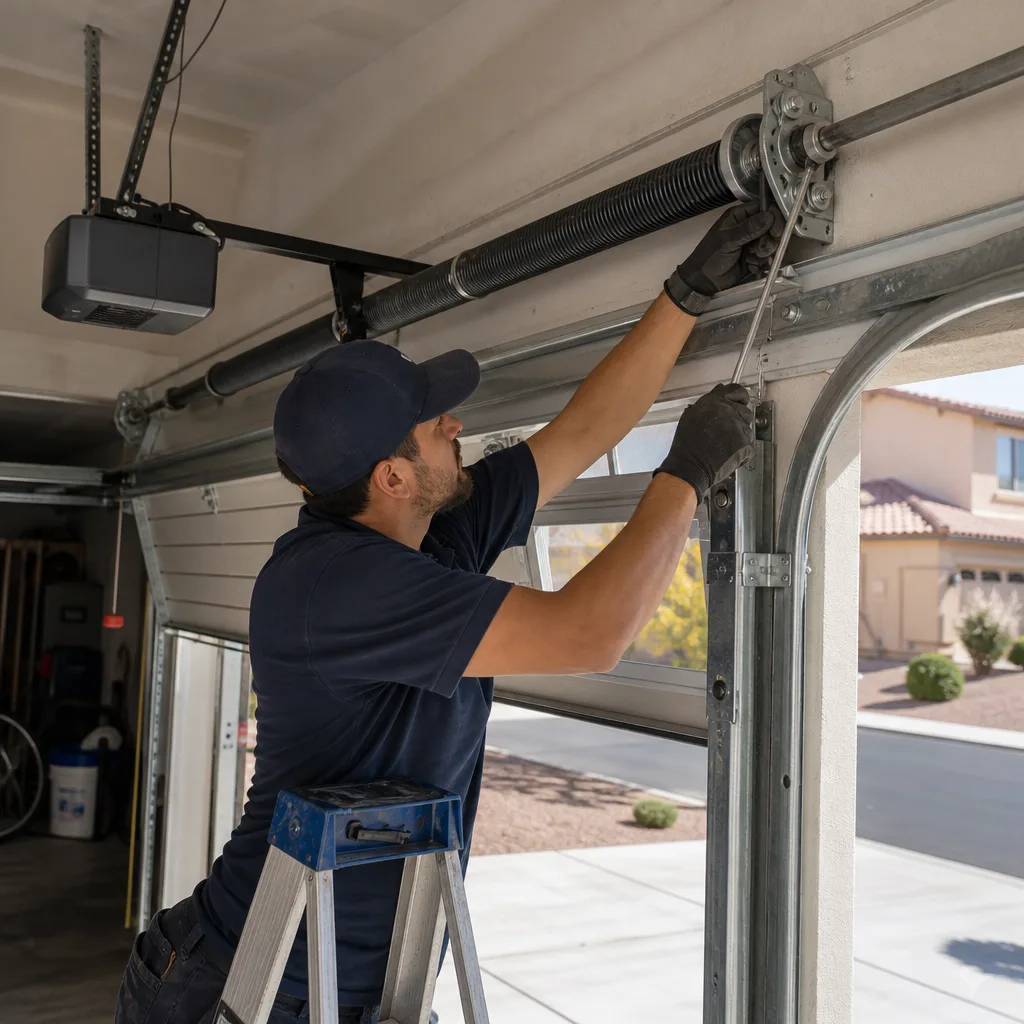
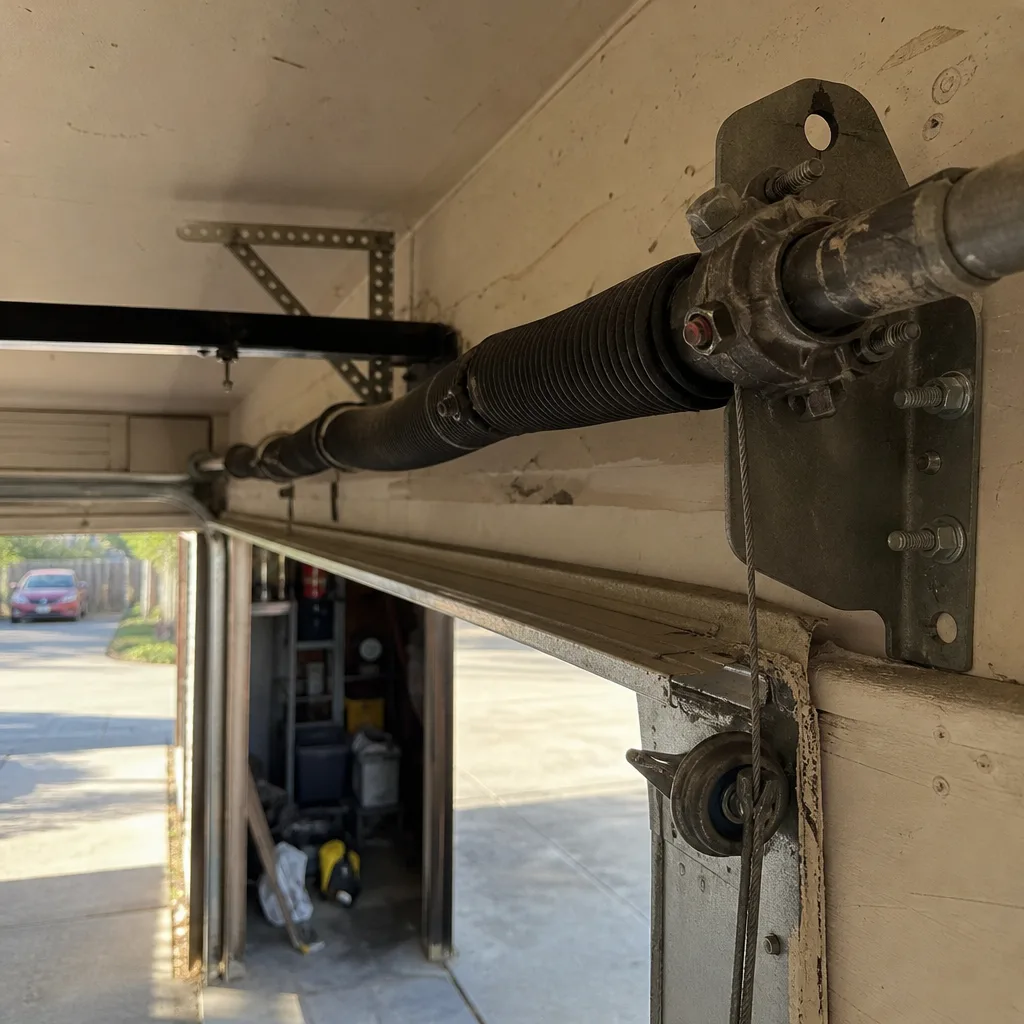
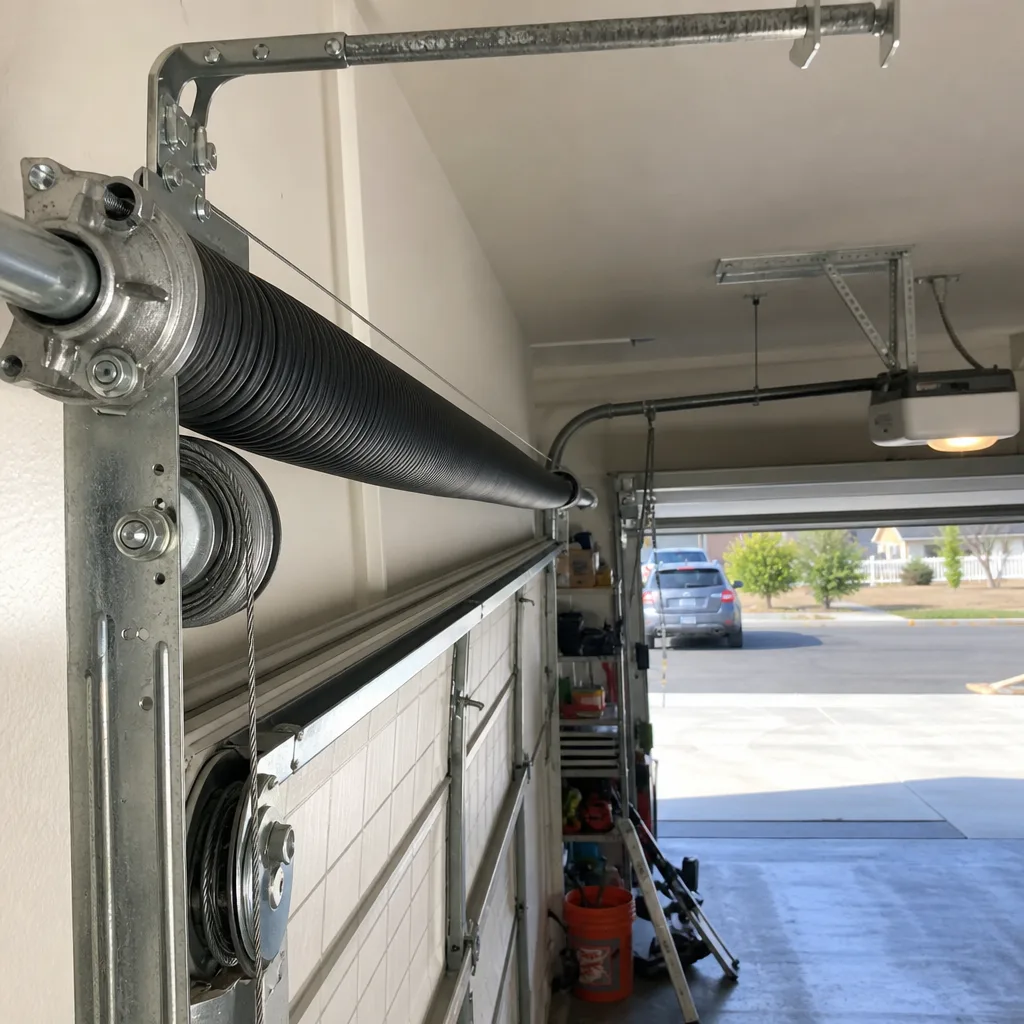
If your garage door won’t open and you hear a single loud bang from your garage, that’s a torsion spring. Not a gunshot, not a car backfiring. A spring under 100-plus pounds of torque letting go. It happens more abruptly in Apple Valley because our thermal cycling creates micro-fractures in the spring coil that eventually propagate under load.
What a broken spring looks like:
- The door won’t lift more than 6 inches, or won’t lift at all.
- You can see a visible 2-inch gap in the spring coil above the center of the door.
- The opener motor runs but the door stays put, and you hear grinding or clicking.
- One side of the door sits higher than the other when closed.
Cable failures follow a similar pattern:
- A frayed strand starts to peel away from the cable bundle near the drum or bottom bracket.
- The cable slips off the drum when the door is in the up position, leaving slack that whips when the door moves.
- The door cocks sideways in the track, jamming one or both rollers.
- Eventually the cable snaps entirely, and the door weight transfers to whatever is left, usually the other cable or the spring itself.
We work on doors from Clopay and Wayne Dalton most frequently in Apple Valley’s tract-home neighborhoods, and on both, the bottom bracket cable connections are where corrosion concentrates. It’s the lowest point on the door, the point that catches road splash during the rare but intense desert rainstorms, and the point where dust accumulates fastest.
A note on springs: do not try to replace or adjust a torsion spring yourself. These springs hold enough stored energy to sever fingers or break bones if the winding bar slips. This isn’t protective trade-guild gatekeeping. It’s physics. If a spring let go on your door, call someone who winds these every week. Your door, not ours to complicate, but a torsion spring repair requires a professional with the right bars, the right spring gauge, and the right respect for the load.
Rollers, Tracks, and Wind-Driven Grit
Apple Valley sits in the Mojave wind corridor, and the same breeze that keeps the Joshua trees leaning also pushes fine silica dust into every moving part of your garage door. Over time, this grit embeds in roller bearings, coats track surfaces, and turns smooth vertical motion into grinding resistance.
The components most affected by sand and dust:
- Nylon rollers with exposed ball bearings. These wear quickly when dust gets inside the bearing housing. You’ll hear a gravelly clicking as the door moves. If left too long, the roller wheel flattens in spots and the door shudders on the way up.
- Steel track surfaces. Dust creates a grinding paste when it mixes with the light grease lubricant on track edges. That paste accelerates wear on both the track and the roller. The fix is simple: wipe tracks clean with a dry rag each spring, then lightly re-lubricate roller bearings and hinges. Do not grease the track itself. That just creates a sticky surface that collects more grit.
- Bottom brackets and weatherstripping grooves. These catch sand in drifts. A pile of sand in the bottom track channel can stop the door from closing fully, and it accelerates wear on the bottom roller.
- Opener rail and chain/belt drive. If your opener uses a chain drive, grit on the rail accelerates sprocket wear. Belt drives are less sensitive, which is one reason we often recommend belt-drive openers for Apple Valley homes with attached garages.
The practical takeaway: inspect rollers and tracks twice a year in Apple Valley, not once. Sand accumulation is not gradual here. It arrives with the first big wind event of spring and keeps coming through the fall. A five-minute visual check prevents most track-related service calls.
Opener Brands You Should Know in Apple Valley
Most Apple Valley tract homes built from the 1990s onward came with one of three opener brands: LiftMaster, Chamberlain, or Genie. Each has a specific failure pattern in our climate, and knowing which you have makes the diagnosis half the work.
LiftMaster (and its consumer line, Chamberlain): These are the most common openers in Apple Valley, especially the chain-drive models from the 2000s and 2010s. The weak point in the High Desert is the drive gear: a plastic gear inside the motor housing that degrades faster in sustained heat. The symptom is a motor that hums but won’t move the door, often accompanied by white plastic shavings on the floor under the opener. The fix is a replacement gear kit, which is a standard repair for us and far less expensive than a new opener.
Genie: The screw-drive Genie models were popular in the 1980s and 1990s and still appear regularly in older Apple Valley homes. Their failure point is the carriage mechanism, which strips when the screw drive becomes dry. In low-humidity environments like ours, lubrication on the screw evaporates faster than in coastal air, leading to groaning, chattering, and eventual stripped carriages. If your Genie opener sounds like it’s chewing rocks, the lubrication is likely gone.
Chamberlain belt drives: These are generally quiet and durable, but the capacitors in the wall control and motor unit are heat-sensitive. An opener that works in the morning but fails in a hot afternoon garage is usually experiencing capacitor degradation, which we diagnose and replace during a standard opener repair visit in Apple Valley CA.
We work on all three brands plus Clopay and Amarr doors, and we maintain parts for each. If your opener is failing, we diagnose the mechanism, not just the symptom. That distinction matters: a door that reverses mid-close might be an opener force-sensor issue or a track issue, and treating the wrong one means the problem returns next week.
For a full picture of how we approach opener diagnostics, see our Garage Door Opener Repair in Apple Valley page.
An Apple Valley Seasonal Inspection Checklist
Generic garage door checklists say “inspect monthly,” which isn’t realistic and doesn’t map to how doors actually wear here. In Apple Valley, your door has two high-risk seasons: after the spring winds deposit grit, and after the summer heat has cycled the springs through maximum thermal stress. A seasonal inspection timed to those windows catches problems before they become failures.
Early spring (March, after the wind season):
- Wipe the tracks clean with a dry cloth. Look for sand accumulation in the bottom track channels and in the weatherstripping grooves at the base of the door.
- Check roller wheels. If any roller wobbles, grinds, or has visible flat spots, plan for replacement. Nylon rollers with sealed bearings last longest in our dust.
- Inspect the bottom seal. Look for cracks, gaps, or sand packed into the seal channel. Replace if you can see daylight under the door when closed.
- Test the safety reverse. Place a 2×4 flat on the ground under the door path and close the door. It should reverse on contact. This is required by federal law and easily checked.
Late fall (October, after summer heat):
- Check spring gaps. With the door closed, look at the torsion spring above the center. If you see an obvious gap or uneven coil spacing, the spring has lost tension and will fail. Do not touch it. Call for service.
- Inspect cables. Look for frayed strands near the bottom brackets and the drum. A cable with visible fraying is a countdown, not a suggestion.
- Lubricate hinges, rollers, and springs with a garage-door-specific spray lubricant. Skip the WD-40; it dries fast and attracts dust. A white lithium or silicone garage-door lube is what we use.
- Test the opener force settings. With the door disengaged (use the red emergency release), the door should lift manually with roughly 10 to 15 pounds of effort. If it feels much heavier, a spring is losing tension.
Two seasonal checks per year is enough for most Apple Valley homes. The key is consistency: the same checks at the same times, so changes are noticeable. A door that was quiet last October and grinds this March is a door that’s telling you something.
What to Fix Yourself vs. What to Call In
Most Apple Valley homeowners can safely handle basic maintenance that doesn’t involve stored spring tension or lifting the full weight of the door. Here’s the honest division, with no guilt-tripping in either direction.
Safe for most homeowners:
- Wiping tracks clean with a dry cloth.
- Lubricating hinges, rollers, and springs with a garage-door lubricant.
- Replacing the bottom rubber weatherstripping (slide it out of the channel, slide the new one in).
- Tightening visible hinge bolts and track bolts with a socket wrench. Use a level to ensure the track isn’t visibly bowed.
- Testing the safety reverse mechanism with a 2×4.
- Cleaning the photo-eye lenses with a soft cloth if the door won’t close.
Leave to a professional, full stop:
- Anything involving torsion springs. The winding rods, the spring winding cones, the center bearing bracket. Torsion springs are under extreme tension and can cause severe injury if they release unexpectedly. This is the single most dangerous component in your home’s mechanical systems.
- Cable replacement or re-spooling. Cables work in tandem with springs. If you replace a cable without releasing spring tension properly, you’re handling a loaded system. Same warning applies.
- Track realignment or panel replacement. A misaligned track can drop the door entirely. A panel replacement requires releasing and re-tensioning the entire system.
- Opener gear or motor work. If your opener hums, grinds, sparks, or smells like burning plastic, the problem is inside the housing. Disconnect the power and call someone who works on that brand regularly.
For anything on the second list, the smart move is a service call. We diagnose the problem, explain what needs replacing and what’s still serviceable, and quote the work before we touch a wrench. That’s the Brightwater approach, and it’s why our Garage Door Repair in Apple Valley page gets so much traffic from homeowners looking for a straight answer.
Common Mistakes to Avoid
Most garage door damage in Apple Valley isn’t caused by weather. It’s caused by well-intentioned homeowners doing the wrong thing at the wrong time, or ignoring a small signal until it becomes a large bill.
- Lubricating the track itself. Greasing or oiling the track surface seems logical, but it creates a sticky film that traps sand and grit. The track is a guide, not a bearing surface. Lubricate the roller bearings, hinges, and springs only.
- Ignoring a slow-down in door speed. When a door starts moving slower, it means the opener motor is working harder against increasing resistance, usually from a weakening spring or dirty tracks. Ignoring it for a season burns out the opener motor, which costs more than a spring replacement.
- Replacing one broken spring only. If your door uses two torsion springs and one breaks, the other is close behind. Replacing both at once costs more upfront but prevents a second service call within a year, which Apple Valley weather makes likely.
- Using WD-40 on garage door parts. WD-40 is a degreaser and water displacer, not a lubricant. It strips existing lubricant and dries quickly, leaving parts worse off. Use a silicone or lithium garage-door lubricant.
- Adding extra tension to compensate for a weak spring. This is a spring that has lost its temper and is nearing failure. Tightening it without understanding spring metallurgy makes the eventual break more dangerous. Replace the spring.
- Disconnecting the opener and manually forcing a stuck door. If the door is stuck, something is mechanically jammed. Forcing it by hand risks bending panels, snapping cables, or pulling the track off the wall. Disconnect the opener and stop. Call a professional.
Each of these mistakes is preventable with a 10-minute visual inspection and a basic understanding of what the components do.
When to Call a Professional
Call a technician when you see a visible spring gap, frayed cables, a door that cocks sideways, a motor that hums without moving, or a panel that’s cracked or dented enough to compromise the door’s balance. Also call if you’ve tried the basic fixes (cleaning the photo-eyes, checking the remote battery, tightening visible bolts) and the issue persists. At that point, the problem is internal, and continued guessing risks damage and time.
Brightwater Garage Door Repair offers free estimates in Apple Valley. We inspect the door, explain the diagnosis in plain terms, and quote the work before anything starts. The price you hear is the price you pay. No scope creep, no “while we’re in there” surprises. Call (855) 473-2508 to schedule a visit. For a broader look at our service offerings, start at the Brightwater Garage Door Repair home page.
Frequently Asked Questions
Spring replacement in Apple Valley typically costs between $180 and $340 for a standard two-car torsion spring setup, including parts and labor. The price varies based on spring wire gauge, door weight, and whether one or both springs are replaced. We always quote the exact price before work starts, and we recommend replacing both springs when one fails to avoid a second service call within the year. Call us for an exact quote. Estimates are free.
Most Apple Valley garage door repairs, including spring replacements and cable fixes, can be diagnosed and fixed in one visit. We carry common spring sizes and cable sets on the truck, particularly for the Clopay, Amarr, and Wayne Dalton doors common in local tract homes. If an unusual part needs ordering, we’ll tell you upfront and schedule the completion before leaving the first visit.
In Apple Valley’s summer, the inside of a closed garage can exceed 120 degrees. That heat degrades the capacitors in older LiftMaster, Chamberlain, and Genie openers, causing them to fail when the garage is hottest and recover when it cools. The fix is a capacitor replacement, which is a standard opener repair for us. If the problem persists after capacitor replacement, we check the motor’s thermal protection circuit.
No. We diagnose the door, provide a written quote for the work, and only proceed once you approve it. If the diagnosis reveals additional issues, we show you what we found and quote those separately before doing any additional work. You’ll never get an invoice that exceeds the approved quote.
Usually not. Individual panels on most Clopay, Amarr, and Wayne Dalton doors can be replaced without replacing the entire door. The panel is ordered to match the door’s material, color, and panel profile. Replacement makes sense when the crack is cosmetic or limited to one panel; if the door has multiple damaged panels or significant rust, we’ll tell you honestly whether panel replacement or a full door replacement using our Garage Door Installation in Apple Valley service makes more financial sense.
Twice a year: once in early spring after the wind season deposits grit in the tracks, and once in late fall after the summer heat has cycled the springs through maximum thermal stress. A seasonal inspection takes about 20 minutes for a homeowner and catches most issues before they become failures. If you’d rather have a professional eye, we offer free estimates and are happy to inspect your door with no obligation.
The Bottom Line
Apple Valley’s garage doors don’t fail randomly. They fail on a predictable schedule driven by the High Desert’s heat swings, wind-blown grit, and aridity. Springs lose tension faster here. Cables corrode at the bottom brackets. Rollers grind under sand loads. Openers cook in enclosed garages. Knowing which parts fail first, and checking them twice a year on Apple Valley’s seasonal timeline, prevents most major repair bills. When something does break, call someone who works on your brand, quotes before beginning, and fixes the mechanism, not just the symptom. That’s exactly what we do. For DIY vs Professional Garage Door: The Apple Valley Homeowner’s Decision Guide, see our blog. For any garage door issue, from a sticking roller to a snapped spring, call (855) 473-2508. We’ll diagnose it honestly and fix it right the first time.
Written by the team at Brightwater Garage Door Repair, serving Apple Valley since 2018.
See the difference
 Before
 After
 Before
 After
 Before
 After