
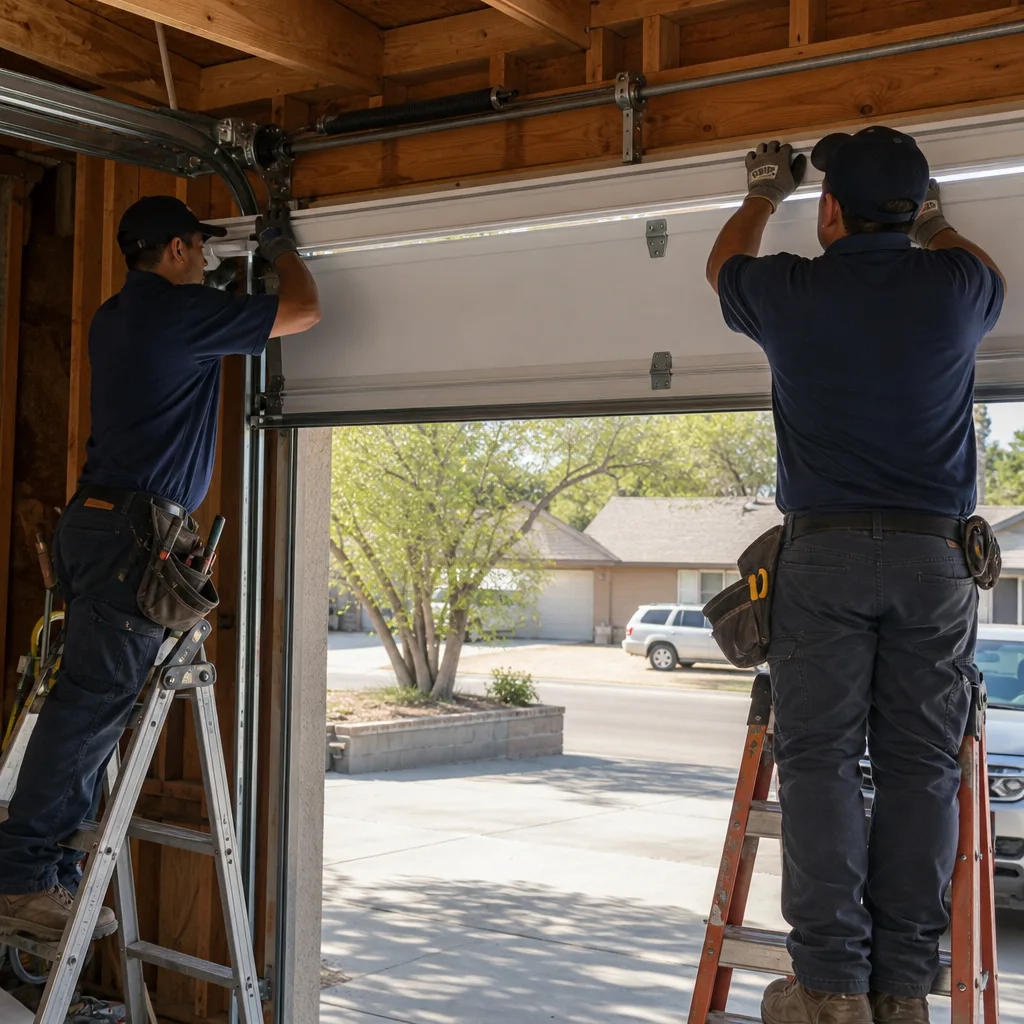
Last updated November 3, 2026
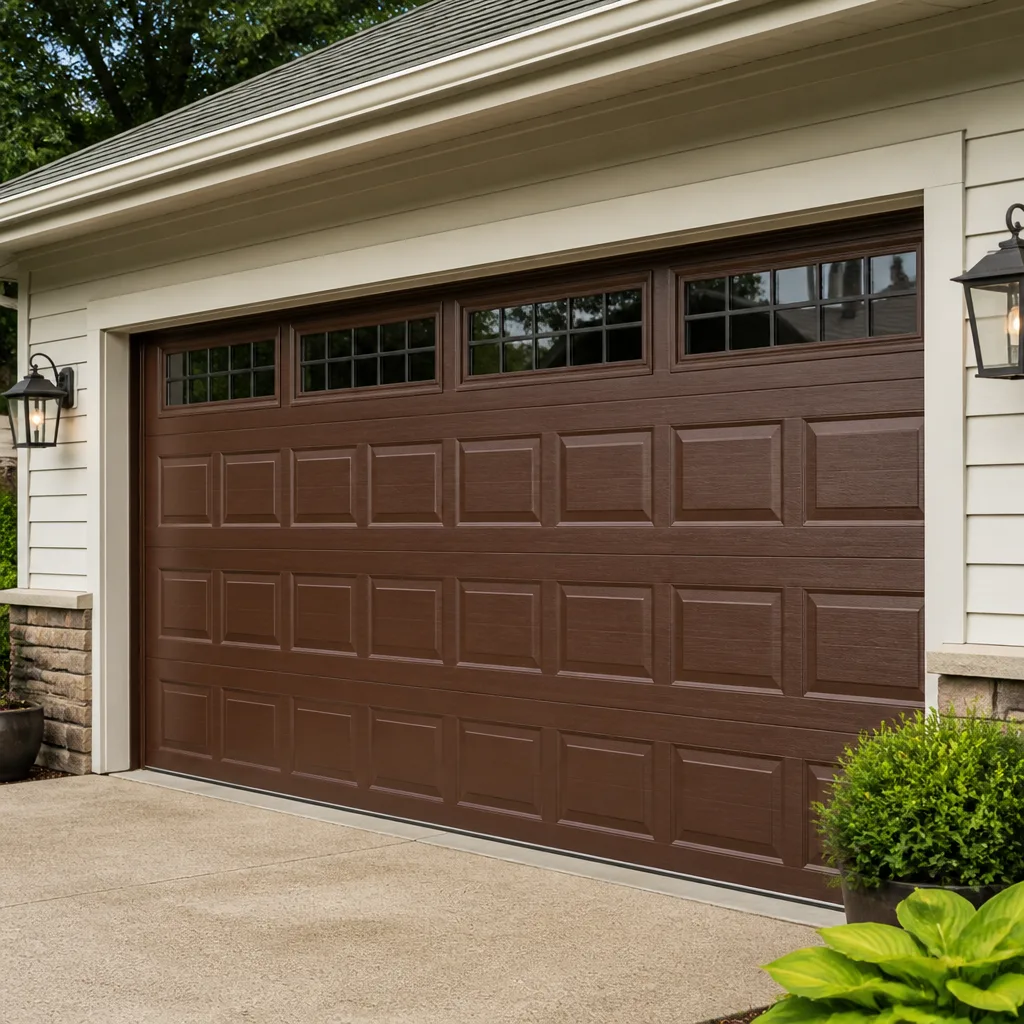 Raised-panel steel
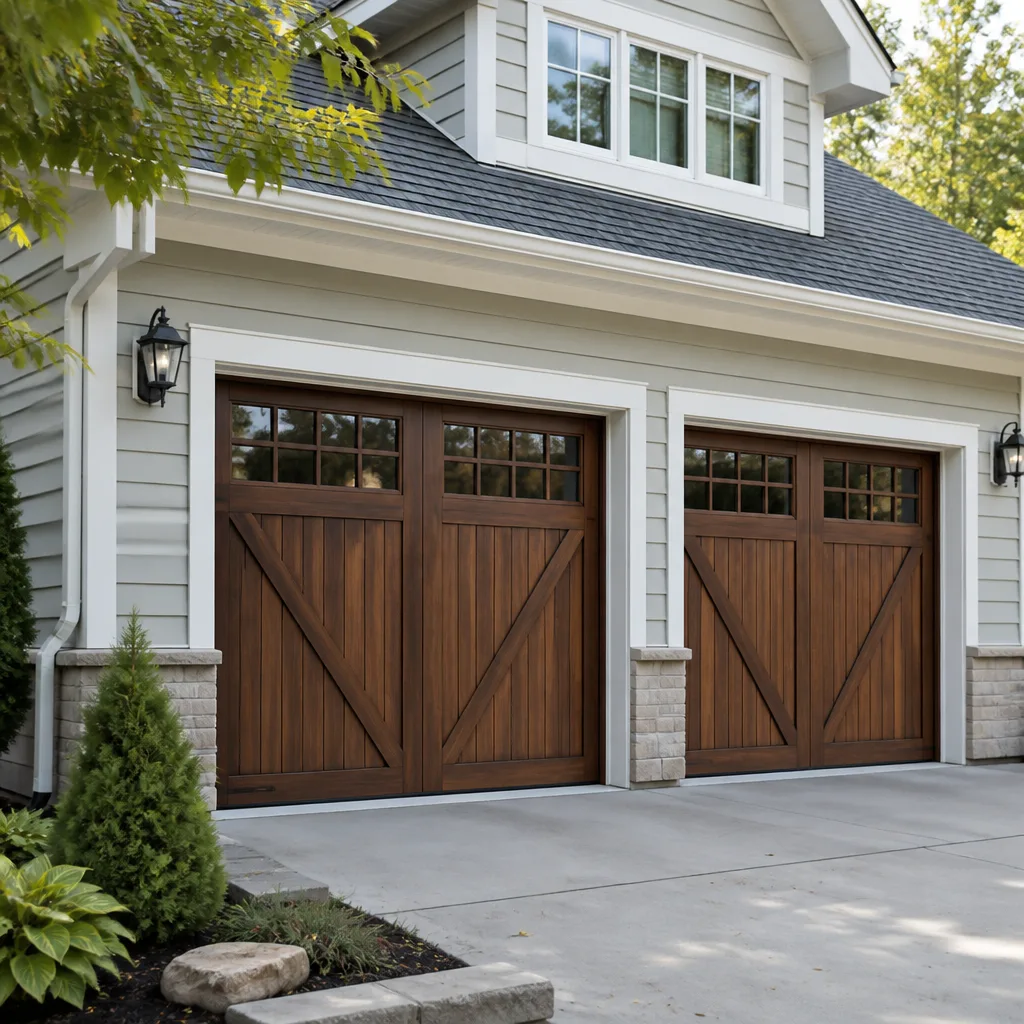 Carriage house
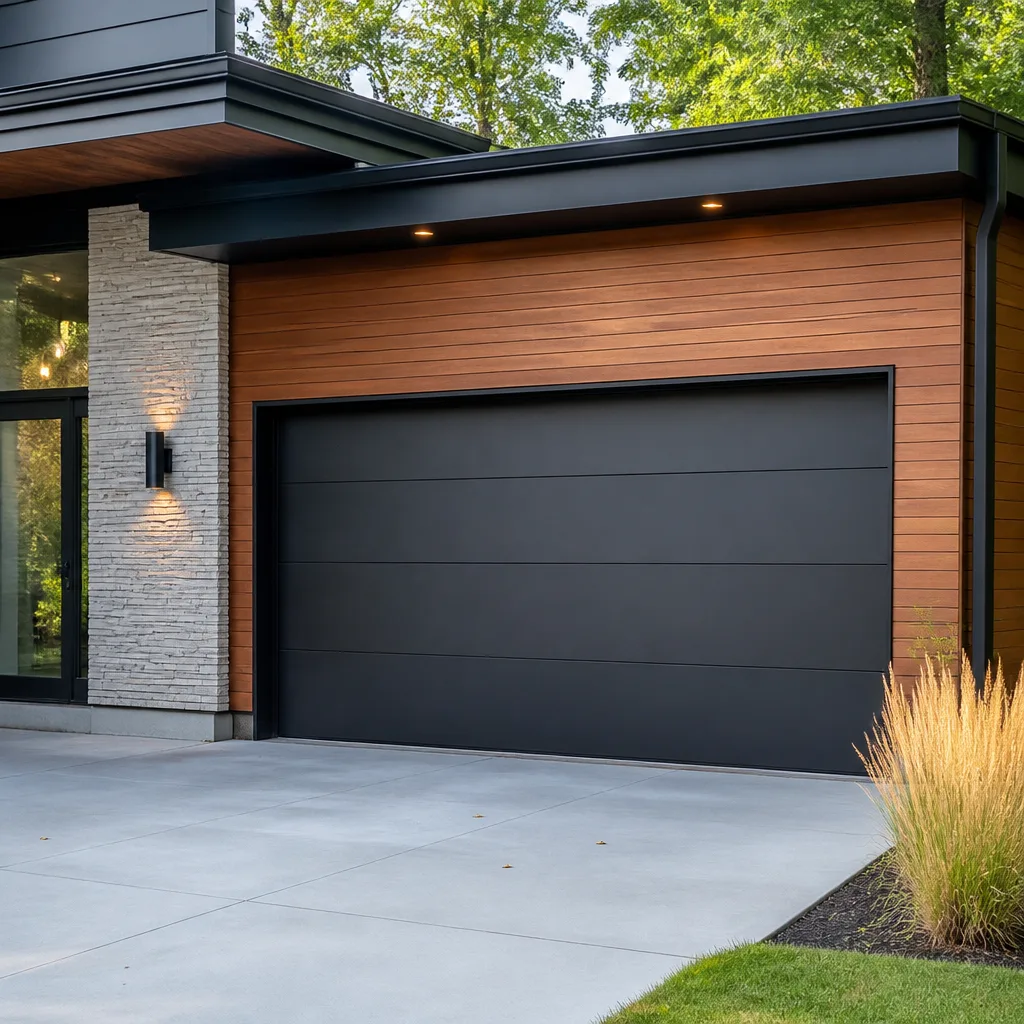 Modern flush
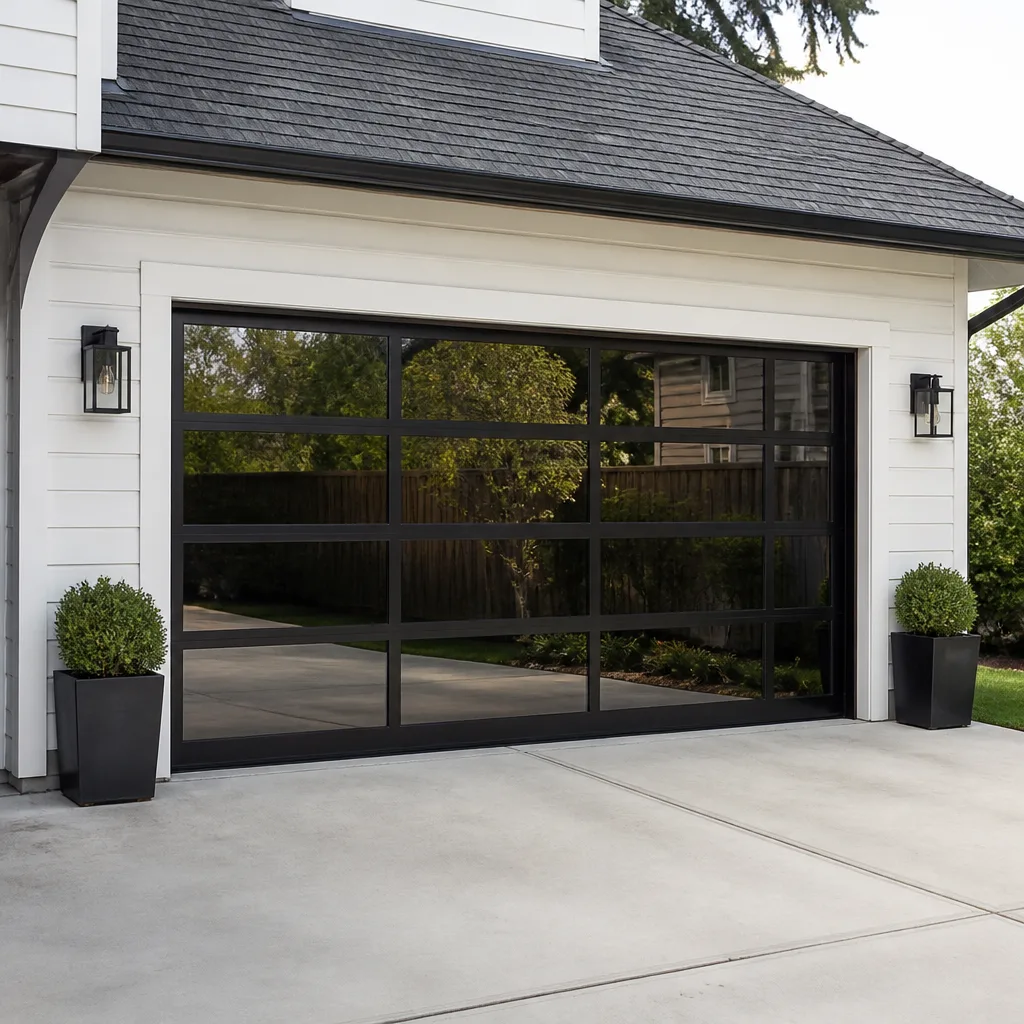 Full-view glass
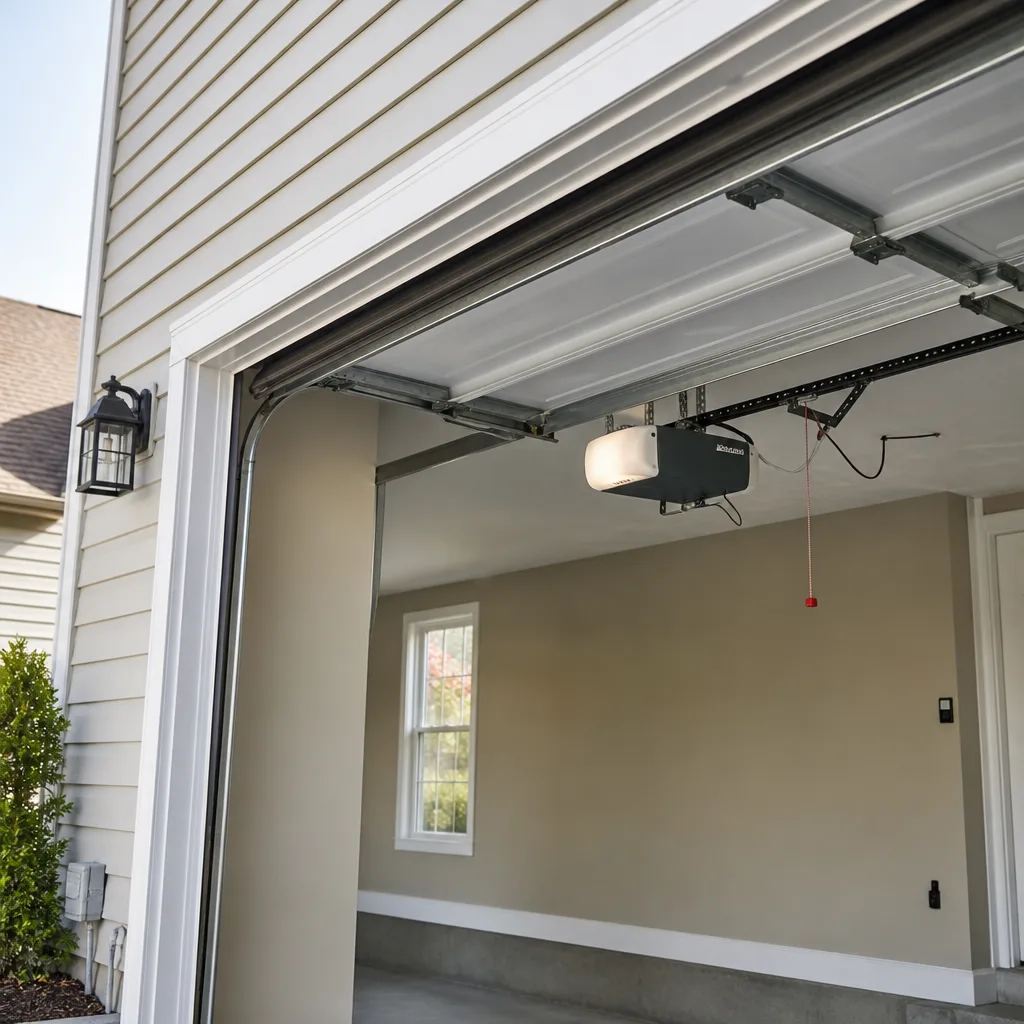 LiftMaster openers
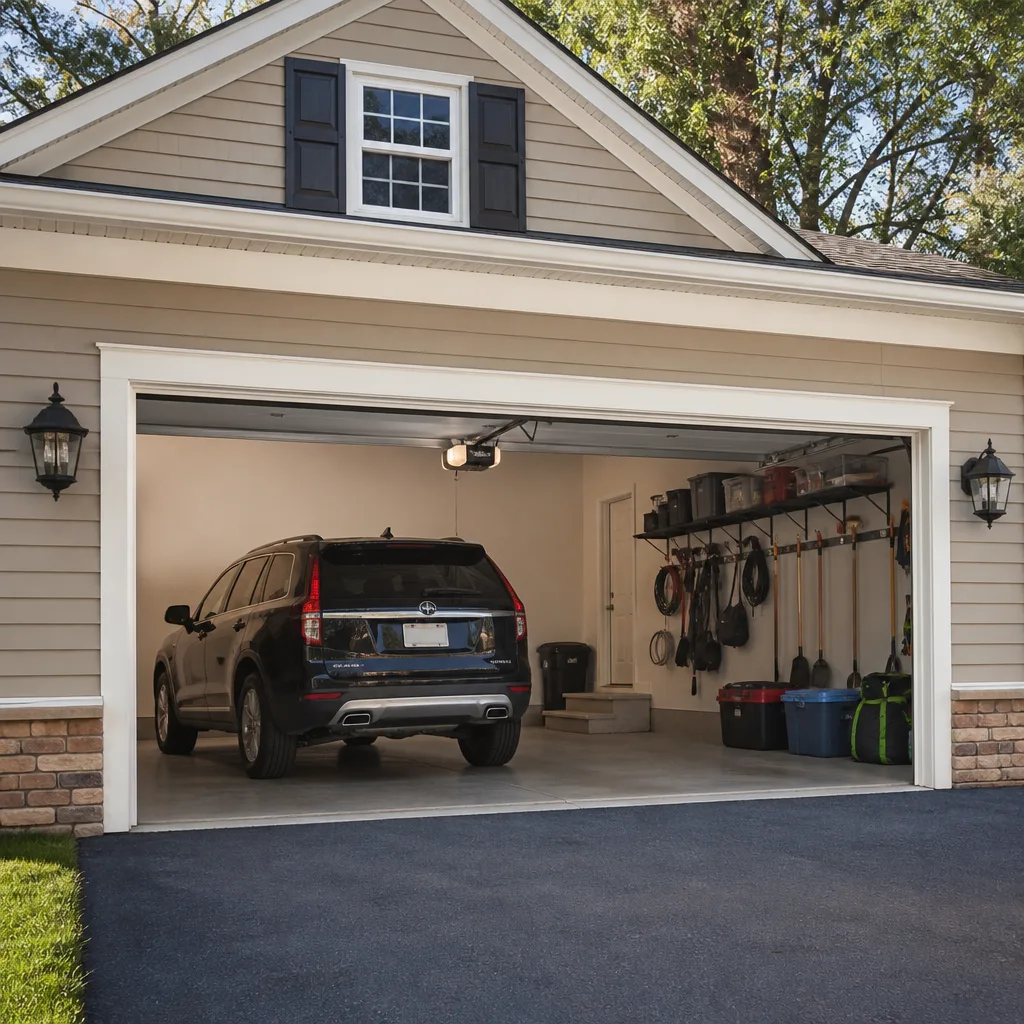 Chamberlain openers
Full 25-point door and opener safety check with every visit - springs, cables, rollers, tracks, and your LiftMaster or Chamberlain opener included
You get a price before we start. It does not change when the truck arrives.
Get your free estimateChoosing the Right Garage Door Brand: A Buyer’s Guide for Apple Valley
Every major garage door brand has a good product line, but several of them carry a standard steel gauge or seal design that underperforms in sustained High Desert heat, and that caveat doesn’t appear in any glossy brochure. We’ve replaced enough warped panels and heat-brittled seals in Apple Valley to know that what works in coastal Orange County does not always hold up out here where summer afternoons routinely push garage interiors past 115°F. This guide explains what actually separates the major brands, which specifications matter most in our climate, and how to choose a door that won’t need special-order parts the first time something wears out. For a deeper dive, see The Complete Garage Door Repair Guide for Apple Valley Homeowners. By the end, you’ll know exactly what to ask for, which brands deliver real value at each price point, and where the hidden costs tend to hide.
Quick Answer
The best garage door brand for an Apple Valley home depends on three things: the steel gauge and insulation core your specific door needs for High Desert thermal cycling, the parts availability for that brand within same-day reach of the High Desert, and whether the opener you pair with it has thermal protection cutoffs that won’t trip during heat waves. Clopay and Amarr offer the strongest combination of 24-gauge steel options and polyurethane insulation for mid-range budgets, while Wayne Dalton’s lighter construction suits attached garages with less direct sun exposure. Most important: buy through a brand-agnostic installer who stocks or can source multiple brands, because brand loyalty alone is not a climate strategy.
Styles & brands we work with
- Raised-panel steel
- Carriage house
- Modern flush
- Full-view glass
- LiftMaster openers
- Chamberlain openers
Table of Contents
- Steel Gauge: Why 24 vs. 25 Matters More in Apple Valley
- Insulation Cores: Polystyrene vs. Polyurethane in High Heat
- Brand-by-Brand Breakdown: What Each Manufacturer Actually Excels At
- Parts Availability: The Repair Cost You Don’t See Coming
- Matching the Opener to the Door: LiftMaster, Chamberlain, Genie, and Craftsman
- Why a Brand-Agnostic Installer Is Your Best Asset
- What to Expect on Price in Apple Valley
Steel Gauge: Why 24 vs. 25 Matters More in Apple Valley
Steel gauge is the single most overlooked specification in residential garage door shopping, and it’s the one that causes the most premature panel replacement we see. The gauge number runs inversely to thickness: 24-gauge steel is thicker than 25-gauge, and 26-gauge is thinner still. Clopay and Amarr both offer 24-gauge options on their mid and upper lines, while several entry-level doors from other manufacturers ship standard in 25 or 26-gauge. The difference sounds academic until a door cycles through our temperature swings for three or four summers.
Apple Valley’s diurnal range is brutal on thin steel. A garage door face can hit 140°F on an August afternoon, then drop into the 60s overnight. That’s an 70 to 80-degree thermal swing every 24 hours for months at a stretch. Thicker 24-gauge panels resist the micro-warping that thinner panels develop over repeated cycles, especially on west-facing and south-facing elevations off Bear Valley Road and Jess Ranch. In our experience, 25-gauge doors fail visibly faster here than they do in Victorville or Hesperia, not because of wind or impact, but because sustained radiant heat plus daily expansion and contraction accelerates metal fatigue at the hinge points.
Here’s the specification hierarchy we recommend based on what we see in Apple Valley garages:
- South-facing or west-facing attached garage: 24-gauge steel minimum, insulated core required. The thermal load is too high for anything thinner.
- North-facing attached garage or shaded by mature trees: 25-gauge is acceptable if the insulation core is polyurethane rather than polystyrene.
- Detached garage with afternoon shade: 24-gauge still preferable, but a 25-gauge door from Clopay or Amarr with a thermal break will hold up reasonably.
- Any door on a home above 3,000 feet elevation near Apple Valley’s northern edge: Step up to 24-gauge. UV intensity at elevation accelerates paint and seal degradation regardless of temperature.
When you’re comparing quotes, ask the installer to write the gauge on the estimate. If they won’t, that tells you something. We work on all eight major brands, and the gauge specification is printed on the door’s data plate, so there’s no reason for ambiguity.
Insulation Cores: Polystyrene vs. Polyurethane in High Heat
Garage door insulation comes in two main forms: expanded polystyrene panels (the white foam board you can snap by hand) and injected polyurethane (a denser foam that bonds directly to the steel skins). For Apple Valley, the difference between the two matters more than the R-value numbers on the sales sheet suggest.
Polystyrene is a floating fill. It’s cut slightly undersized and placed inside the panel cavity, which means it can shift, settle, and pull away from the steel as the door cycles through hot and cold. In a climate like ours where garage interiors sit above 110°F for weeks at a time, that air gap between insulation and skin becomes a convection channel. The door effectively insulates less than its rating. Polyurethane, by contrast, is injected as a liquid and bonds to both steel skins as it cures. It acts as a structural adhesive, so the entire panel becomes one rigid composite. That’s why polyurethane-core doors feel noticeably more solid when you push on them, and why they resist the oil-canning flex that develops in cheaper doors after a few High Desert summers.
R-value matters, but mechanism matters more. A 25-gauge door with polystyrene might claim R-9 and underperform an R-6 polyurethane door in August. We tell customers to focus on the core type first and the R-number second.
Two more heat-specific factors to check before you buy:
- Ask about the thermal break. Entry-level doors often omit the thermal break between the exterior and interior steel skins, which means the metal conducts heat straight through even if the core is decent. Clopay’s Intellicore and Amarr’s ThermaCore designs both include a thermal break, and Wayne Dalton’s foam-core doors on the mid and upper lines do as well. This is the difference between a garage that stays at 95°F and one that hits 110°F on a 108-degree day.
- Check the bottom seal material. Most brands ship a generic vinyl bulb seal, but vinyl plasticizes and loses flexibility faster in prolonged heat. We see more bottom-seal failures in Apple Valley than anywhere else we service, and the pattern tracks with the heat. A dual-durometer seal (firmer at the attachment point, softer at the contact edge) lasts measurably longer, and brands like Clopay offer them as an option on newer lines.
If you intend to use your garage for anything besides parking, such as a workshop, gym, or storage for heat-sensitive items, polyurethane core with a thermal break is the right call. If the garage is purely a carport and you don’t spend time in it, polystyrene will do the job but expect the door to feel flimsier with each passing year.
Brand-by-Brand Breakdown: What Each Manufacturer Actually Excels At
We’re certified on eight major manufacturers, and the honest truth is that none of them makes a universally superior door. For detailed repair insights, read The Complete Garage Door Repair Guide for Apple Valley Homeowners. Each has a strength and a weakness relative to Apple Valley conditions. Here’s the breakdown based on what we see in the field, with a focus on the brands homeowners in Apple Valley ask about most: Clopay, Amarr, and Wayne Dalton.
Clopay: The Broadest Product Range
Strength: Clopay builds more configurations than anyone else, which means you can get a 24-gauge, polyurethane-core, thermal-break door in virtually any style from carriage-house to contemporary glass. For Apple Valley, their Intellicore line is the sweet spot: bonded polyurethane, good thermal performance, and panel profiles that hold up to prolonged sun exposure without warping at the seams. Weakness: The entry-level Clopay lines are 25-gauge with polystyrene, and sold side by side with the premium lines at the same dealers. You need to know the spec, not the nameplate.
Amarr: Consistency at Mid-Range Price Points
Strength: Amarr’s manufacturing is tightly standardized, which means less variance between panels and a fit-and-finish that holds up over years ofHigh Desert cycles. Their Olympus and Heritage lines offer 24-gauge steel with ThermaCore polyurethane at prices that undercut comparable Clopay configs by 8 to 12 percent in this market. Weakness: Amarr’s design language is more conservative than Clopay’s. If you want a specific architectural look rather than a solid basic door, the options thin out faster on the Amarr side.
Wayne Dalton: Light Weight, Fast Cycle, Lower Thermal Mass
Strength: Wayne Dalton’s TorqueMaster system keeps the springs inside the torsion tube rather than exposed on the shaft, which reduces corrosion and extends spring life in dusty environments. Apple Valley’s airborne grit and dust are hard on exposed moving parts, so this design has a real advantage here. Their doors also weigh less, which reduces strain on the opener. Weakness: Lighter construction means thinner gauge on some lines, and the foam core on their entry-level doors is less effective in sustained heat than polyurethane. For shaded attached garages, a Wayne Dalton is a perfectly good door. For a west-facing unshaded slab, we’d steer you toward Clopay or Amarr with 24-gauge skins.
Genie enters this conversation mostly on the opener side, which we’ll cover below. On the door side, their residential lines are less common in Apple Valley, and parts for Genie doors can be slower to source than Clopay, Amarr, or Wayne Dalton.
Parts Availability: The Repair Cost You Don’t See Coming
Every garage door will need parts eventually. Springs, rollers, cables, hinges, seals, sensors. The question that matters for an Apple Valley homeowner is how quickly those parts arrive when the failure happens, because a garage door stuck halfway open is not something you leave overnight in a neighborhood where nighttime temps drop into the 40s and coyotes wander through open garages off Rock Springs Road.
Parts availability breaks down like this in the High Desert:
- Clopay and Amarr parts: stocked or same-day reachable. Both brands move enough volume through Southern California distributors that common parts (hinges, rollers, bottom seals, struts, end bearing plates) sit on distribution shelves within 90 minutes of Apple Valley. A broken spring on a Clopay or Amarr door is almost always a same-day repair.
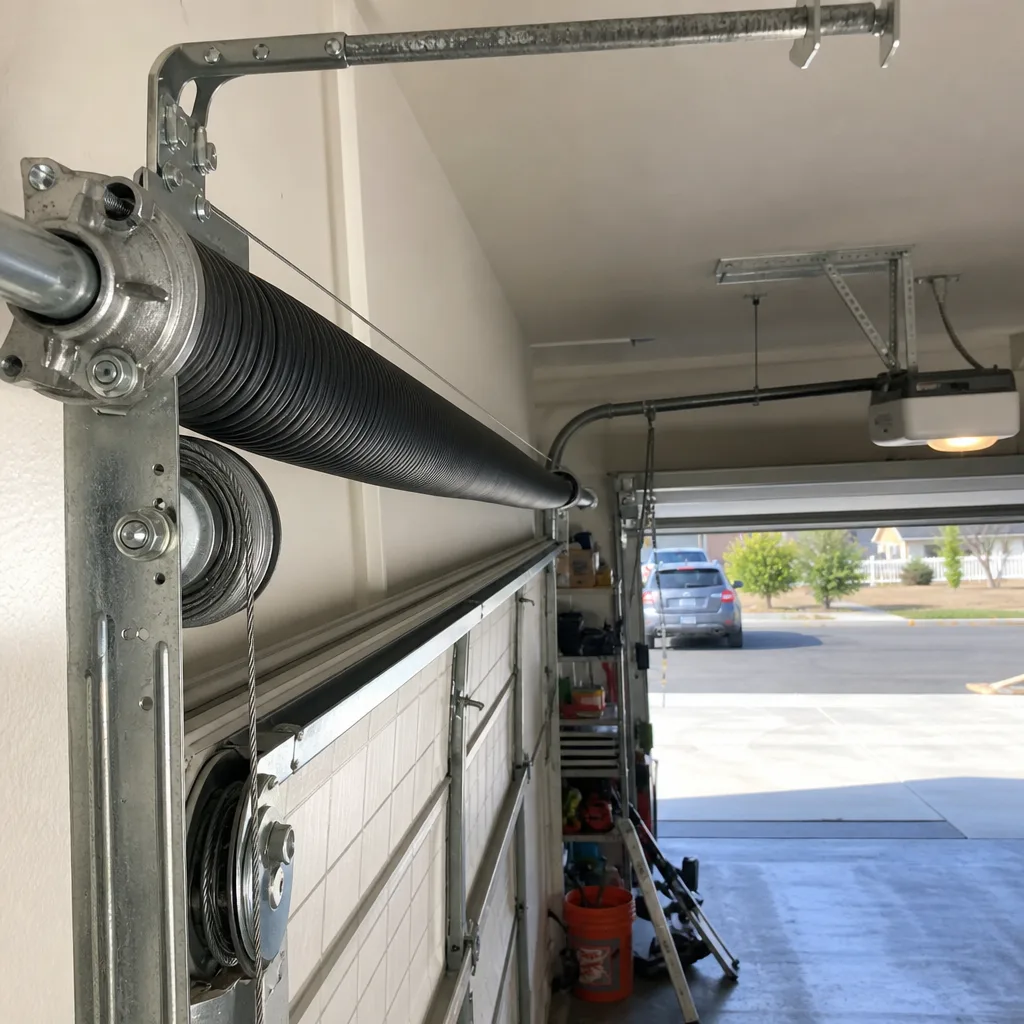
- Wayne Dalton parts: sometimes same-day, sometimes 2 days. The TorqueMaster spring system is not interchangeable with standard torsion parts, which means a spring replacement requires either a Wayne Dalton-specific spring assembly or a full conversion to standard torsion. We stock conversions because the original parts can take 2 days to arrive from a warehouse, and most customers don’t want to wait.
- Genie door components: 3 to 5 days shipping in many cases. Genie’s distribution network is geared toward openers rather than doors, which means door panels and structural parts have a longer lead time. If you buy a Genie door, ask your installer to include a spare set of rollers and hinges in the deal. It’s cheap insurance.
This is not a small consideration. We’ve repaired doors in the Mesa View and Sitting Bull Road areas where the homeowner bought a discounted door from a big-box store and didn’t realize until the first spring failure that the brand’s parts were special-order. The repair itself is straightforward. The waiting is not.
Before you finalize any door purchase, ask the seller three questions: What common parts for this brand do you physically stock or can get same-day? What happens to my warranty if the original installer goes out of business or moves? And who in Apple Valley is certified to work on this brand when something breaks? A good installer will answer all three without blinking.
Matching the Opener to the Door: LiftMaster, Chamberlain, Genie, and Craftsman
The opener brand matters as much as the door brand, and for Apple Valley there are four openers you’ll see most often: LiftMaster, Chamberlain, Genie, and Craftsman. The first thing to understand is that Chamberlain and LiftMaster are the same manufacturer. Chamberlain Group builds both lines: Chamberlain is the retail version, LiftMaster is the professional line sold through installers. Craftsman openers are also built by Chamberlain Group under license. So three of the four major opener brands on the market come out of the same factory, with different feature sets and support channels.
Here’s how they compare on the factors that matter in a High Desert climate:
Thermal Protection Cutoffs
Every modern opener has a thermal overload sensor that shuts the motor down when it runs too hot. In Apple Valley, where a garage interior can hit 115°F before the door even moves, this sensor trips more often than most people expect, and it’s the most common “my opener just quit working” call we get in July and August. LiftMaster’s professional-grade motors use a heat-dissipating housing and a cutoff threshold set slightly higher than the retail units. Chamberlain retail openers will still trip in a genuinely hot garage, but they recover faster after a 15-minute cool-down. Genie’s belt-drive models have a similar cutoff, but their older screw-drive models (still common in Apple Valley homes from the 1990s and 2000s) run hotter and trip more readily. If your opener keeps shutting off on hot afternoons, it’s often not broken; it’s doing what the thermal sensor was designed to do, and the fix is either better garage ventilation or an opener upgrade with a higher duty rating.
Battery Backup
Apple Valley’s power infrastructure is more stable than some rural High Desert communities, but wind events still knock out power every winter and spring, and a garage door locked on a dead opener is the kind of inconvenience that turns into a project when you have to pull the emergency release in a cold January wind. LiftMaster and Chamberlain both offer battery backup on their mid and upper models, and the battery kicks in automatically when line power drops. Genie offers battery backup on select models only. If your home has a single-point garage entry and you park inside daily, battery backup is worth the $75 to $120 adder at purchase.
Smart Home Integration That Works Out Here
The smart home conversation is more nuanced in Apple Valley than the marketing suggests. MyQ, Chamberlain Group’s smart platform, works well in areas with consistent internet service, and most of Apple Valley has reliable broadband through Frontier or Spectrum. But if you’re in a pocket where the cellular signal or home Wi-Fi is marginal, a smart opener that depends on cloud connectivity will frustrate you. LiftMaster models with built-in Wi-Fi and MyQ integration perform well in our service area when the home network is solid. Genie’s Aladdin Connect system works, but its app reliability lags MyQ in our customers’ experience, especially during the firmware update cycles. If smart integration matters to you, buy the opener with integrated Wi-Fi rather than a retrofit bridge. The bridges are the weak point.
The Practical Recommendation
For most Apple Valley homes, our recommendation is a LiftMaster belt-drive with battery backup if it fits the budget, a Chamberlain belt-drive if you want retail-install flexibility at a lower price, and Genie only if you’re specifically tied to the Genie ecosystem. Craftsman openers share the Chamberlain parts platform, which means repair parts are abundant, but the modem features on older Craftsman units don’t integrate well with newer smart platforms. If your Craftsman is 12 years old and starting to grind, replacement typically makes more sense than repair. We work on Garage Door Opener Repair in Apple Valley across all of these brands, and a thermal-trip diagnosis is a same-visit fix when the opener itself is sound.
Why a Brand-Agnostic Installer Is Your Best Asset
The garage door industry has a quiet dealer network problem: most installers who sell doors are aligned with one or two manufacturers, which means their recommendations reflect dealer margins as much as your climate needs. The showroom salesman with a Clopay dealership will steer you to Clopay. The Amarr dealer will tell you Amarr is the better value. Neither is lying; both are working from a narrowed menu.
A brand-agnostic contractor like Brightwater Garage Door Repair approaches the recommendation from the opposite direction. Explore more guides & resources on choosing, maintaining, and repairing garage doors in the High Desert. We’re certified on eight major brands because our repair volume across Apple Valley demands fluency with all of them, not because we sell any one of them. When a customer asks us “which brand should I buy,” our answer starts with questions about their home: which direction does the garage face, is the garage attached or detached, do they insulate the garage door or treat it as a plain vehicle door, what’s their budget for the opener as a separate line item, and how long do they plan to stay in the home. The brand recommendation comes out of those answers, not the other way around.
That’s the asset a brand-agnostic installer provides: the recommendation is the output, not the input. We tell customers “repair or replace, we’ll tell you honestly which one makes sense,” and the same logic applies to brand selection. A Clopay door might be the right call for one Apple Valley home and overkill for another. An Amarr quote might beat the Clopay quote on a comparable spec, or it might not once you compare the gauge and core type line by line. And if the best answer for your budget is keeping your current door and replacing the opener, that’s what we’ll say. Your door, not ours to complicate.
What to Expect on Price in Apple Valley
Apple Valley’s garage door market runs slightly below the state average for comparable work, mostly because the High Desert’s lower overhead and proximity to major distribution centers keeps material costs competitive. A mid-range single-car door with polyurethane insulation and a thermal break typically runs $1,100 to $2,400 installed, depending on size, R-value, and panel style. A double-car door in the same class runs $2,200 to $4,200. Clopay and Amarr both occupy this mid-range well, with Amarr often pricing 8 to 12 percent lower on equivalent specs.
The factors that move your quote in Apple Valley:
- Size and track configuration. A standard 7-foot high door is the cheapest; 8-foot doors add 15 to 20 percent, and low-headroom or high-lift tracks add $150 to $400 per door.
- Insulation core type. Polystyrene to polyurethane is typically a $300 to $600 step on a double door. In our climate, that’s the single best money you can spend on the door itself.
- Wind load ratings. Apple Valley’s high wind events, especially along the northern and eastern edges of town, mean some homes need doors with reinforced struts and heavier track. That adds $200 to $500, but it’s code-driven in wind zones, not optional.
- Opener included or separate. Some installers bundle the opener; some quote the door only. Always confirm what’s in the number.
Any price we quote is agreed before work starts, and we don’t run up the invoice mid-installation for things we could have seen from the driveway. A Garage Door Installation in Apple Valley estimate should include the door, the track, the labor, the haul-away of the old door, and the opener if it’s part of the job. If someone’s quote is missing any of those line items, ask the question before you sign.
Common Mistakes to Avoid
- Buying a door by brand name without checking the spec sheet. Every brand sells both good and bad doors. “Clopay” on the label tells you nothing until you know the gauge, the core type, and whether there’s a thermal break.
- Choosing polystyrene insulation to save $400 on a west-facing garage. The savings disappear the first summer you try to work in that garage, and the door’s long-term shape suffers. We’ve replaced warped polystyrene-core panels that were only four years old.
- Ignoring parts availability until the first repair. A homeowner up near Sunset Hills who saves $200 on a lesser-known brand, then waits five days for a hinge, does not feel like they’ve saved anything.
- Pairing a cheap door with an expensive opener or vice versa. The door and opener work together as a system. A heavy 24-gauge double door needs an opener rated for its weight, and a light door with an oversized opener wears out the travel limits faster.
- Not asking about the bottom seal before installation. This is a $30 part that fails faster in Apple Valley heat than almost anywhere else. The time to upgrade it is at installation, not after a two-inch gap develops under the door.
- Buying from an installer who won’t put specifications on the quote. If the gauge, insulation type, and opener model aren’t written down, you’re buying a door you haven’t seen and the installer knows it.
- Assuming a smart opener will work without checking your home’s Wi-Fi coverage in the garage. MyQ and Aladdin both depend on a signal that reaches the opener. A detached garage 40 feet from the router with a weak 2.4GHz signal is a frustration waiting to happen.
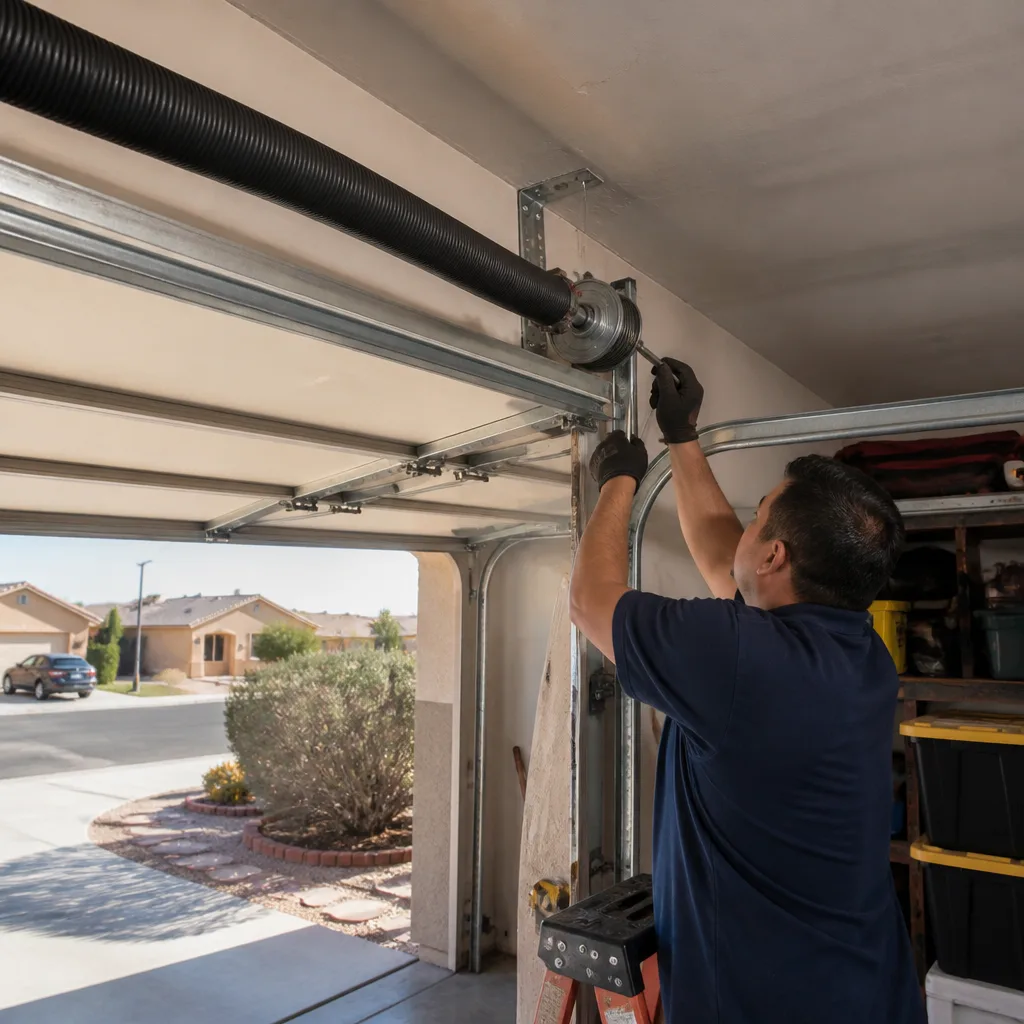
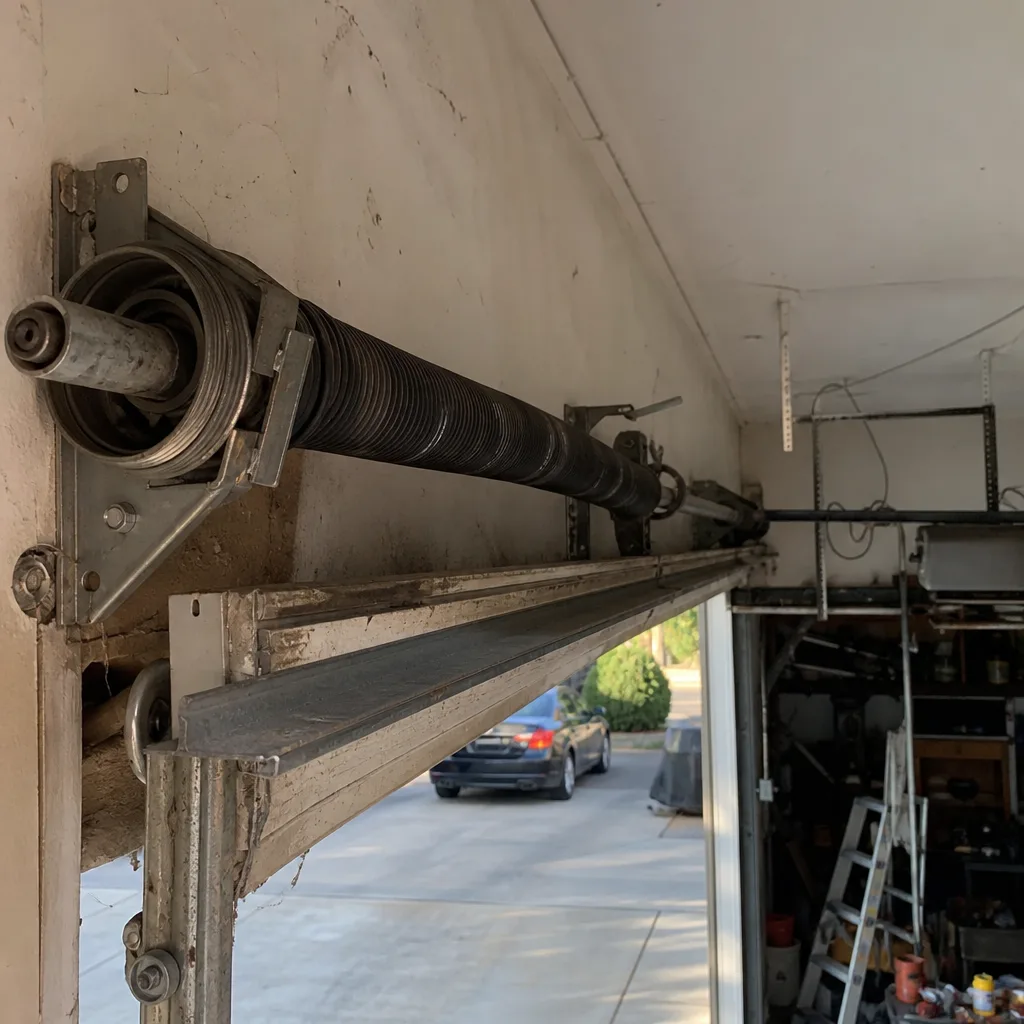
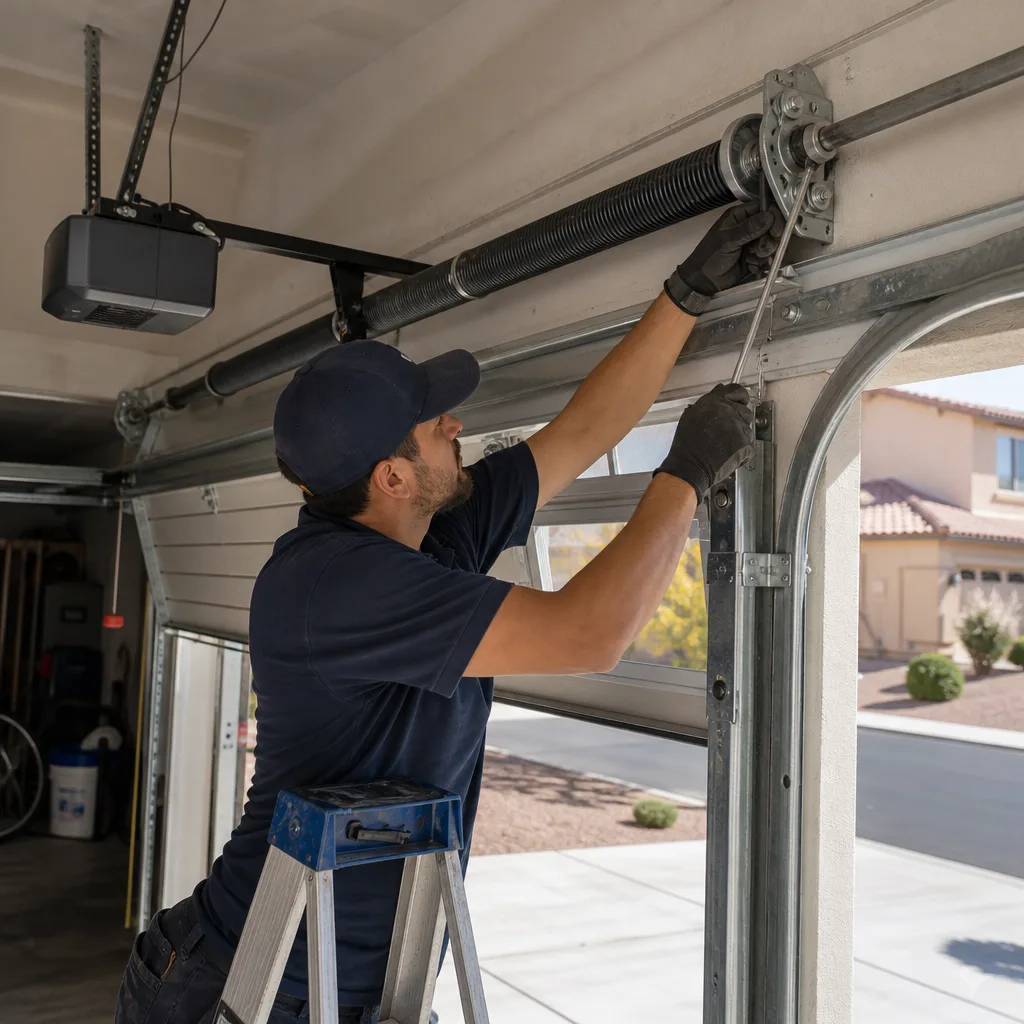
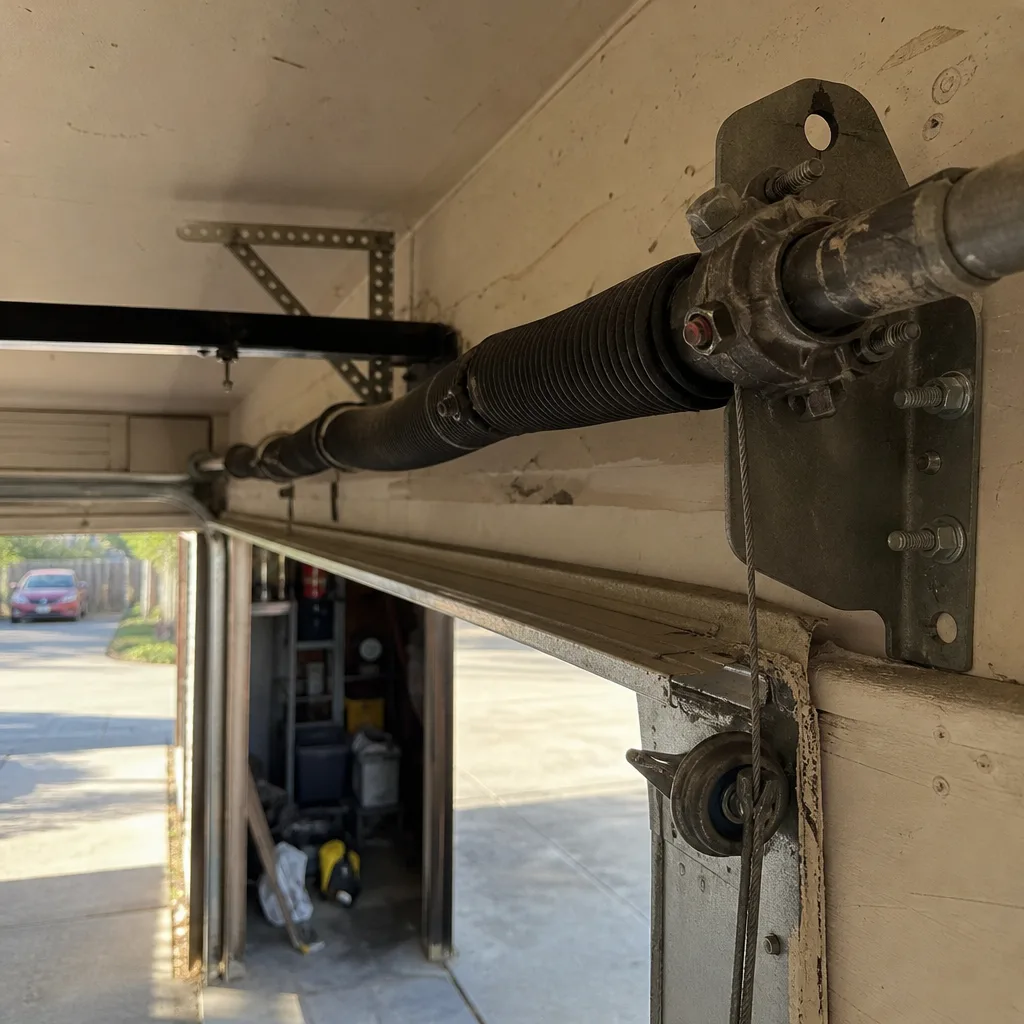
See the difference
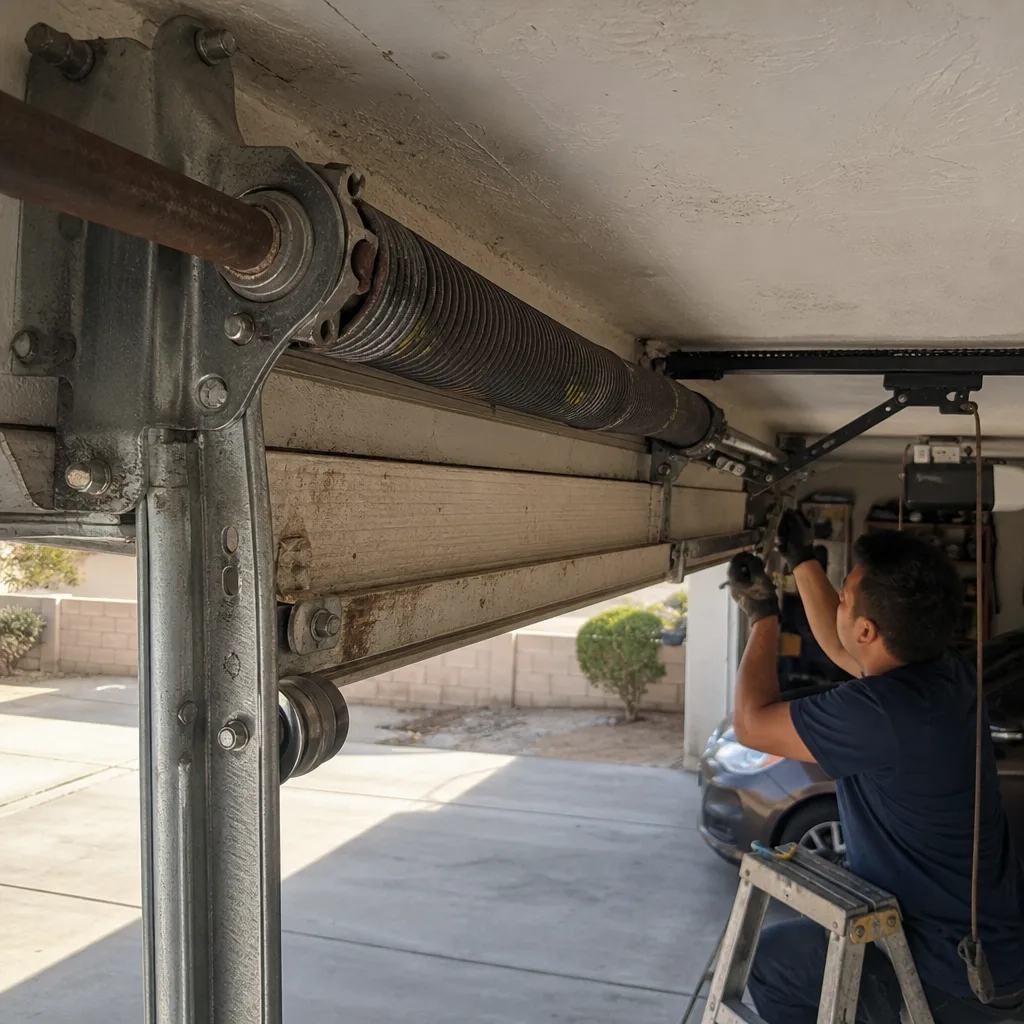 Before
 After
 Before
 After
 Before
 After
When to Call a Professional
Door selection is not installation, and installation is not repair, but all three intersect at the moment when you’re deciding between brands and the right answer depends on the condition of your existing door, track, and opener. If your current door has visible warping, loud operation, or a spring that’s 7-plus years old, a professional assessment should precede a new-door decision, because the condition of what’s already on the opening changes the math. The same applies if your opener trips its thermal cutoff repeatedly in summer or if your door binds halfway up the track. Brightwater Garage Door Repair offers free estimates in Apple Valley, and we’ll tell you straight whether a repair or a replacement makes sense for your door and your budget. Call (855) 473-2508 to schedule that conversation.
Frequently Asked Questions
The best heat-tolerant garage door brands for Apple Valley are Clopay and Amarr with 24-gauge steel and polyurethane insulation cores, because thicker steel resists thermal warping and bonded polyurethane maintains its insulating value better than floating polystyrene at sustained garage temperatures above 110°F. Wayne Dalton is also a solid choice for shaded attached garages if you choose a foam-core line from the mid or upper range.
A mid-range insulated single-car garage door installed in Apple Valley typically costs $1,100 to $2,400, while a double-car door in the same class runs $2,200 to $4,200. The final price moves based on size, insulation core type, wind load requirements, and whether an opener is included. Call (855) 473-2508 for an exact quote on your specific opening; estimates are free.
Yes, for attached garages used as anything more than a carport, polyurethane worth the $300 to $600 upcharge because its bonded core resists the convection gaps that develop in polystyrene fill after repeated thermal cycling. The performance difference shows up as a 10 to 15 degree cooler interior on summer afternoons.
LiftMaster and Chamberlain, both built by Chamberlain Group, are the most reliable opener brands for Apple Valley homes because their thermal protection cutoffs recover cleanly and their MyQ smart integration works well in neighborhoods with broadband service. Genie is serviceable on belt-drive models, but older screw-drive units are prone to thermal tripping in sustained heat.
Yes. Brightwater Garage Door Repair is certified on eight major brands: LiftMaster, Chamberlain, Genie, Clopay, Amarr, Wayne Dalton, Craftsman, and Raynor. Our Garage Door Repair in Apple Valley service covers the majority of doors found in residential driveways across the High Desert, and we stock parts for the most common configurations.
Our quoted price is the price, agreed before any work starts, and we don’t add surprise line items mid-installation for things that could have been identified during the estimate. If unexpected damage is discovered during installation, we stop and discuss it before proceeding. Call (855) 473-2508 to schedule a free estimate and get a number you can plan around.
The Bottom Line
Apple Valley rewards a specific kind of garage door buyer: one who looks past the brochure and asks about steel gauge, insulation core type, thermal breaks, and parts lead times. The brands that dominate the national market all make good products, but not every product line from every brand makes sense under a 108-degree August sun. Clopay and Amarr deliver the best climate-resilient options at the mid-range price point. Wayne Dalton earns its place for specific configurations. The opener should be chosen for thermal tolerance and connectivity reliability, not smartphone features alone. And the installer you choose should be fluent across all of it, so the recommendation fits your home rather than the dealer’s inventory sheet. If you’re sorting through options in Apple Valley, call (855) 473-2508 and we’ll help you narrow it without the showroom pressure.
Written by the team at Brightwater Garage Door Repair, serving Apple Valley since 2018.