
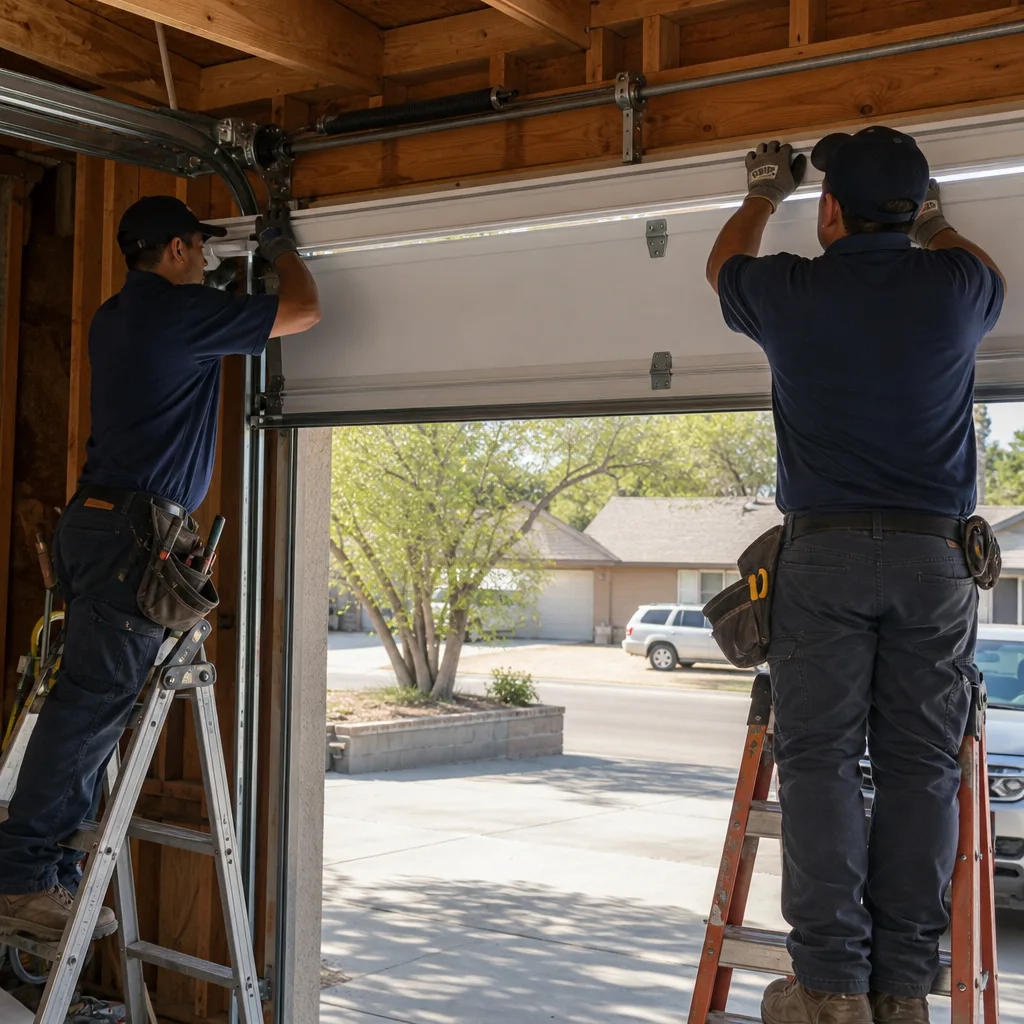
Last updated November 2, 2026
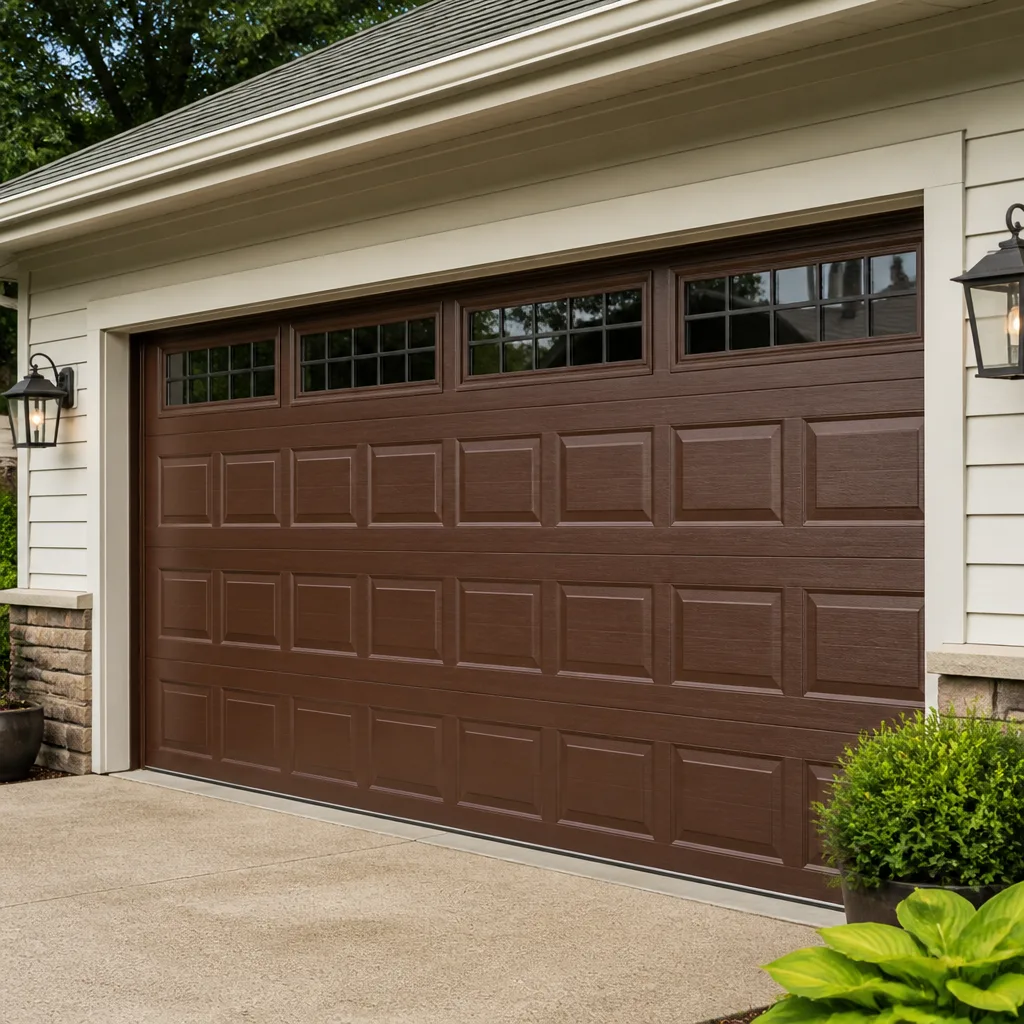 Raised-panel steel
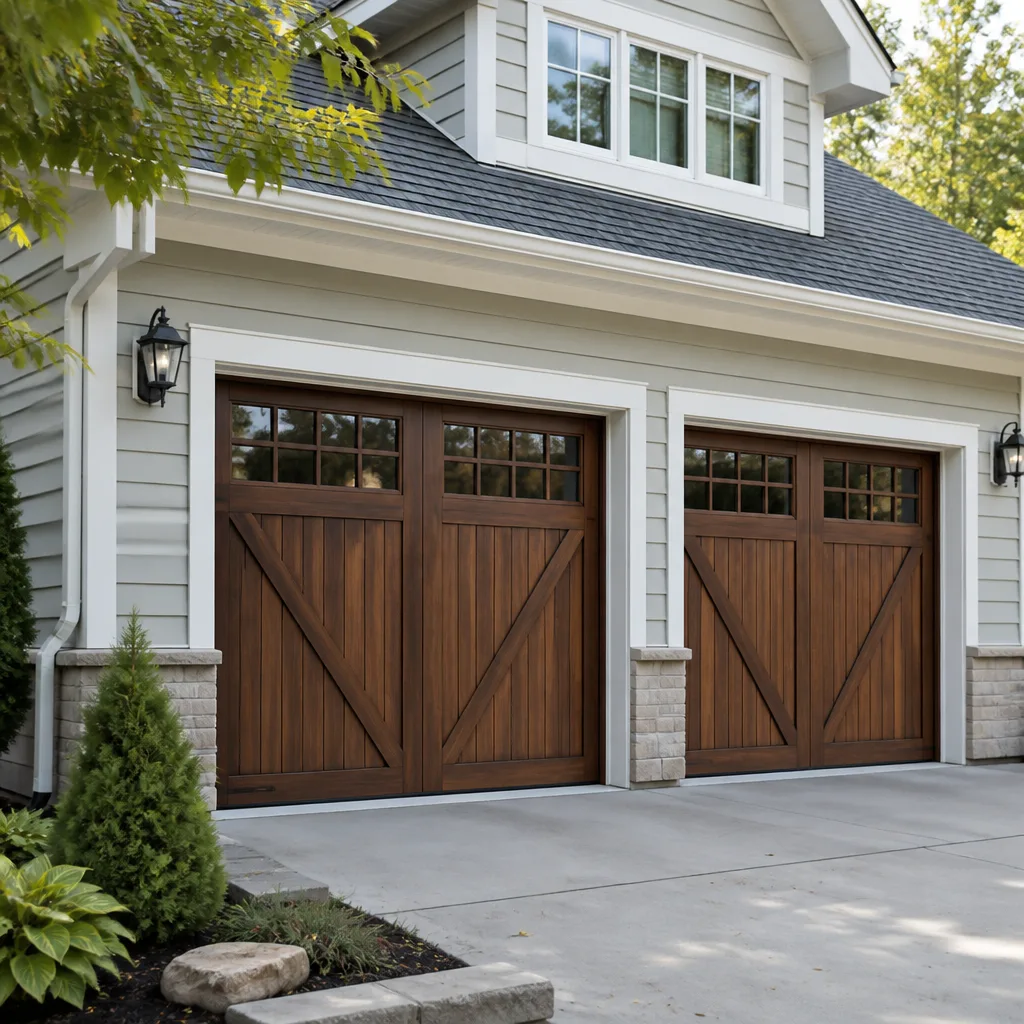 Carriage house
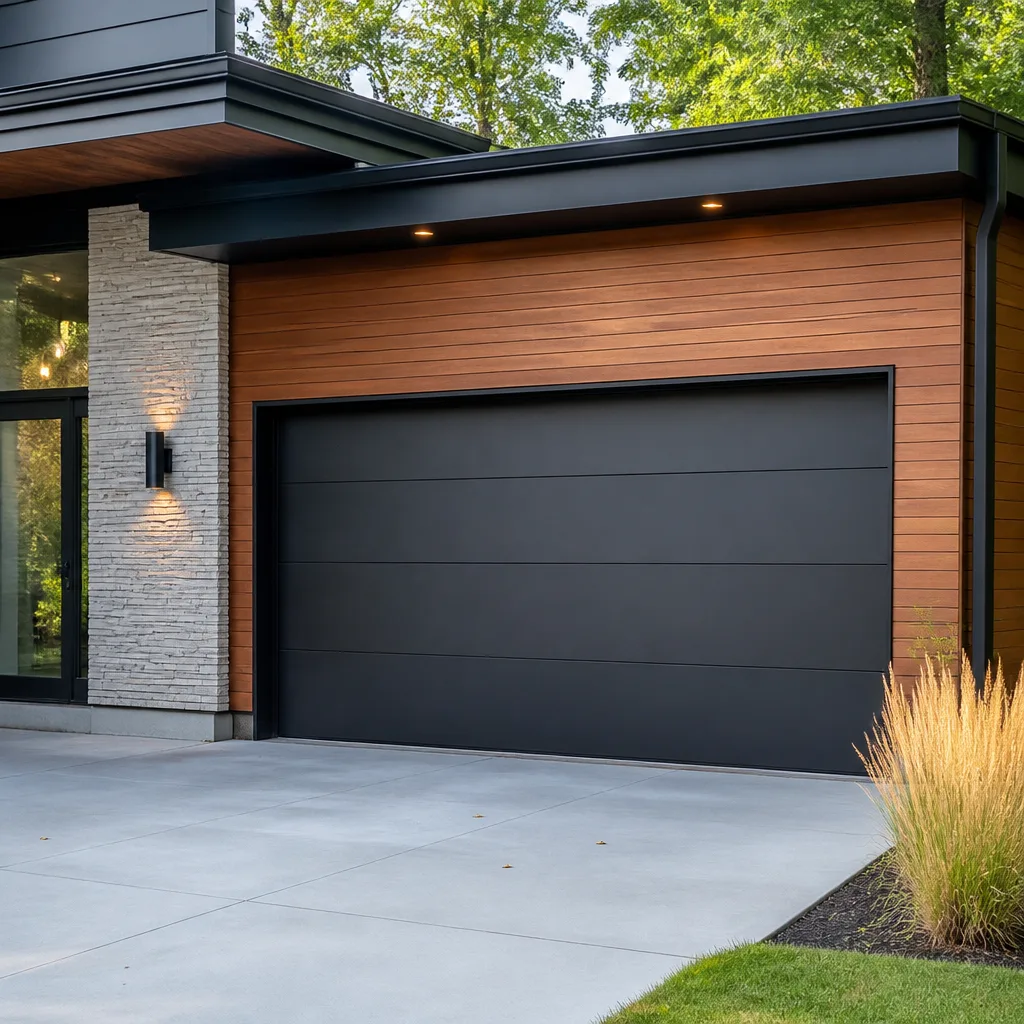 Modern flush
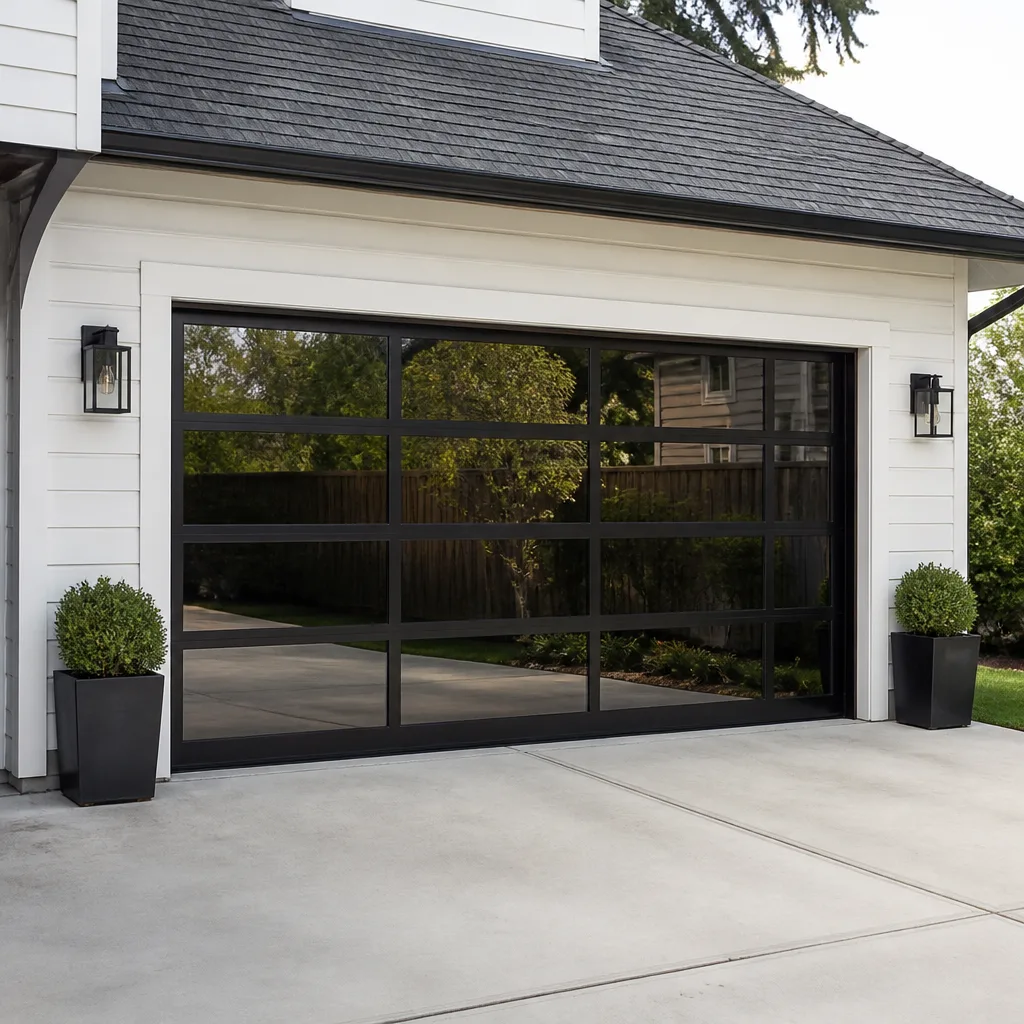 Full-view glass
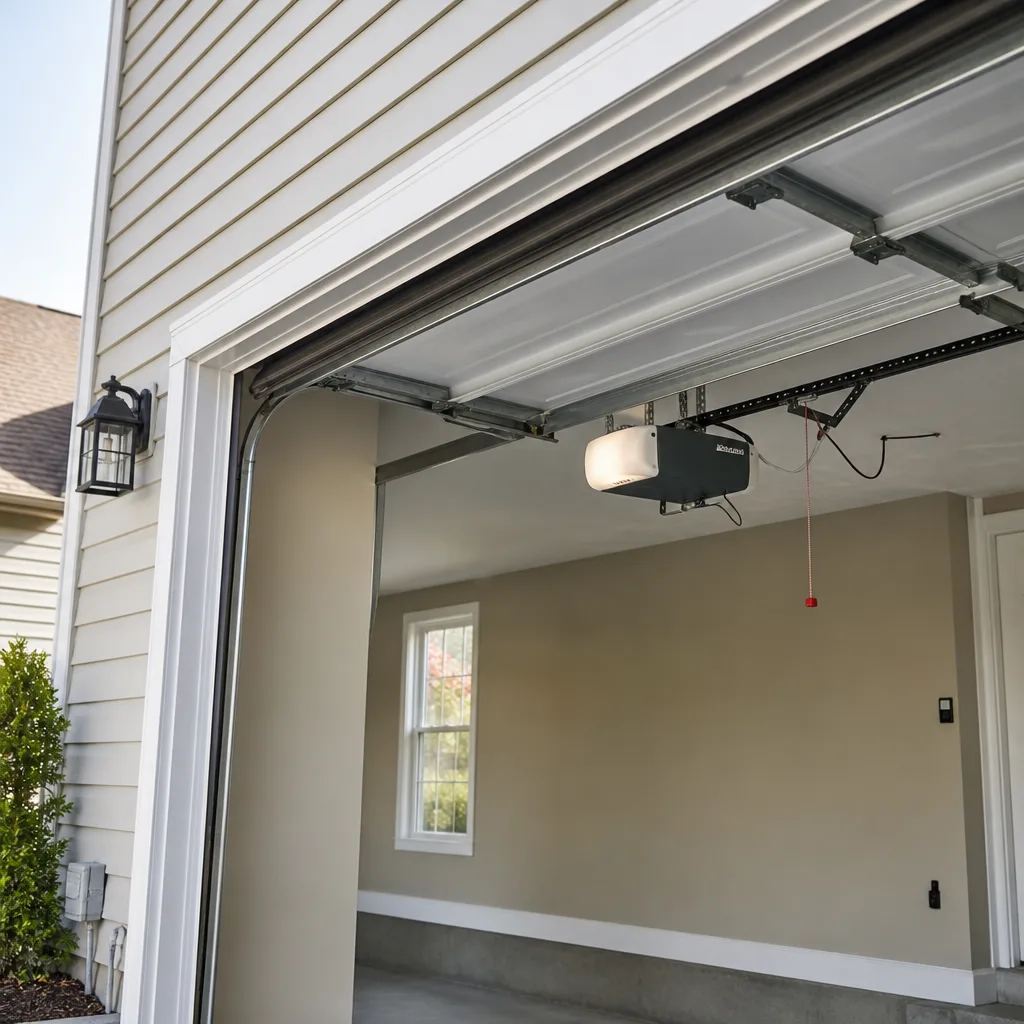 LiftMaster openers
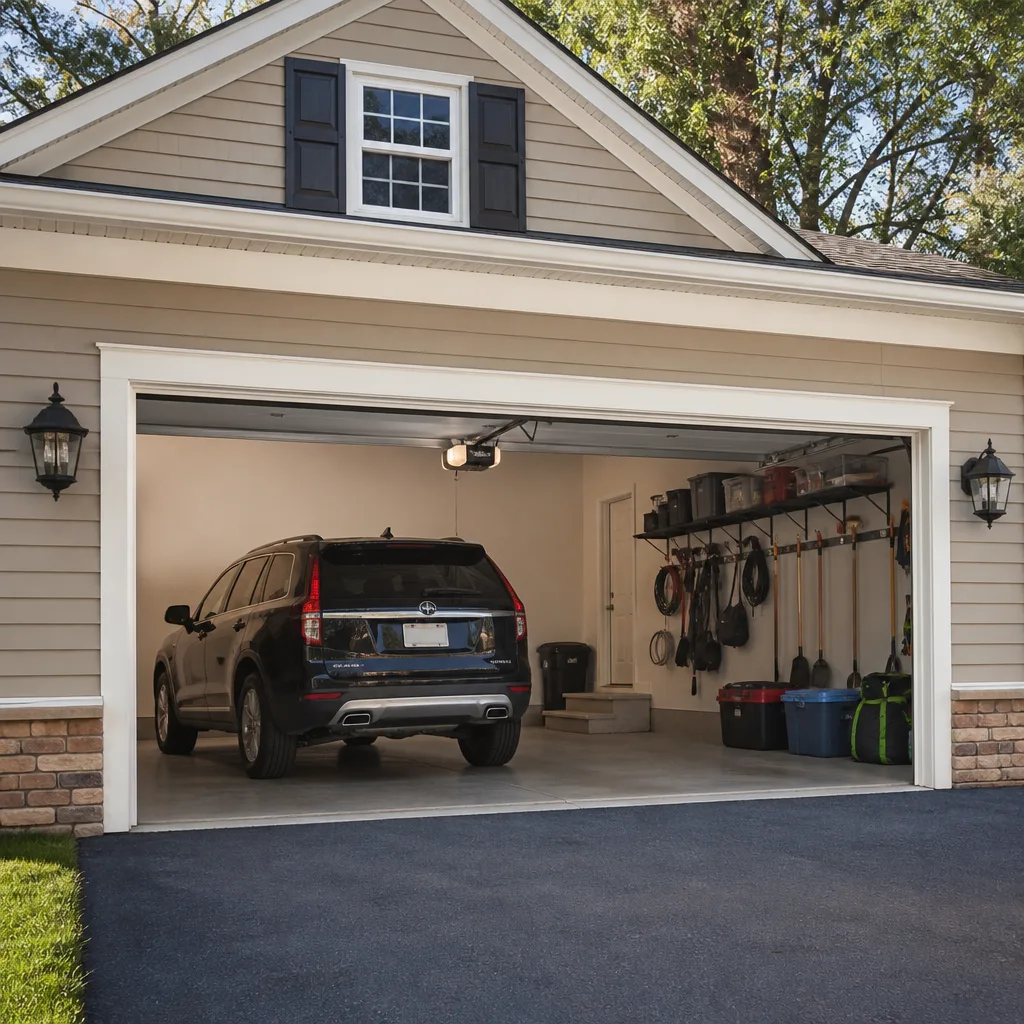 Chamberlain openers
Full 25-point door and opener safety check with every visit - springs, cables, rollers, tracks, and your LiftMaster or Chamberlain opener included
You get a price before we start. It does not change when the truck arrives.
Get your free estimateDIY vs Professional Garage Door: The Apple Valley Homeowner’s Decision Guide
Every year in Apple Valley, at least one homeowner ends up in the emergency room because a garage door spring let go while they were working on it. The High Desert’s temperature swings put real stress on doors, and when something fails, the temptation to grab a wrench and fix it yourself is strong. We get it. But here’s the thing: a wound torsion spring stores roughly 100 foot-pounds of torque. That number isn’t a warning label, it’s physics. This guide draws the exact line between what you should tackle yourself and what you should never touch, so you can decide with facts instead of confidence.
Styles & brands we work with
- Raised-panel steel
- Carriage house
- Modern flush
- Full-view glass
- LiftMaster openers
- Chamberlain openers
Quick Answer
Most garage door maintenance in Apple Valley is safe to DIY, but spring replacement, cable work, and anything involving bottom brackets is not. The dividing line is stored energy: if the part you’re touching is under tension, leave it to a professional. For everything else, like lubrication, weatherstripping, and sensor alignment, a homeowner with basic tools can do the job well and save money.
Table of Contents
- The Hard No-DIY List
- Safe DIY Tasks for Apple Valley Homeowners
- The Tool Reality Check
- High Desert Weatherstripping: An Annual Reality
- Using a Professional Visit Strategically
- DIY vs Professional: A Cost Comparison for Apple Valley
- Common Mistakes to Avoid
- When to Call a Professional
- Frequently Asked Questions
- The Bottom Line
The Hard No-DIY List
There are three garage door repairs that should never be attempted by a homeowner, regardless of experience, confidence, or how many YouTube videos you’ve watched. These aren’t suggestions based on liability concerns. They’re based on how the mechanical components store and release energy.
Torsion Spring Replacement
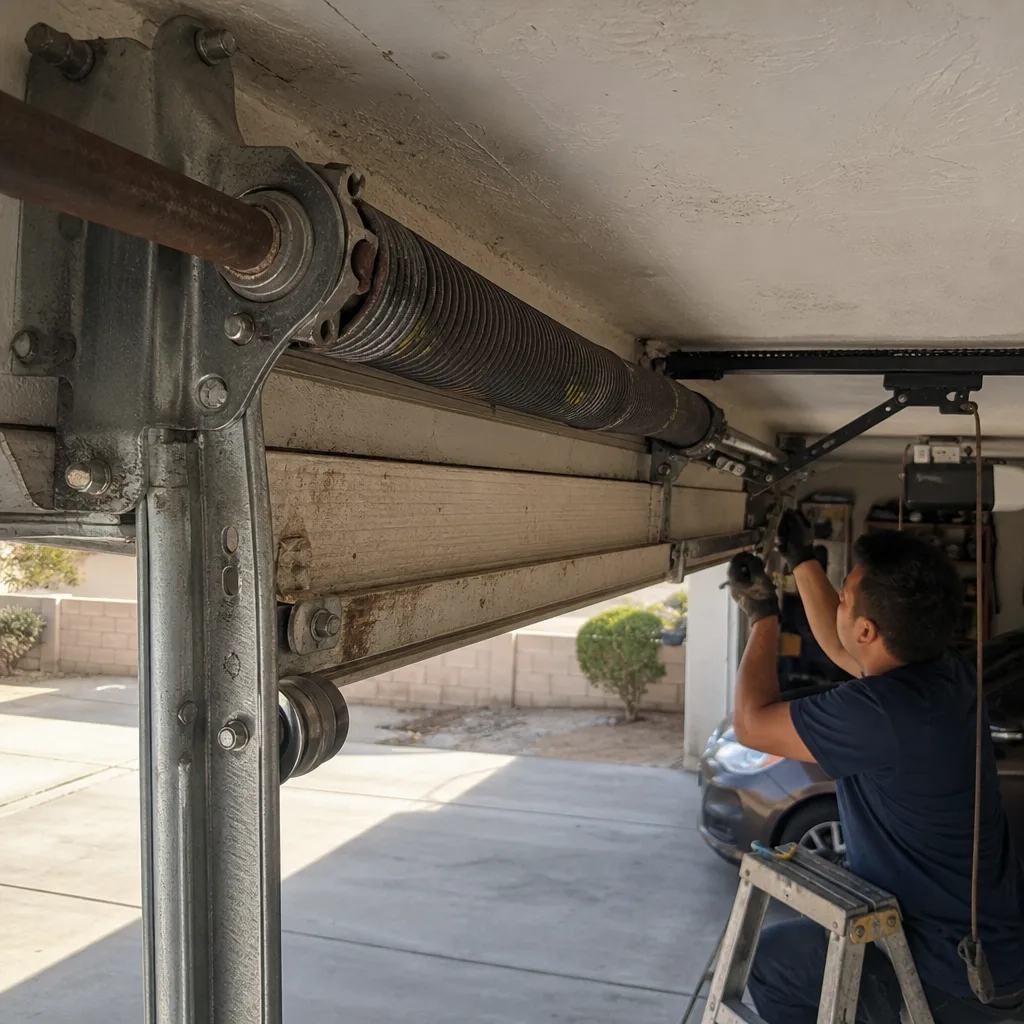
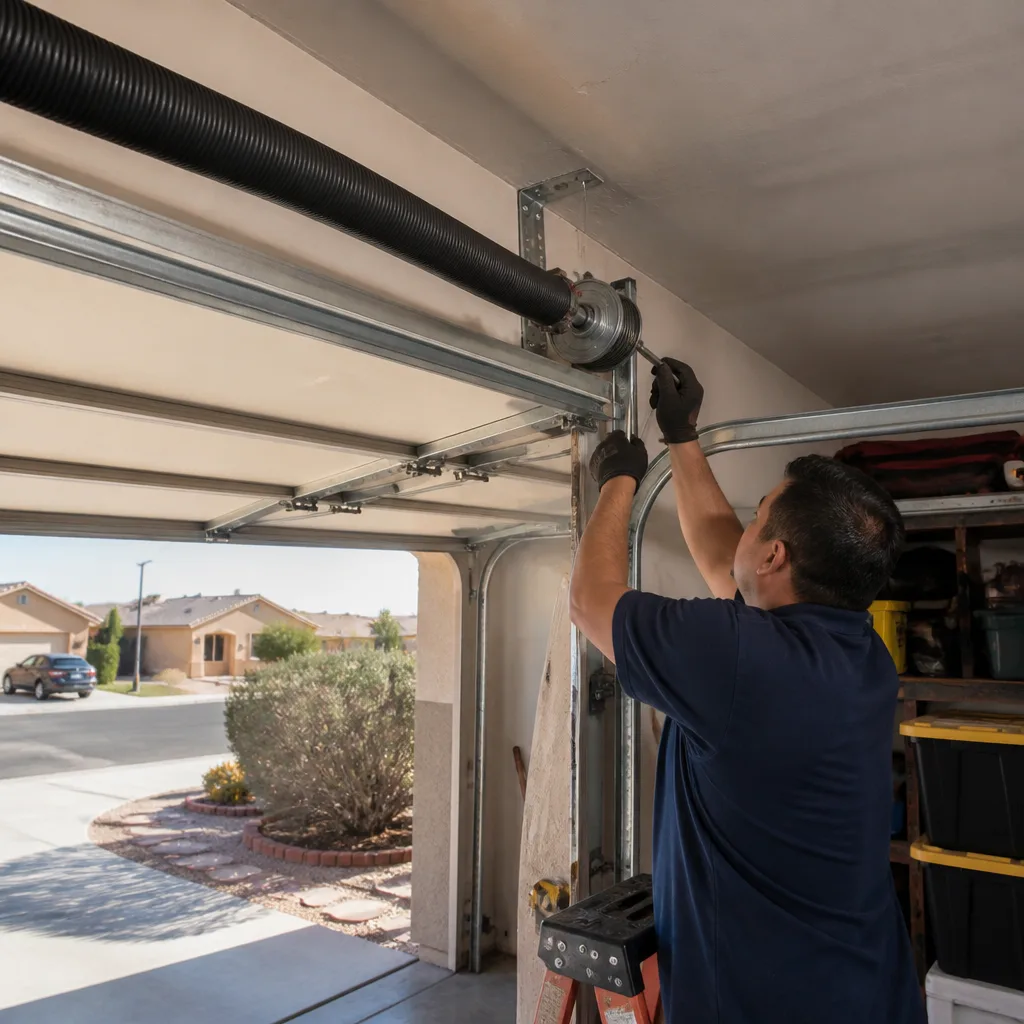
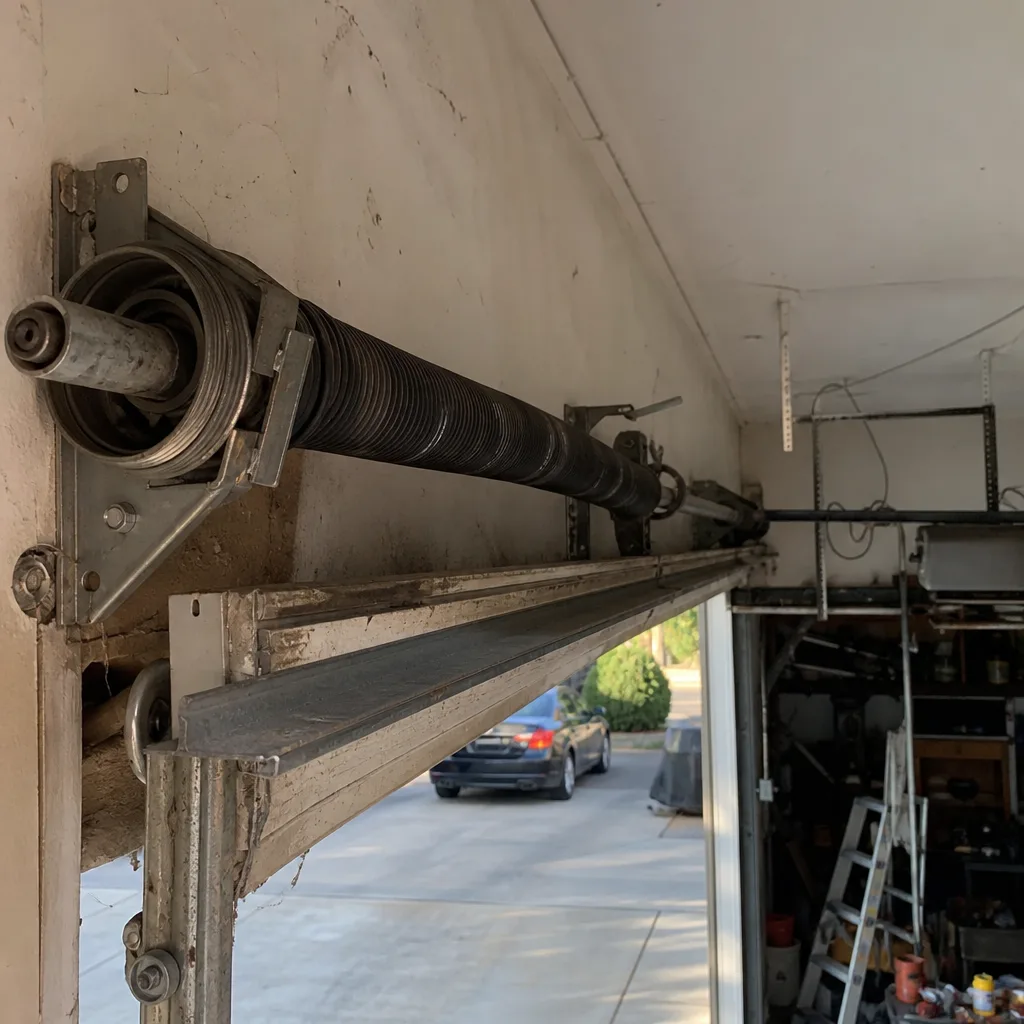
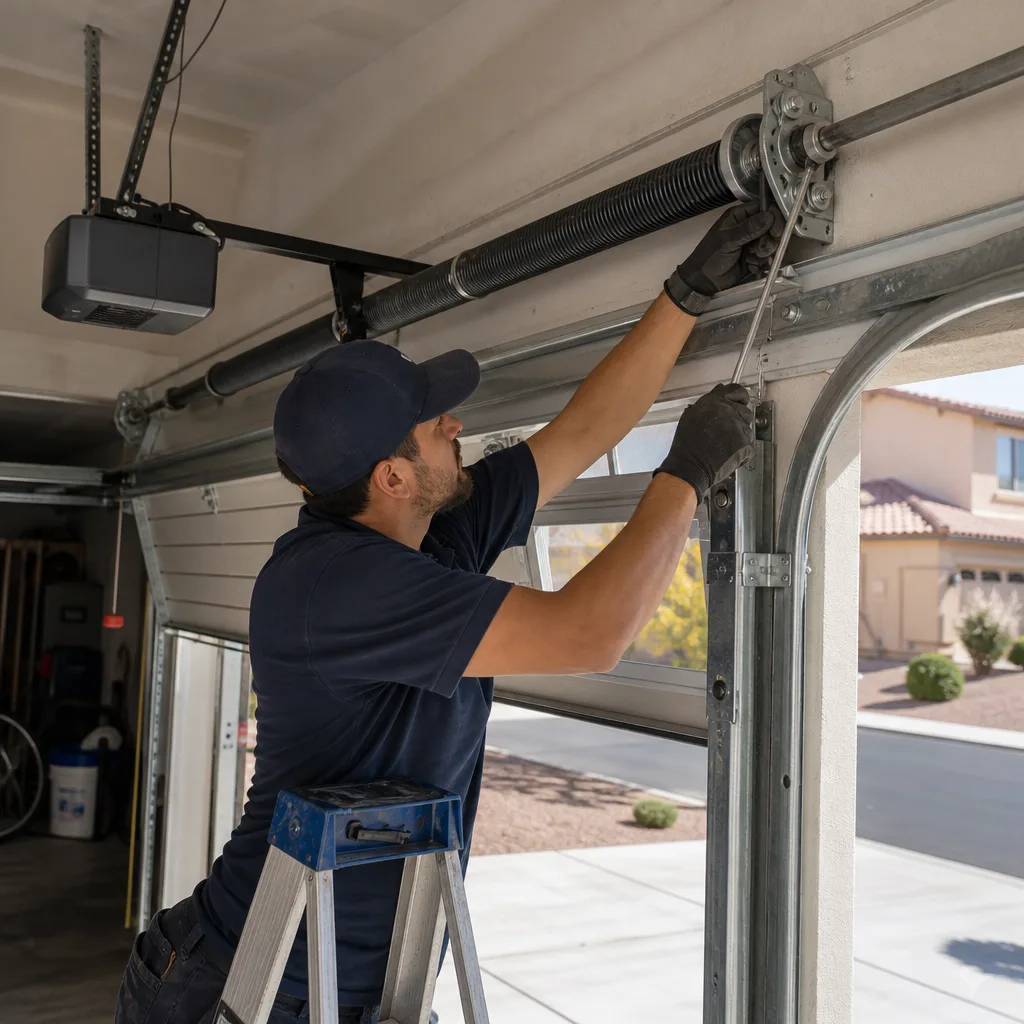
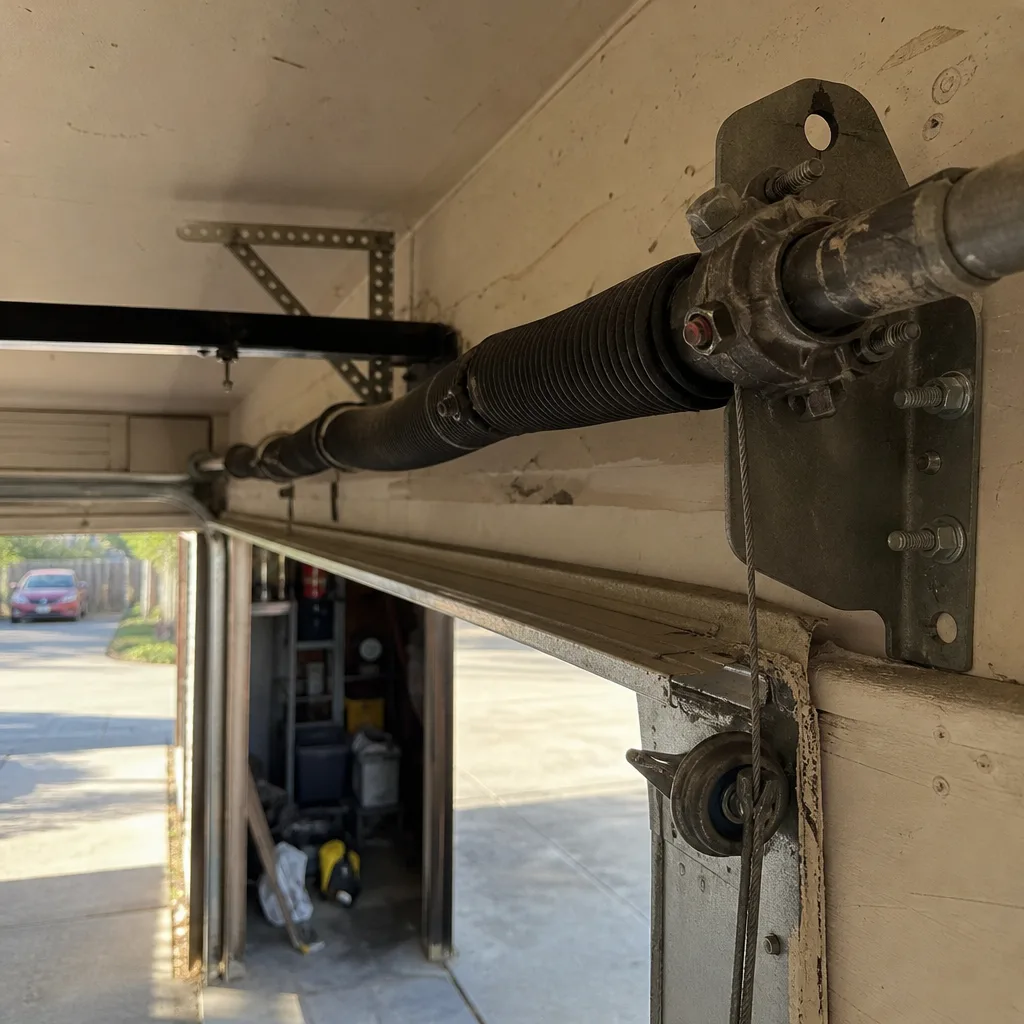
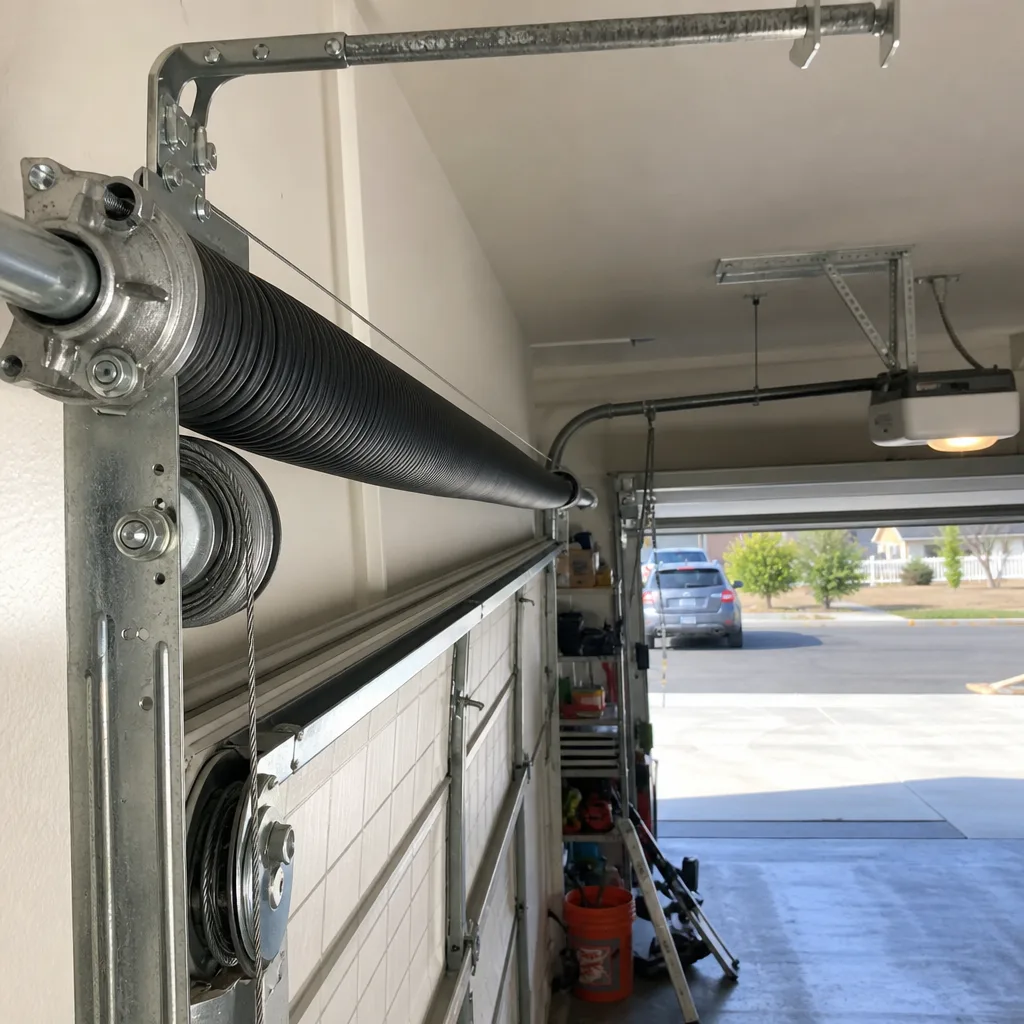
A torsion spring sits above the door opening, mounted on a metal shaft. When the door is closed, that spring is wound tight, holding the entire weight of the door in check. When it breaks, the door becomes dead weight, and the temptation is to replace the spring yourself. Here’s the mechanical reality: the winding process requires two steel bars inserted into the winding cone, and you’re manually adding one-quarter turn after one-quarter turn until the spring reaches the correct tension for your door’s weight. During this process, if one of those bars slips or snaps, it becomes a projectile moving with enough force to break bone. In Apple Valley, where doors are often heavier steel models designed for High Desert heat, the tension requirements are higher than average. We’ve seen homeowners attempt this in Victorville, Hesperia, and throughout Apple Valley, and the outcome is rarely good. This is not a task where technique develops with practice. The first mistake can be the last one.
Cable Replacement
Garage door cables run through the extension or torsion system and bear the full weight of the door during every open and close cycle. When a cable frays or snaps, it’s because years of tension cycles have worn the metal. The replacement process involves feeding cable through pulleys while managing the spring tension, which means you’re working in the exact zone where stored energy lives. A cable that lets go during handling can whip back with enough force to cause severe lacerations. The cable itself is under hundreds of pounds of load. That’s not something to manage with a pair of pliers and determination.
Bottom Bracket Removal
The bottom brackets attach the lifting cables to the bottom corners of the door. In many door styles, including those from Clopay and Amarr, these brackets are under constant tension from the cable system. Removing them without first releasing the cable tension is the single most common way homeowners injure themselves during attempted repairs. The process requires re-routing cables under the bottom roller, which means pivoting the door’s weight on a point you’re actively unfastening. When the bracket pops free, the door’s corner can drop without warning, and your fingers are right there.
If your door has an issue with any of these three components, call (855) 473-2508 and get an Apple Valley garage door repair professional on it. The estimate is free, and the work is quoted before anything starts.
Safe DIY Tasks for Apple Valley Homeowners
Not everything requires a service call. There’s a set of tasks where the homeowner is not only safe to act, but should act, because regular maintenance prevents the catastrophic failures that lead to emergency repairs. Here’s what we recommend you handle yourself.
Lubrication
Your garage door has roughly a dozen moving pivot points: rollers, hinges, springs, and the opener rail. Each one benefits from lubrication every six months. In Apple Valley’s dry climate, lubricant evaporates faster than in coastal areas, so you may want to do this quarterly during summer. Use a silicone-based lubricant or white lithium grease in a spray can. Avoid WD-40, which is a solvent, not a lubricant. A quick spray on each hinge pin, roller bearing, and along the torsion spring coils will reduce friction, extend component life, and quiet the operation. This is a ten-minute job that requires no disassembly.
Sensor Alignment
If your door reverses immediately after touching the floor, or refuses to close at all, the photo-eye sensors near the bottom of the tracks are likely misaligned. These sensors face each other across the door opening, and a small LED indicator on each unit tells you if alignment is off. Loosen the wing nut holding the sensor bracket, adjust until both lights are solid, and retighten. This is the single most common false alarm that triggers a service call. In our experience, roughly a third of Apple Valley opener issues resolve with a simple sensor adjustment.
Remote Reprogramming
If your remote stops working after a power outage or battery change, the opener likely needs to re-learn the remote’s signal. Every major brand, including Genie and LiftMaster, uses a learn button on the motor head. Press it, then press the remote button, and the opener re-syncs. Consult your owner’s manual for exact sequences, but most residential openers follow this pattern. This is genuinely a homeowners’ task, and there’s no reason to pay for a service call.
Manual Release Operation
The red cord hanging from your opener rail is the manual release. Pulling it disconnects the door from the opener carriage, letting you operate the door by hand. Test this twice a year to ensure the release mechanism works smoothly. If you ever experience a power outage, you’ll want to know how to open your door manually. This is also useful to test whether a slow or noisy door is a door issue or an opener issue: disconnect the opener and try lifting manually. If it’s heavy, the door needs attention. If it moves freely, the opener is the culprit.
The Tool Reality Check
There’s a persistent myth that professional garage door techs succeed because they own special tools. The truth is more mundane, and more important. The winding bars required for torsion spring work cost about $40 at any hardware store. Any homeowner can buy them. The reason professionals exist is technique, repetition, and knowing what you’re feeling for when you add that quarter-turn of tension. It’s the same reason a plumber’s pipe wrench doesn’t make you a plumber.
Here’s what a professional brings that tools can’t provide:
- Muscle memory for tension: The feel of a correctly wound spring isn’t written down anywhere. It’s learned through hundreds of repetitions.
- Recognition of secondary failures: A broken spring rarely fails alone. Rollers, cables, and hinges often have wear that a trained eye catches immediately.
- The right parts on the truck: Springs are sized by door weight, height, and cycle rating. Getting the wrong size is common for first-time DIYers, and a wrong-size spring fails early or makes the door unsafe.
- Safety equipment and habit: Professionals use purpose-built winding bars, wear eye protection, and follow a sequence that keeps their body out of the line of force.
The bottom line: the tools are not the barrier to entry. The judgment is.
High Desert Weatherstripping: An Annual Reality
If there’s one DIY task that Apple Valley homeowners should expect to do more often than anyone else in Southern California, it’s replacing the bottom weatherstrip on the garage door. The High Desert sun is brutal on rubber and vinyl. Temperatures in Apple Valley routinely exceed 100 degrees in summer, and the UV exposure degrades weatherstripping to a cracked, brittle state in a single season. Homeowners in coastal climates replace weatherstrip every three to five years. Here, it’s closer to an annual ritual if you want a decent seal against dust, wind, and the occasional cold snap.
The replacement process is straightforward. The old strip slides out of a T-channel on the bottom of the door, and the new strip slides in. No tools needed beyond a utility knife to trim the ends. Brands like Wayne Dalton and Amarr use compatible universal weatherstrips available at most hardware stores. A poor seal isn’t just an energy issue; it lets dust from the surrounding desert into your garage, which settles on everything you store in there. We recommend checking yours every spring, before the dust season kicks up.
Using a Professional Visit Strategically
There’s a smart way to blend DIY and professional work, and it’s underused. When you schedule a tune-up or inspection, you’re not just paying for maintenance. You’re paying for a trained set of eyes to look at every component and tell you what’s wearing out, what’s fine, and what’s about to become a problem. A professional can spot a hairline crack in a spring before it snaps, or a roller bearing that’s about to seize. Those are things you won’t notice until they fail.
Here’s the strategic play:
- Do the safe DIY tasks first: Lubricate, check sensors, replace weatherstripping. This gives you a baseline and helps you notice what feels off.
- Book a professional inspection: Have a technician look at the points you can’t safely assess: spring condition, cable wear, and opener force settings. Our Apple Valley garage door repair service includes this kind of assessment.
- Ask specific questions: What’s the spring’s cycle rating? Are the rollers original? How’s the balance? The answers tell you what to budget for.
- Make informed decisions: You’ll know if your door has two more years of life or if you should start planning for a replacement. The cost of the inspection is cheap insurance against a surprise failure.
This approach respects both your budget and your safety. You handle what you can, and you get expert eyes on what you can’t. For many Apple Valley homeowners, a single annual tune-up catches the small things that become emergency calls later.
DIY vs Professional: A Cost Comparison for Apple Valley
Let’s talk about what these decisions actually cost. The DIY route isn’t free, and the professional route isn’t always more expensive when you account for tools, mistakes, and time.
Common Garage Door Repair Costs in Apple Valley
| Service | DIY Cost (Typical) | Professional Cost Range |
|---|---|---|
| Lubrication | $8-$15 for lubricant | $75-$125 as part of tune-up |
| Weatherstripping replacement | $20-$40 for materials | $90-$140 installed |
| Sensor alignment | $0 (adjustment only) | $75-$110 service call |
| Remote reprogramming | $0 (see manual) | $50-$85 if service call required |
| Single torsion spring replacement | $50-$80 for spring, high injury risk | $180-$340 installed |
| Cable replacement (both sides) | $30-$50 for cables, dangerous | $150-$250 installed |
| Opener replacement | $200-$400 for opener, 4-6 hours | $450-$750 installed |
These are Apple Valley market ranges from our experience in the High Desert. Coastal pricing runs lower on labor and higher on some materials; interior markets vary. The professional price always includes the diagnosis, correct parts, and the labor to install them. More importantly, the price you’re quoted is the price you pay. We quote every job before work starts, and that number doesn’t change when the job is done. No surprises on the invoice is a core promise of Brightwater Garage Door Repair.
For the dangerous tasks, the DIY “savings” are illusory. A single ER visit involving a spring-related injury can exceed the cost of every professional garage door repair you’ll ever need, and that’s before the permanent damage to your hand or arm. The economic case for DIY evaporates when you factor in risk.
Common Mistakes to Avoid
- Using improvised winding tools: Screwdrivers, rebar, and pry bars are not winding bars. They slip, and when they slip, the spring unwinds in a fraction of a second. Buy the right bars or call a professional. There is no middle path.
- Mis-sizing replacement springs: Springs are specified by door weight, height, and drum size. A spring that’s too strong makes the door fly up dangerously. Too weak, and the opener burns out trying to lift it. Both are common DIY outcomes.
- Disconnecting the opener while the door is up: If you pull the release cord while the door is in the raised position, and the spring is broken, the door will slam down. Always disconnect with the door closed, or have a professional handle it.
- Ignoring gradual changes: A door that’s getting louder, slower, or slightly off-balance is not getting better on its own. We see Apple Valley homeowners wait until failure, and failure usually destroys multiple components at once, doubling or tripling the repair bill.
- Skipping the balance test: Disconnect the opener with the door down. Lift the door halfway and let go. It should stay put. If it drops or rises, the springs are off. This test takes thirty seconds and tells you a lot about what’s coming.
- Over-lubricating the wrong parts: Garage door tracks should stay dry. Lubricant on tracks attracts High Desert dust and creates a grinding paste. Only lubricate pivot points, never the track surface.
When to Call a Professional
Call a professional for any work involving springs, cables, or bottom brackets. That’s the line, and it’s a hard one. Also call if your door is off-balance after a manual test, if the opener is making grinding noises that aren’t fixed by lubrication, or if you’ve replaced a part and the door still isn’t working right. The second visit to fix a botched DIY repair costs more than the first visit would have. Garage door opener issues in particular benefit from professional diagnosis, since intermittent faults often look like something they aren’t. Brightwater Garage Door Repair offers free estimates in Apple Valley. Call (855) 473-2508 and let us take a look before you commit to anything.
Frequently Asked Questions
No. Torsion and extension springs are under extreme tension, and the energy stored in a wound spring can cause severe injury if released incorrectly. This is a firm line: do not attempt spring repair yourself, regardless of what you’ve seen online. Call a professional.
Lubricating pivot points, aligning photo-eye sensors, reprogramming remotes, replacing bottom weatherstripping, and testing the manual release are all safe for homeowners. These tasks require no disassembly of tensioned components and are appropriate for any Apple Valley homeowner with basic hand tools.
Single torsion spring replacement typically runs $180 to $340 in Apple Valley, including the spring, labor, and a balance check. Dual spring replacement runs $280 to $520. The exact price depends on door weight and spring cycle rating. Call (855) 473-2508 for an exact quote. Estimates are free, and the price is locked before work begins.
Every three to four months during summer, and every six months the rest of the year. Apple Valley’s dry, dusty climate strips lubricant faster than coastal environments. Use a silicone-based spray on rollers, hinges, and springs, and never lubricate the tracks themselves.
Usually, yes. The most common cause is misaligned photo-eye sensors near the floor. Check that both sensor LEDs are lit and that the eyes face each other directly. If alignment doesn’t fix it, the issue may be with the limit settings or the opener’s force adjustment, which benefits from professional diagnosis.
We service and install doors and openers from the eight most common residential brands, including Genie, Clopay, Amarr, and Wayne Dalton. Our technicians diagnose based on your door’s condition and your budget, not on pushing a particular manufacturer. Whether you need garage door installation in Apple Valley or repairs on an existing system, we work on what’s in your driveway.
The Bottom Line
The DIY-vs-pro decision for garage doors isn’t about your handiness. It’s about whether the part you’re touching is under tension. Springs, cables, and bottom brackets store enough energy to cause serious injury, and no amount of YouTube confidence changes that. For those, call a professional. For everything else, lubrication, sensors, remotes, weatherstripping, the sensible homeowner can and should handle it. In Apple Valley, the High Desert sun makes weatherstripping an annual task, and a proactive approach to maintenance keeps the big failures away. Do the safe work yourself, budget for the professional work, and your garage door will serve you for decades. Brightwater Garage Door Repair is here for the parts you shouldn’t touch. Call (855) 473-2508 for a free estimate.
Written by the team at Brightwater Garage Door Repair, serving Apple Valley since 2018.
See the difference
 Before
 After
 Before
 After
 Before
 After