
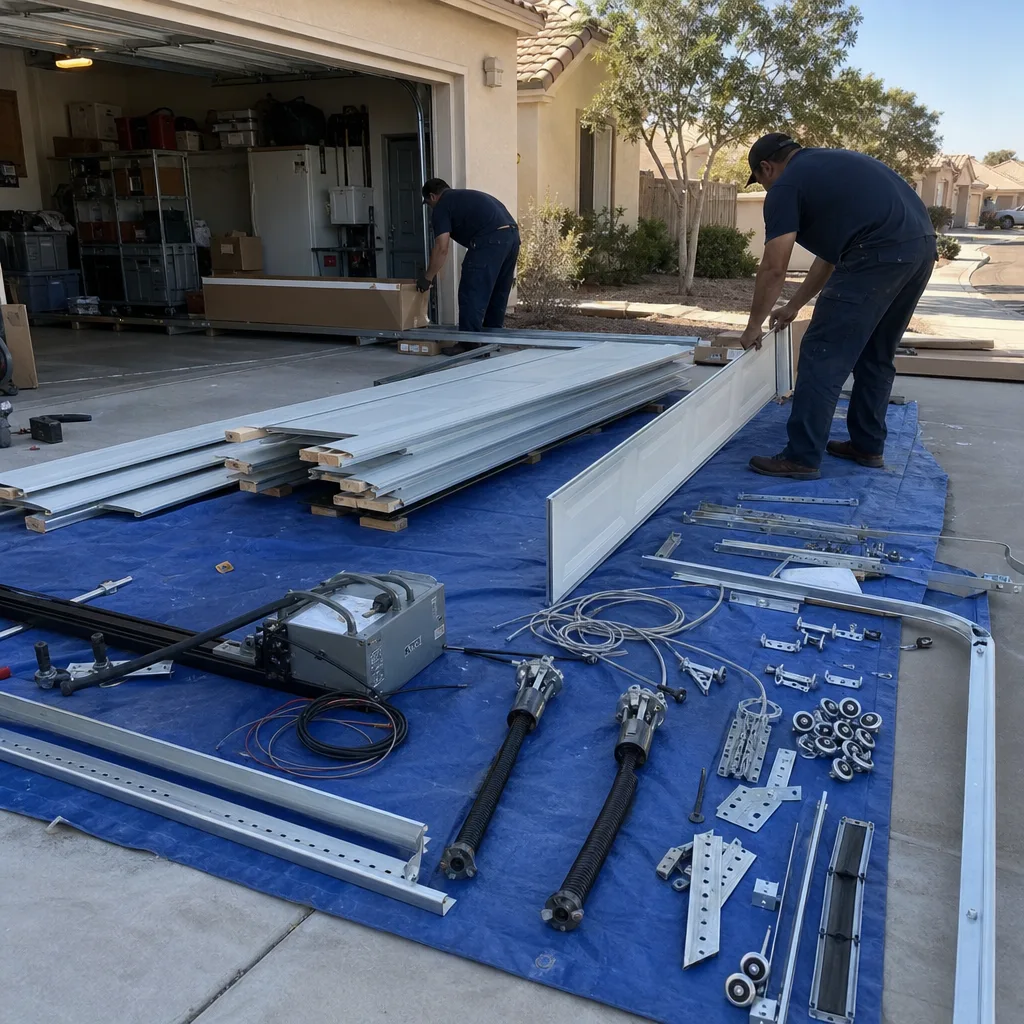
Last updated November 2, 2026
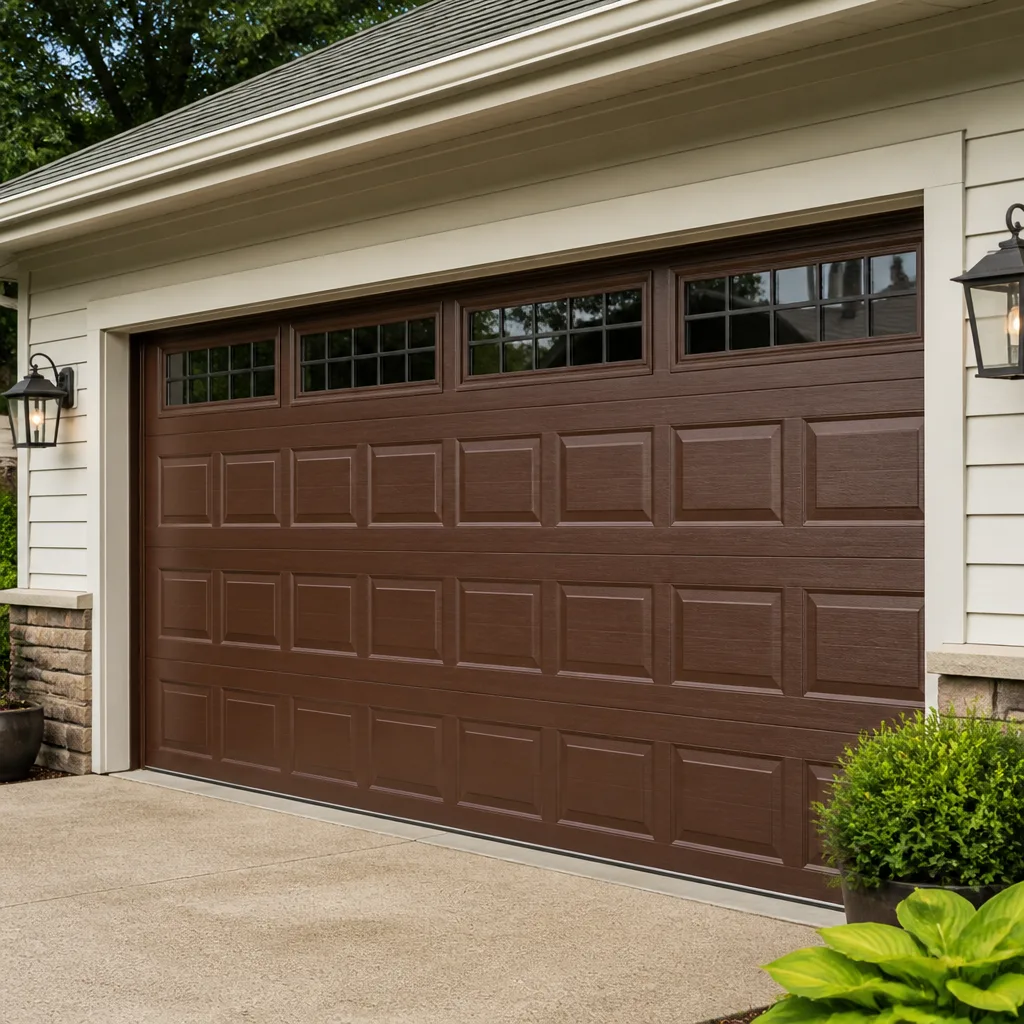 Raised-panel steel
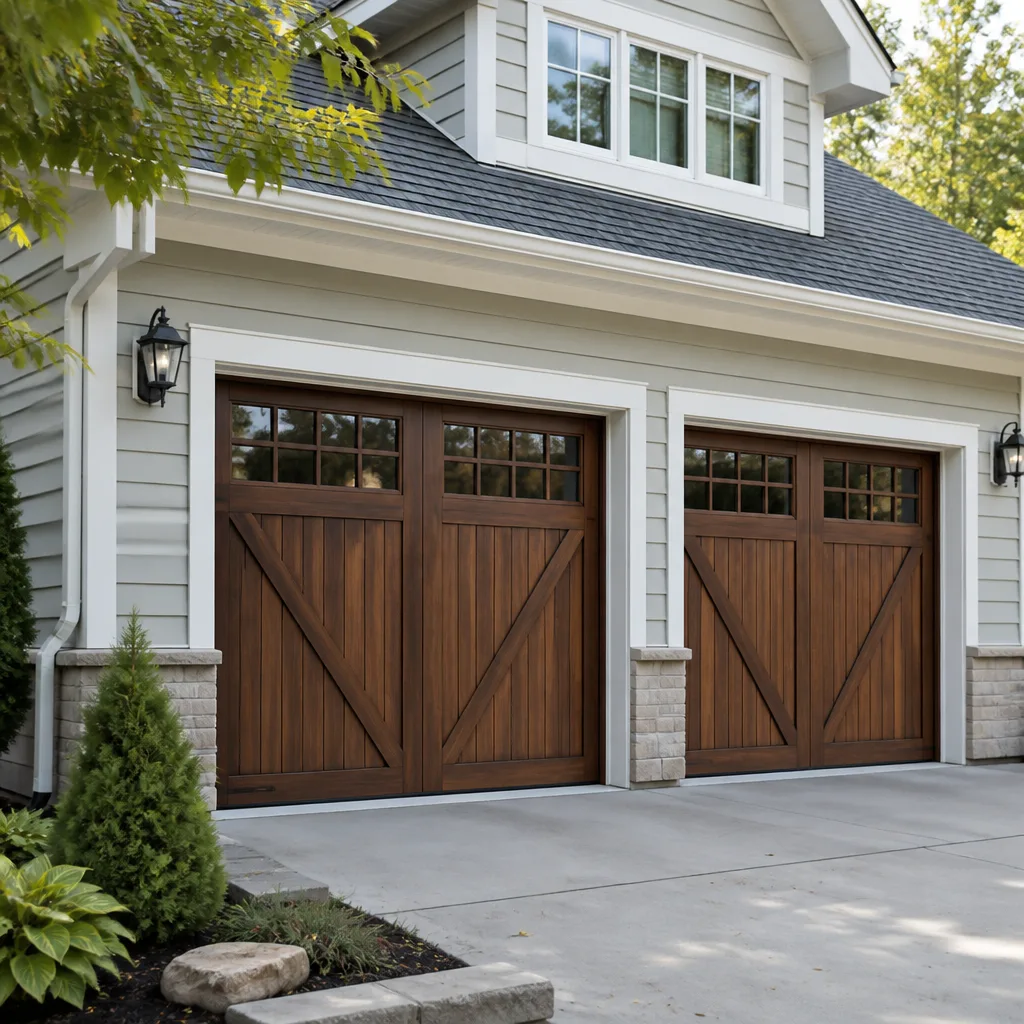 Carriage house
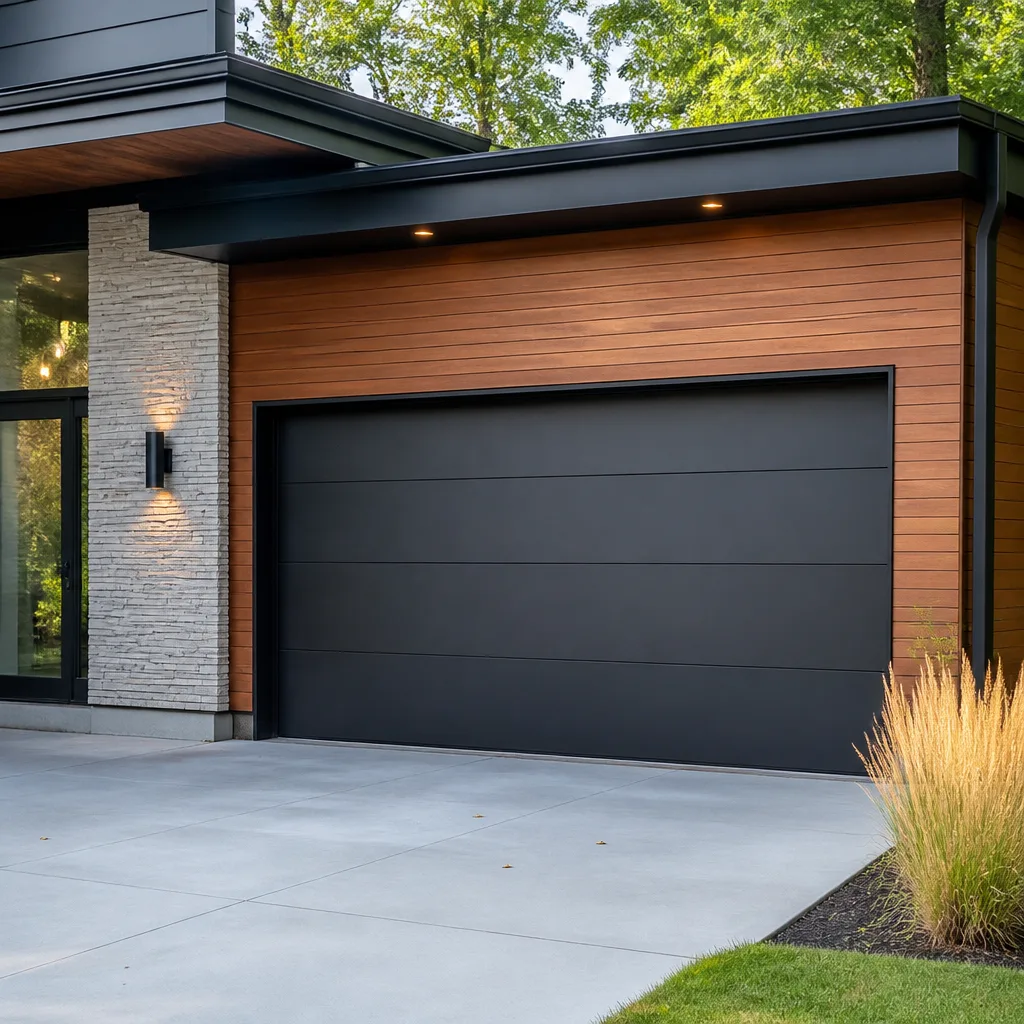 Modern flush
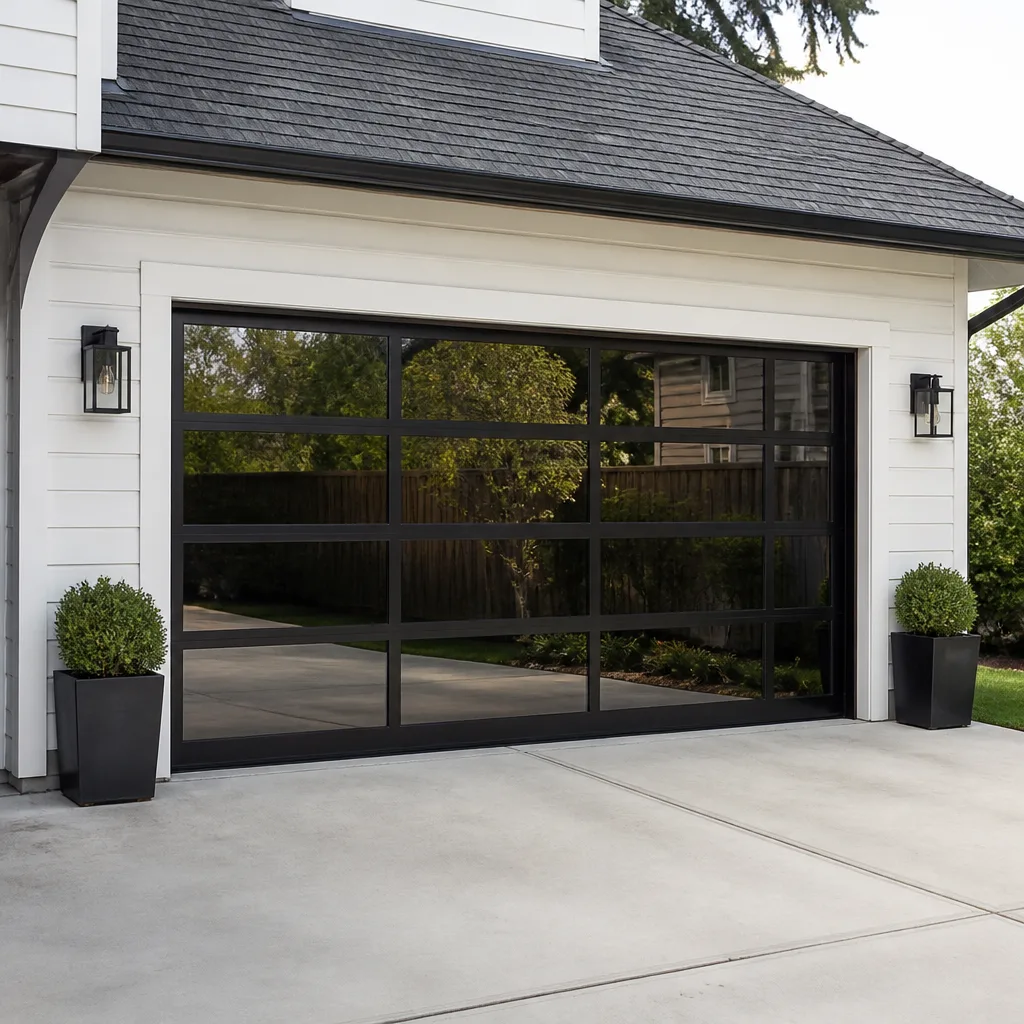 Full-view glass
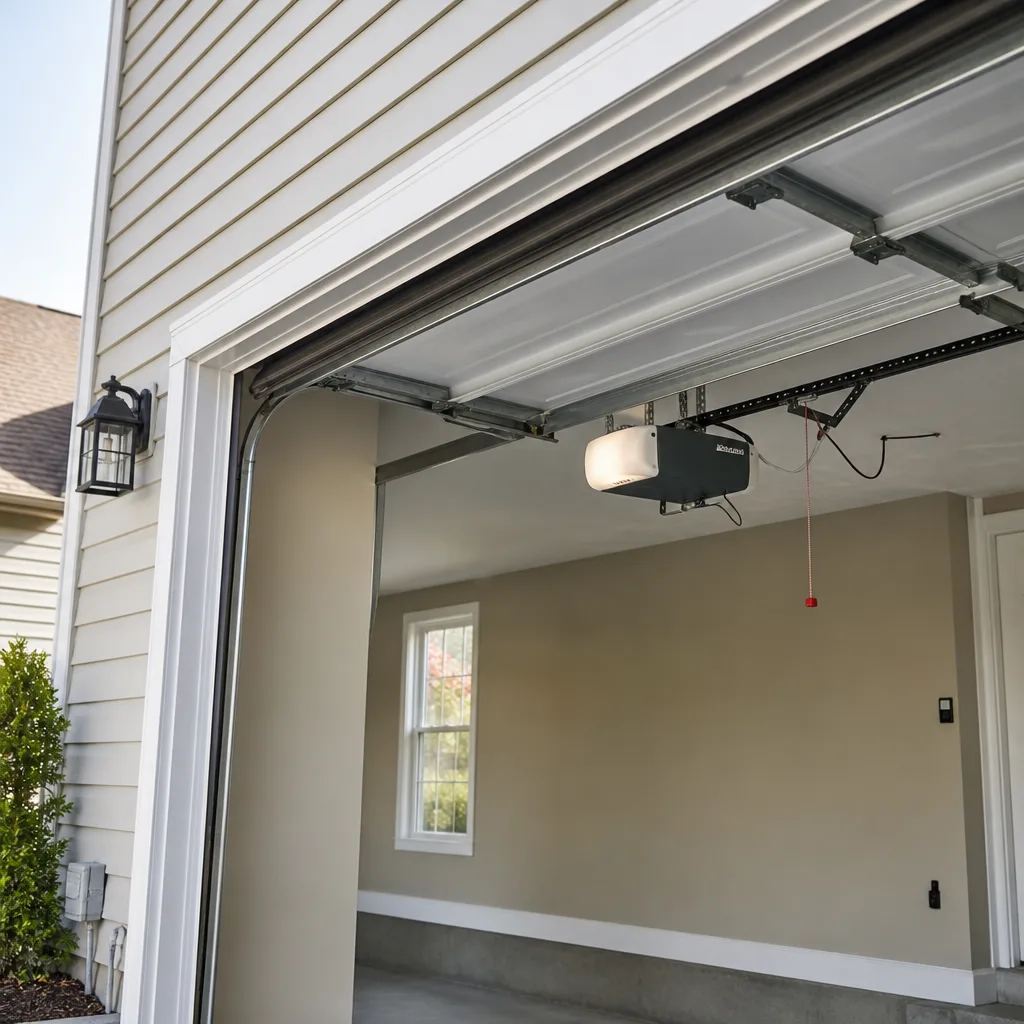 LiftMaster openers
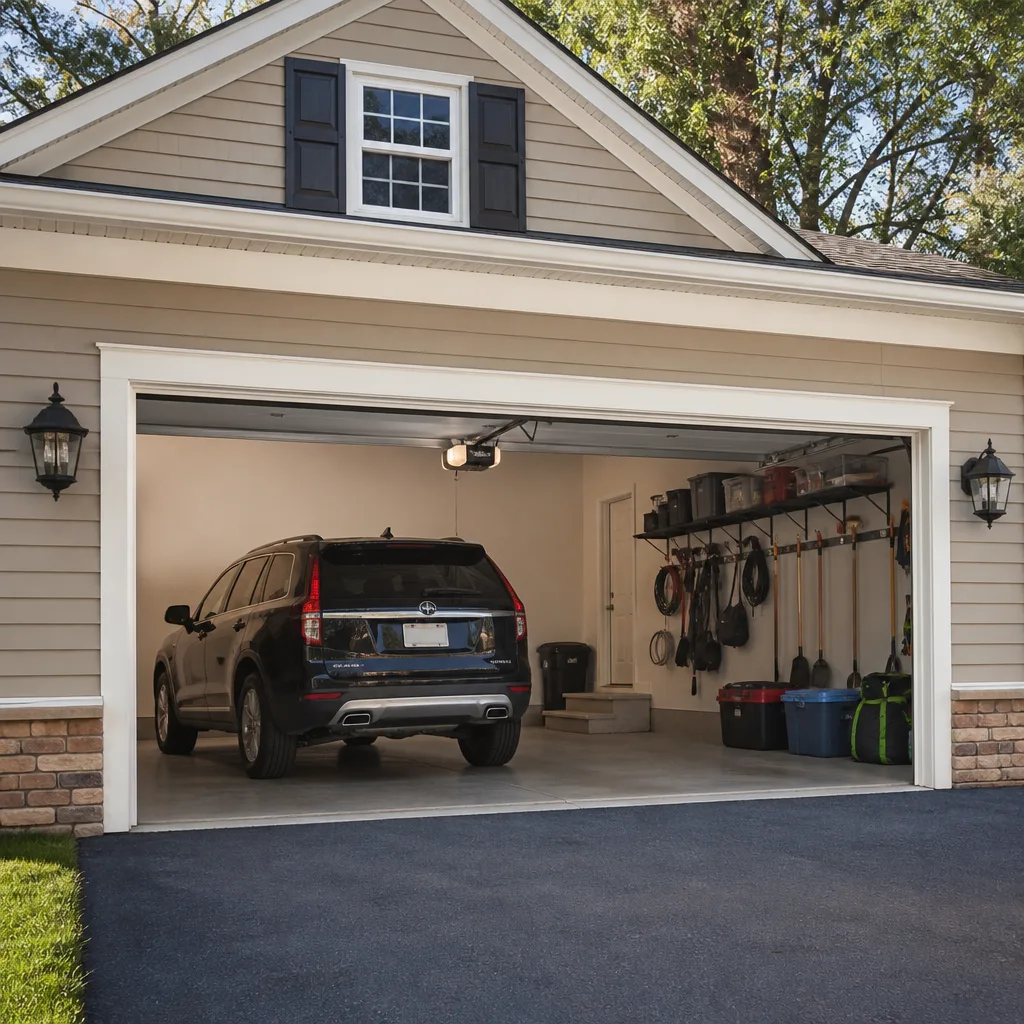 Chamberlain openers
Full 25-point door and opener safety check with every visit - springs, cables, rollers, tracks, and your LiftMaster or Chamberlain opener included
You get a price before we start. It does not change when the truck arrives.
Get your free estimateGarage Door Cost Breakdown: The Apple Valley Homeowner’s Reference for 2026
A $900 garage door job quoted in Apple Valley isn’t the same as a $900 job in Rancho Cucamonga. Parts travel farther, the labor pool is thinner, and the door itself usually needs a higher spec to survive High Desert summers. That gap between what a job costs here versus down the hill isn’t a contractor padding a bill (usually) – it’s the reality of building and repairing homes where July hits 110 and the nearest supply house is a 45-minute drive. This guide breaks down exactly where your money goes on every major garage door repair and replacement in Apple Valley, so you can read a quote and know which line items are fair, which are inflated, and which are worth paying extra for.
Styles & brands we work with
- Raised-panel steel
- Carriage house
- Modern flush
- Full-view glass
- LiftMaster openers
- Chamberlain openers
Quick Answer
Garage door repair in Apple Valley runs $150 – $550 for most mechanical fixes (springs, cables, rollers), while a new opener install costs $450 – $950, and a full door replacement lands between $1,200 and $3,800 depending on size, insulation, and material. The High Desert premium adds roughly 10 – 20% over Inland Empire baseline pricing because of supply runs, climate-driven material upgrades, and a smaller contractor pool. You should expect and accept that premium; what you shouldn’t accept is a quote that can’t explain where it goes.
Table of Contents
- The Real Price of Garage Door Work in Apple Valley (2026 Figures)
- Why Apple Valley Pays a High Desert Premium
- Spring Replacement Cost: The Most Common Repair
- Cable and Roller Repair: When Small Parts Fail
- Panel Replacement: Patching vs. Replacing
- Opener Installation and Repair: The Mechanism Matters
- Full Door Replacement: What a New Door Actually Costs
- Insulated vs. Non-Insulated: The Apple Valley Payback Math
- Hidden Cost Triggers: Permits, Disposal, and Same-Day Fees
- Repair or Replace: The Cost-Ratio Rule
- How to Evaluate a Parts Markup Without Getting Ripped Off
- Common Mistakes to Avoid
- When to Call a Professional
- Frequently Asked Questions
- The Bottom Line
The Real Price of Garage Door Work in Apple Valley (2026 Figures)
National averages don’t survive contact with the High Desert. When a home services website quotes you “$250 for spring replacement,” that’s a national figure pulled from aggregated data across every climate zone, labor market, and supply chain in the country. In Apple Valley, actual 2026 pricing for common garage door work looks like this:
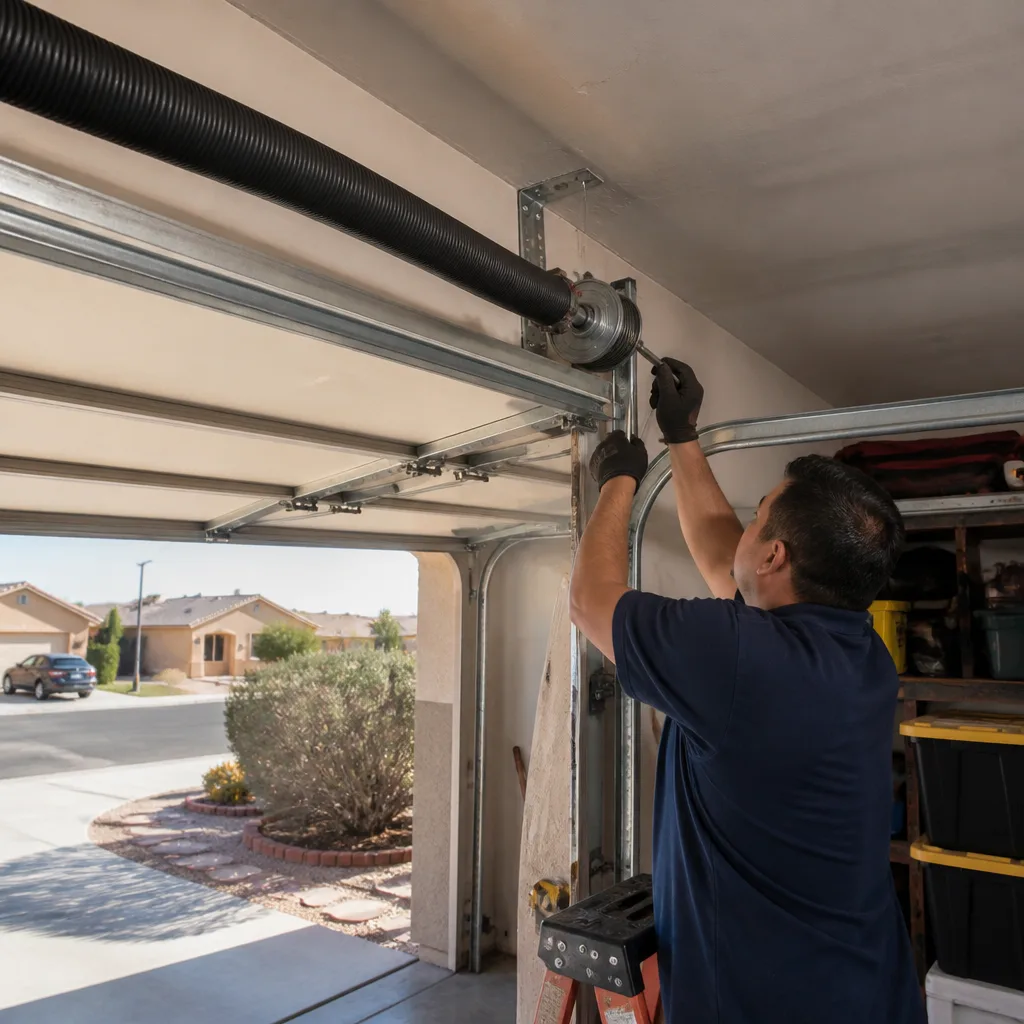
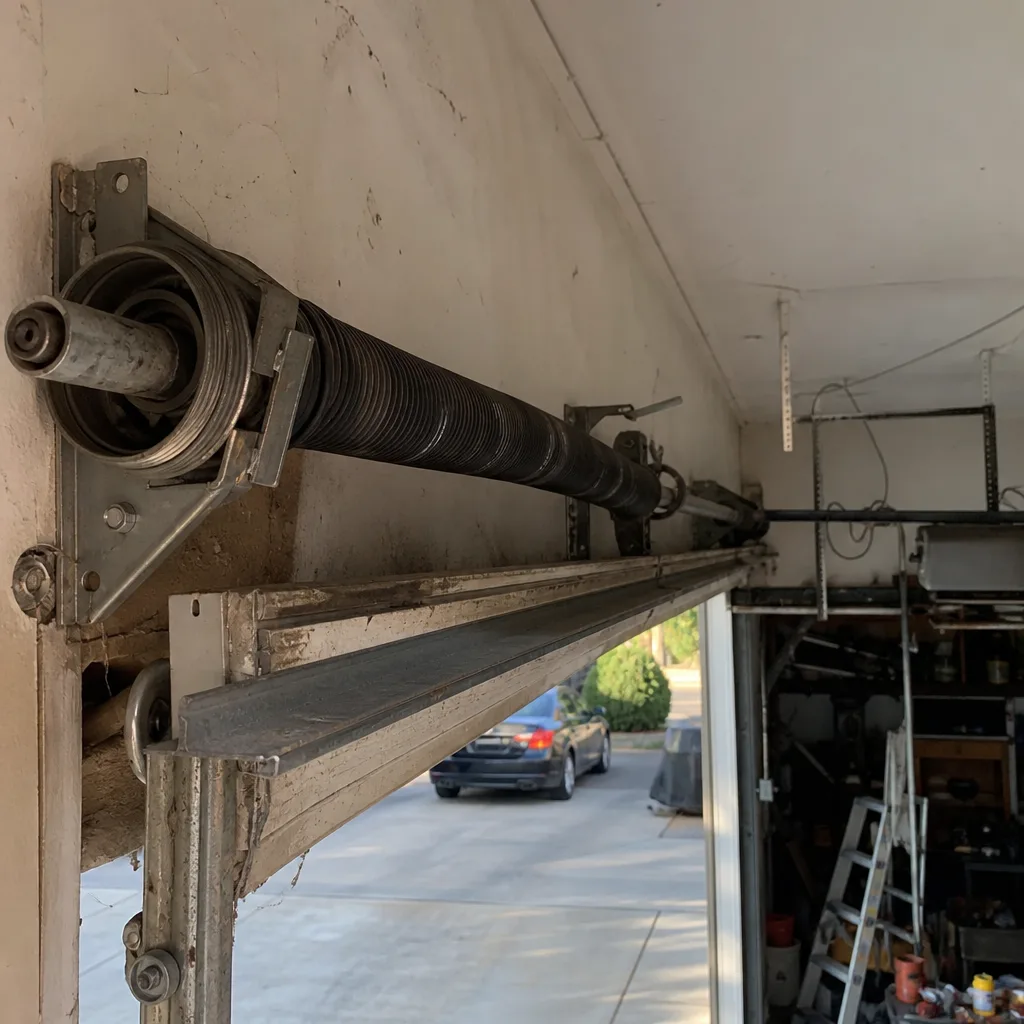
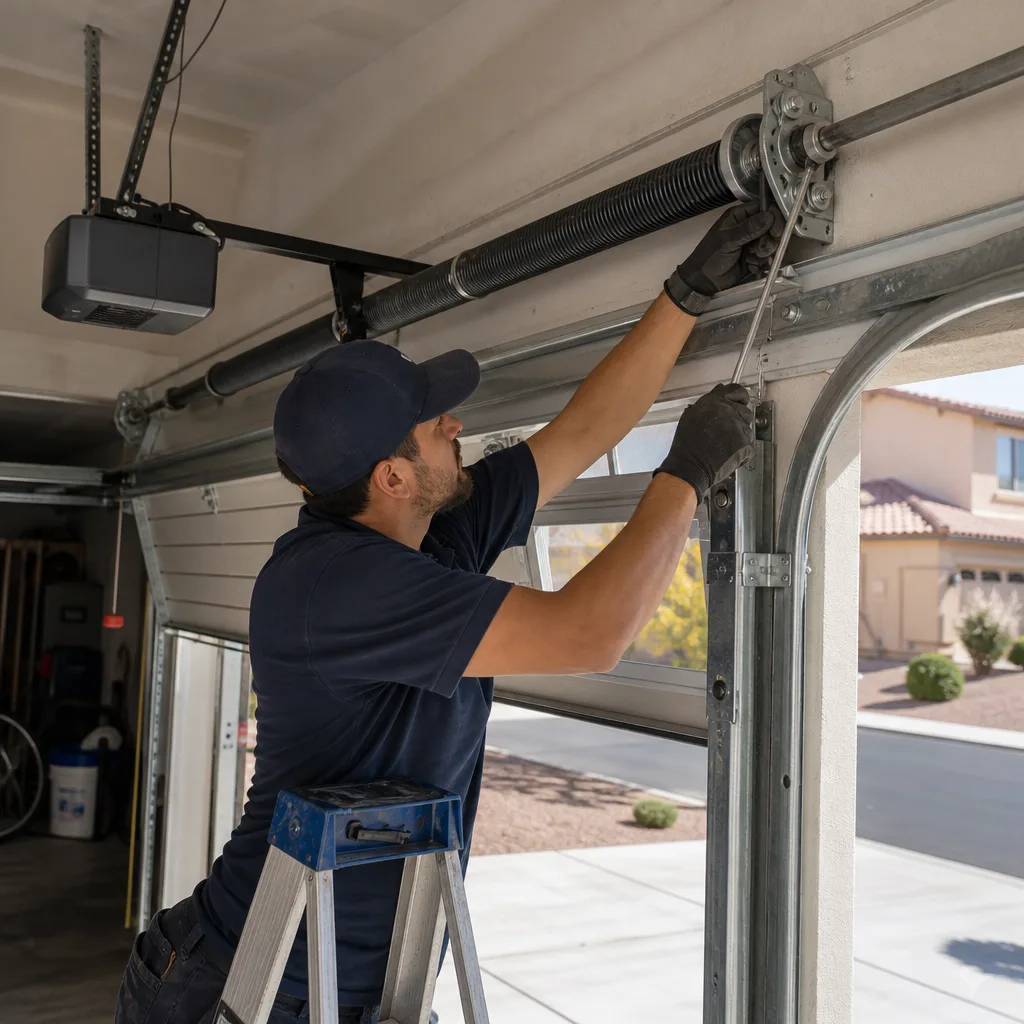
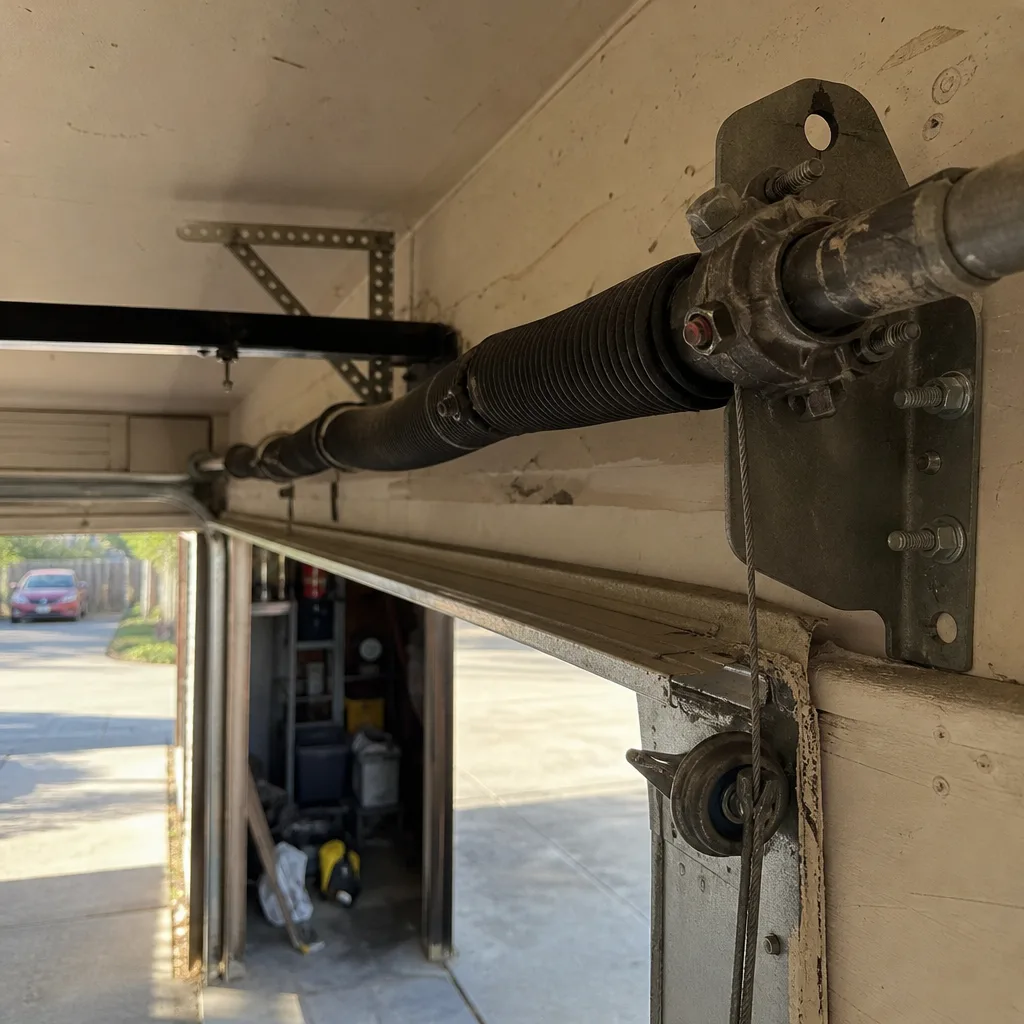
- Spring replacement (torsion, pair): $180 – $340. Single spring jobs run lower; the materials are the same but the labor drops. Most Apple Valley doors under 16 feet wide use one of two spring wire sizes, and honest shops price by the spring spec, not a flat “spring job” number. Expect closer to $340 if you have a heavy wood door or an oversized opening. These springs carry enough stored tension to cause serious injury, so this is a job for a trained tech with the right winding bars, not a weekend project.
- Cable replacement (both sides): $140 – $280. Includes the cable itself, re-seating the drum, and rebalancing the door. If the cable snapped because a bearing froze, expect to pay for that too.
- Roller replacement (full set, nylon): $90 – $180. Metal rollers are cheaper but noisier. In Apple Valley, nylon rollers survive the heat better because they don’t transfer as much thermal expansion to the track.
- Panel replacement (single steel panel): $250 – $500 depending on whether it’s a standard-height Clopay or Amarr pattern or a discontinued style that has to be custom-cut.
- Opener installation (belt drive, mid-range Chamberlain or Genie): $450 – $950 including labor, disposal of the old unit, and programming of remotes and keypad.
- Full door replacement (steel, single-car, basic insulation): $1,200 – $2,200 installed. Double-car or wood-look composite runs $2,500 – $3,800.
These numbers are for a brand-agnostic shop like Brightwater Garage Door Repair home, not a solo operator pricing by gut feel and not a national chain padding for franchise fees. They’re the range you should expect from a competent independent contractor in Apple Valley right now.
Why Apple Valley Pays a High Desert Premium
The single biggest driver is geography. Apple Valley sits at the edge of the Victor Valley supply network. Most garage door parts – springs, cables, drums, panels, opener boards – come through distribution hubs in Ontario, San Bernardino, or Victorville. A contractor doing three jobs in Rancho Cucamonga can make one 10-minute supply run between stops. A contractor doing three jobs in Apple Valley, Lucerne Valley, and Hesperia can burn two hours just driving between them. That time has to be billed somewhere, and it shows up in the service fee, not as a separate line item called “driving around the desert.”
The second driver is climate. Doors in Apple Valley face heat that warps non-insulated steel panels, UV that breaks down vinyl trim and weatherstripping faster than coastal installs, and wind that puts more fatigue on tracks and springs. A door spec that lasts 15 years in Chino lasts 10 here. That means the parts quoted for an Apple Valley repair are often a step up: nylon rollers instead of steel, heavier-gauge springs, insulated panels even on a budget replacement. You’re not paying for a markup so much as paying for equipment that won’t need a second repair in three years.
The third driver is a thinner labor pool. Fewer garage door techs service the High Desert than the Temecula-Murrieta corridor or the I-10 stretch, which means established companies stay busy and don’t discount work to fill a schedule. That’s not a scam; it’s the same dynamic that makes every trade service cost more in small markets.
Spring Replacement Cost: The Most Common Repair
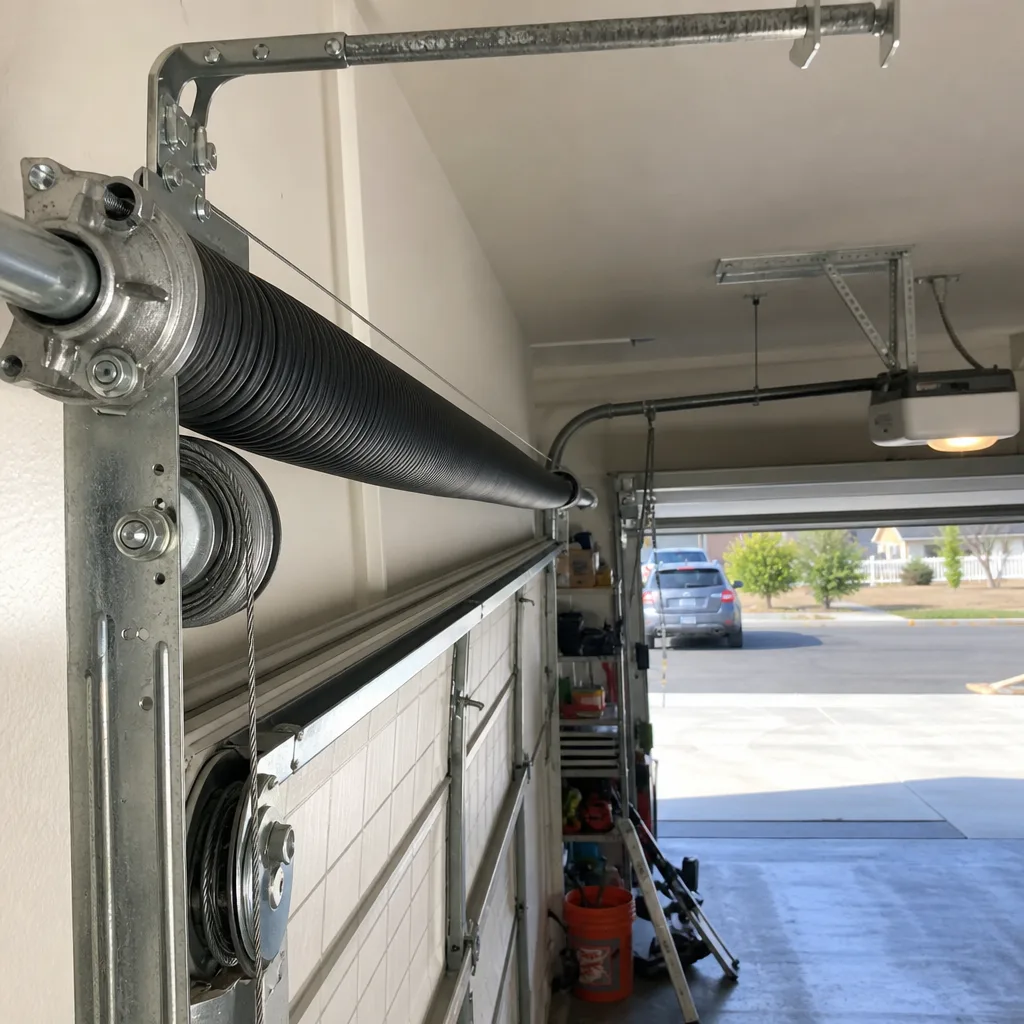
If your garage door stopped opening and you heard a bang like a gunshot, you already know what failed. Torsion springs are the most common repair in Apple Valley because they carry the full weight of the door through every open and close cycle. A standard spring set is rated for 10,000 cycles, which translates to roughly 7 – 10 years of use in a household that opens and closes the door once or twice a day. When one breaks, the door goes from 0 to 150 pounds of dead weight in an instant.
In Apple Valley, torsion spring replacement runs $180 – $340 for both springs, and that pair is the key. Even if only one spring snapped, a competent tech replaces both. The spring that didn’t break has the same cycle count as the one that did, and mismatched springs cause uneven door travel that wears out cables, drums, and rollers within about two years. Honest shops quote it as a pair. Shops that quote you one spring are either cutting the price to appear competitive or planning to come back next year when the other snaps.
The parts themselves are inexpensive: a wholesale spring pair runs $40 – $70 depending on wire gauge and door weight. What you’re paying for is knowledge and risk. The spring has to be matched to the door’s exact weight, not just its width. A 16-foot door with a wood-look overlay weighs twice what a plain steel door of the same dimensions weighs, and a spring rated for the wrong weight either breaks early or slams the door shut when the opener releases. We’ve replaced springs in Apple Valley that were installed by a previous contractor with the wrong spec and failed inside 18 months. The labor includes winding the spring under tension, setting the balance so the door stays put at both half-open and full-open positions, and testing the safety reverse. That’s not work worth doing cheap.
Cable and Roller Repair: When Small Parts Fail
Cables and rollers fail quietly. A cable starts to fray at the drum, a roller develops a flat spot, and then one morning the door judders halfway up and stops. The repair is not expensive if you catch it early: $140 – $280 for a cable pair, $90 – $180 for a roller set. Wait until the cable snaps under load and the door drops into the track at an angle, and you’re looking at track straightening, panel repair, and possibly a full re-balance on top of the original fix.
For Apple Valley specifically, we see more cable and roller failures from dust than from rust. The dry lakebed winds push fine particulates into the track, and over time that abrasive grit wears a groove in the nylon rollers and frays the cable at the drum. Lubricating with a silicone spray a few times a year helps, but no spray eliminates it. The best prevention is visual: once a season, with the door closed, look at the cable where it meets the drum at the top of the door. If you see loose strands fanning out, call for a repair before it snaps. Same check on rollers: if any roller has a visible flat edge or wobbles in your fingers, the set is on its way out.
Panel Replacement: Patching vs. Replacing
A dented panel from a basketball, a car bumper, or a wind-blown trash can is the most common cosmetic repair request in Apple Valley. The decision comes down to whether the panel can be sourced. If your door is a current-style Clopay or Amarr steel door, a replacement panel runs $250 – $500 including labor. The old panel gets unbolted from the hinges, the new one goes in, and the door gets rebalanced. Looks like new.
If your door is older, discontinued, or a wood grain pattern that’s no longer manufactured, the math changes. A custom-cut panel with a color match on a 10-year-old door can run close to $700 once you account for paint fade matching, and the new panel will still stand out from its neighbors in certain light. At that point, a garage door repair in Apple Valley is a judgment call: a $700 patch on a door that’s 12 years old doesn’t make much sense when a new single-car door starts at $1,200. But a $300 panel on a 3-year-old door is an easy yes. The rule we use is simple: if the panel repair is more than 60% of a new door, replace the door.
One Apple Valley-specific consideration: heat fade. Panels that sit in full afternoon sun on west-facing garages in the Victor Valley fade noticeably within five years. A replacement panel matched to the factory color will look slightly off against the rest of the door. If your garage faces west and the door is more than eight years old, color matching becomes a real discussion, not just a formality.
Opener Installation and Repair: The Mechanism Matters
More than half of the “broken door” calls we see turn out to be the opener. The door itself is fine; the motor, logic board, or drive mechanism has failed. This is where the garage door opener repair in Apple Valley service differs from mechanical door repair, and it’s worth understanding the cost split before you spend anything.
Opener repair runs $120 – $300 for most problems: a stripped drive gear on a Chamberlain, a failed capacitor on a Genie, a logic board on an opener more than eight years old. If the opener is under 10 years old and the motor still runs clean, repair usually makes sense. If it’s older than that, you’re gambling $250 on a fix when a new belt-drive opener starts at $450 installed. That’s a ratio worth calculating.
Opener installation in Apple Valley runs $450 – $950. The range depends on three things: drive type, horsepower, and whether or not you’re adding a battery backup. Belt-drive openers are the standard for attached garages because they’re quiet enough to not wake the house. Chain-drive openers run cheaper, but in a High Desert house where the garage shares a wall with a bedroom, the vibration is noticeable. Battery backup adds $80 – $150 and is worth it in Apple Valley specifically because the High Desert sees more wind-driven power flickers than the Inland Empire basin. When your power goes out and the car is in the garage, a battery backup is the difference between waiting out the storm at home and missing work.
Full Door Replacement: What a New Door Actually Costs
A new garage door in Apple Valley has a wide price range because the material choices are genuinely different, not just cosmetic tiers. Here’s the current spread for installed single-car doors:
- Non-insulated steel, builder grade: $1,200 – $1,600. Thin panels, noisy operation, no thermal benefit. Fine for a detached shop, borderline for an attached garage.
- Insulated steel, basic polystyrene core: $1,600 – $2,200. The value sweet spot for most Apple Valley homes. Noticeably cooler in summer, noticeably quieter, and the panels don’t oil-can in the heat.
- Insulated steel, higher R-value (polyurethane, R-12 or better): $2,000 – $3,000. Worth it if your garage is a workshop or gym, or if the garage sits on the west side and absorbs full afternoon sun.
- Wood-look composite or overlays: $2,800 – $4,000. More for curb appeal than function. Holds up better than real wood in the High Desert because the composite doesn’t split in low humidity.
Double-car doors run roughly 50 – 70% more than the single-car figures. Every garage door installation in Apple Valley should include haul-away of the old door, which is a $50 – $100 line item if itemized separately. Most reputable shops just fold it into the quote.
Insulated vs. Non-Insulated: The Apple Valley Payback Math
Insulated doors cost $400 – $800 more than non-insulated for the same size and style. In most of coastal California, that premium is hard to justify. In Apple Valley, the math works differently because the door faces something coastal doors don’t: direct solar gain on a west or south-facing garage, plus ambient heat that can push an uninsulated garage to 120°F or more in July and August.
A non-insulated steel door acts as a giant radiator. The afternoon sun heats the panel to 140°F surface temperature, and that heat radiates into the garage. The air inside the garage then radiates into any shared wall between the garage and the rest of the house. That heat load has to be removed by your AC system. An insulated door with a basic polystyrene core cuts that transfer noticeably. An R-12 polyurethane door cuts it more.
The simple payback: if your garage shares a wall with conditioned living space and the door gets afternoon sun, the insulated upgrade pays for itself in cooling dollars within two to four years. Not a rounding error. And the non-financial benefits on top: the door is quieter when it opens and closes, more resistant to denting, and holds up better in the temperature swings that crack thin builder-grade panels. For an attached garage in Apple Valley, we recommend insulated panels as the default, not the upgrade.
Hidden Cost Triggers: Permits, Disposal, and Same-Day Fees
Three line items catch Apple Valley homeowners off guard when they compare quotes. Here’s what they are and what reasonable looks like.
Permit Fees
Most garage door repairs – springs, cables, rollers, opener swaps – don’t require a permit in Apple Valley. Full door replacements can trigger a building permit if the opening dimensions change, but a same-size door swap generally doesn’t. Where the permit question really applies is when a door is being converted, the header is being modified, or a new opening is being cut. If a contractor quotes you a permit line item, ask what specifically is being permitted. If the answer is vague, push back. A same-size replacement door should not carry a permit fee. For full details, see our Garage Door Permits, Codes & Inspections in CA: What You Need to Know.
Disposal Fees
Town of Apple Valley waste services won’t take a 16-foot garage door section in the standard cart. Contractors haul old doors and old openers to the Victorville landfill or a metal recycler. Most shops fold this into the quote; some itemize it at $50 – $100. It’s a legitimate cost either way. What’s not legitimate is a “disposal surcharge” added on top of a quote that already included “complete installation.” Confirm at the quote stage: “Does this price include haul-away of the old door?”
Same-Day Service Premiums
Emergency and same-day service in Apple Valley carries a $50 – $150 premium because a contractor is prioritizing your call over their scheduled route and absorbing the extra drive time. It’s a fair charge on an emergency repair like a snapped spring or a door jammed open. It’s not a fair charge on a scheduled replacement. If you need the door open today, expect to pay for the privilege. If you can schedule a few days out, don’t pay it. For tips on handling outages safely, read our Garage Door Emergency Preparedness Guide for Apple Valley Homes.
Repair or Replace: The Cost-Ratio Rule
The most common question we get is the hardest one to answer honestly without looking at the door: “Is it worth fixing, or should I just get a new one?” There’s a defensible rule of thumb that works for most Apple Valley homes.
- Find the repair cost as a percentage of replacement cost. If the repair is a $200 spring job and a comparable new door is $1,800, that’s 11%. Repair it.
- If the repair is between 25% and 50% of replacement cost, look at the door’s age. A 4-year-old door with a $600 panel repair is worth fixing. A 14-year-old door with that same $600 panel bill is not.
- If the repair is over 50% of replacement cost, replace the door. You’re approaching the point where you’re paying new-door money for a tool that’s already past its service life.
- Add a year count for Apple Valley conditions. The High Desert heat takes a year off every seven when it comes to door lifespan. A 12-year-old door in Apple Valley has had the same environmental stress as a 14-year-old door in Redlands.
Here’s the honest version of that rule in practice: a 9-year-old builder-grade steel door with a broken spring, worn rollers, and a dented bottom panel is a replacement candidate even if the individual repairs add up to less than 50%. Three separate aging systems on one door means the next 18 months bring more calls. A competent tech who’s not trying to sell you a new door will tell you that. The full door replacement quote then becomes a conversation about what the new door should be, not whether you need one.
How to Evaluate a Parts Markup Without Getting Ripped Off
Every contractor marks up parts. That’s not a scam; it’s how a service business covers overhead, warranty liability, and the time spent sourcing and stocking. The question is whether the markup is reasonable or whether you’re being quoted for a yacht payment.
Here’s the practical way to check without becoming a garage door industry analyst:
- Know the wholesale anchors. A pair of torsion springs runs $40 – $70 at distributor pricing. A belt-drive opener from Chamberlain or Genie runs $200 – $350 wholesale depending on horsepower and features. A single steel door panel runs $80 – $150 for common sizes.
- Apply the markup range. A legitimate contractor markup is typically 50% to 100% over wholesale for the parts on a repair ticket. That means a $60 pair of springs becomes $90 – $120 on the invoice, plus labor. A $300 opener becomes $450 – $600 installed, with the difference covering markup, labor, and disposal.
- Be suspicious of flat “parts and labor” bundling. A quote that says “$400 for spring replacement, parts and labor included” doesn’t tell you anything about what the parts cost. A legitimate shop can and should break down the line items if you ask. If the answer is defensive or vague, that’s a signal.
- Compare quotes on the same failure, not on the same number. Get two quotes for the same diagnosed issue and compare the parts line, not the total. If one shop quotes $85 for springs and another quotes $240, the second shop is either pricing for a heavier spring spec or padding. Ask which. A brand-neutral shop like Brightwater will tell you the brand, spec, and why that spec is correct for your door.
We recommend the right part for your door, not the part that makes the best margin. That sounds like a line, but it’s observable: ask your contractor what brand and spec they’re quoting and why. If the answer includes specifics like wire gauge, panel thickness, or drive type, you’re talking to someone who wants the door to work. If the answer is “it’s a spring,” get another quote.
Common Mistakes to Avoid
- Accepting a national-average price without asking why it’s different here. A $250 spring quote from a national site means nothing in Apple Valley. If a local shop quotes $300, that’s the High Desert supply run and experience pricing. Ask what’s included; don’t argue it down to a national number.
- Replacing one spring instead of both. It saves $60 – $80 today and costs you a full second service call within a year, plus wear on the cables and drums in the meantime. Replace both, always.
- Skipping insulation on an attached garage. The $400 – $800 you save on a non-insulated door disappears into your summer cooling bill within a few years, and you live with a hotter garage in the meantime.
- Paying a same-day premium for a non-emergency. If the door closes and locks, schedule the repair. Same-day dispatch fees are for doors that won’t close at all or are stuck open.
- Waiting until the second failure to call. A frayed cable is a $180 fix. A snapped cable that drops a door into the track is a $500 – $700 repair. Catch small problems before they become structural ones.
- Buying an opener without battery backup. In a High Desert wind season, the power goes out when you need the garage door the most. The backup unit is cheap insurance.
- Paying in full before the work starts. Some deposit is reasonable on a custom door order. Full payment up front is not. Legitimate shops invoice after the door is installed and tested.
When to Call a Professional
Some garage door problems are worth calling for immediately; a few are worth a look first. Call the same day if a torsion spring has snapped, the door is stuck open, a cable has released, or the door drops when the opener releases it. These are safety issues and they get worse by the hour. Call on a normal schedule if the door is noisy, slow, or visibly wearing but still opens and closes. A visual inspection now beats an emergency call later.
Brightwater Garage Door Repair offers free estimates in Apple Valley. Call (855) 473-2508 for a quote on any repair, opener issue, or full replacement. We’ll diagnose the problem, name the part and the price, and you’ll know what you’re paying before any work starts.
Frequently Asked Questions
Spring replacement in Apple Valley runs $180 – $340 for a pair of torsion springs, including labor and safety testing. The range depends on door weight and spring spec, not on the contractor’s mood. Call (855) 473-2508 for an exact quote on your door.
Yes, most mechanical repairs like spring replacement and cable work can be completed the same day in Apple Valley, and same-day dispatch is available for true emergencies like a door stuck open. Expect a $50 – $150 same-day service premium; scheduled work doesn’t carry that charge.
A new garage door in Apple Valley costs $1,200 – $3,800 installed for a single or double door depending on material, insulation level, and size. Insulated steel run $1,600 – $2,200 for a single-car width, which is the best value for an attached garage in the High Desert.
Use the cost-ratio rule: if the repair is under 25% of replacement cost, fix it. If it’s over 50%, replace the door. Between 25% and 50%, factor in the door’s age, remembering that Apple Valley conditions age a door about a year faster every seven than milder climates.
Most garage door repairs and same-size replacements do not require a permit in Apple Valley. Permits apply when the door opening dimensions change or structural work is involved. If a contractor quotes a permit fee for a standard replacement, ask what specifically is being permitted.
The price quoted over the phone is an estimate; the final price should be confirmed on-site before any work starts and should not change unless the scope of work changes. A legitimate shop quotes the price, explains any hidden issues found during diagnosis, and gets your sign-off before proceeding. You’ll never get a surprise invoice from a shop that quotes before work begins.
The Bottom Line
Garage door work in Apple Valley costs more than the national average, and that premium is real: longer supply runs, climate-driven material upgrades, and a thinner contractor pool. What you get for it is a door spec that survives High Desert heat and a technician who knows which parts fail here first. Use the figures in this guide to compare quotes on equal terms: know the wholesale anchors, apply the markup range, and ask for specific brands and specs. The right question isn’t “is this quote fair” so much as “does this contractor explain where the money goes.” The ones who do are the ones to hire.
Written by the team at Brightwater Garage Door Repair, serving Apple Valley since 2018. We work on LiftMaster, Chamberlain, Genie, Clopay, Amarr, Wayne Dalton, Craftsman, and Raynor doors and openers. Repair or replace? We’ll tell you honestly which one makes sense. Call (855) 473-2508 for a free estimate on any garage door job in Apple Valley.
See the difference
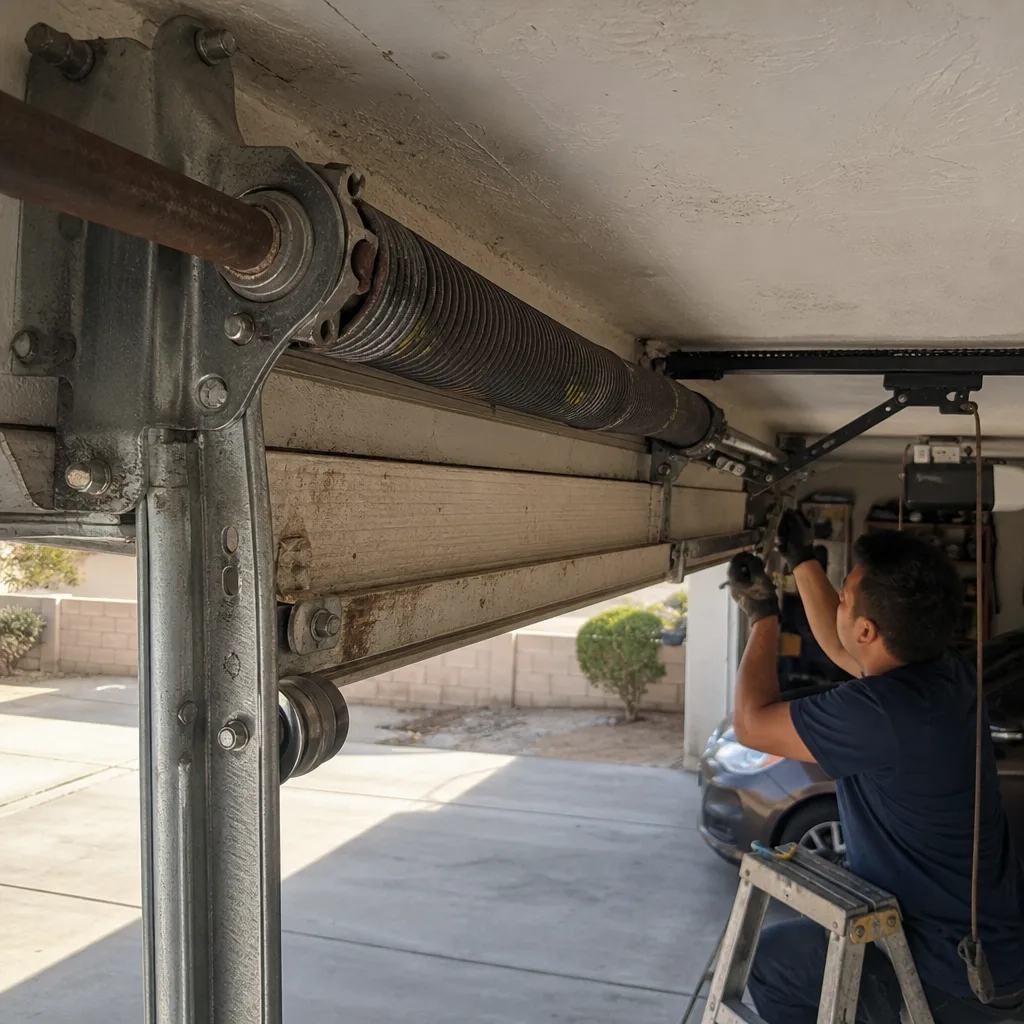 Before
 After
 Before
 After
 Before
 After